
At Blackberry Clinic we offer a multi disciplinary approach to the care and treatment of our patients who come to us with painful musculoskeletal conditions. In the workplace, our physios, osteopaths and chiropractor have combined learning and teaching sessions for continuous professional development. In these sessions there are presentations and case study discussions. Our MSK and SEM doctors also join in and give lectures about the treatments that they do. This approach means that the care of the patient can be optimised with a cross referral system benefitting the patients.
Our reception staff regularly get asked what the difference is between these professions and who should the patient book in with. The answer is that there are differences, but that all our practitioners are able to treat all MSK conditions. If your practitioner feels there is someone else better suited to treating your condition they will not hesitate to refer you to someone else, as the care of the patient and the optimum outcome of the best possible recovery is at the forefront of Blackberry Clinic treatment.
However, in order to address the question which is regularly put to Complementary and Alternative Medical (CAM) practitioners by both first-time and returning patients, it is useful to refer to the definitions and general information published by the professional bodies for each of these three therapies in turn:
Physiotherapy
Physiotherapy is a primary healthcare profession, aiming to restore movement and function to the fullest potential when someone is affected by injury, illness or disability. Physiotherapy treatment encourages development and facilitates recovery, enabling people to stay in work while helping them to remain independent for as long as possible.
Physiotherapists achieve this through movement and exercise, manual therapy, education and advice. They offer treatment for people of all ages to manage pain and disability. .
Physiotherapists work in a range of healthcare settings, such as intensive care, mental health, neurology, chronic conditions, occupational health and care of the elderly. They help to treat physical problems associated with a number of the body’s systems, including the MSK, neuromuscular, cardiovascular and respiratory systems.
Chiropractic is a primary healthcare profession, specialising in the diagnosis, treatment and prevention of neuromusculoskeletal disorders and their effects on the function of the nervous system and general health. It is especially related to the spine.
Some problems associated with the MSK system can be caused by accidents, stress, inactivity, poor posture, illness and everyday wear and tear. These problems may cause pressure on the nerves in the body.
Chiropractors use specific manipulations to free joints in the spine or other areas of the body that are not moving properly, and give patients advice on exercise, self-help, diet and lifestyle. Chiropractors regularly promote rehabilitation programmes and provide advice on posture.
Osteopathy is a primary healthcare profession, focusing on the diagnosis, treatment, prevention and rehabilitation of musculoskeletal (MSK) disorders and their effect on the patient’s general health.
Osteopaths seek to restore the optimal functioning of the body, based on the principle that the body is its own ‘medicine chest’, and they focus sessions on strengthening the MSK system to treat existing conditions and to prevent illness. By considering symptoms in the context of the patient’s full medical history, as well as their lifestyle and personal circumstances, a holistic Osteopathic approach ensures that all treatment is tailored to the individual patient.
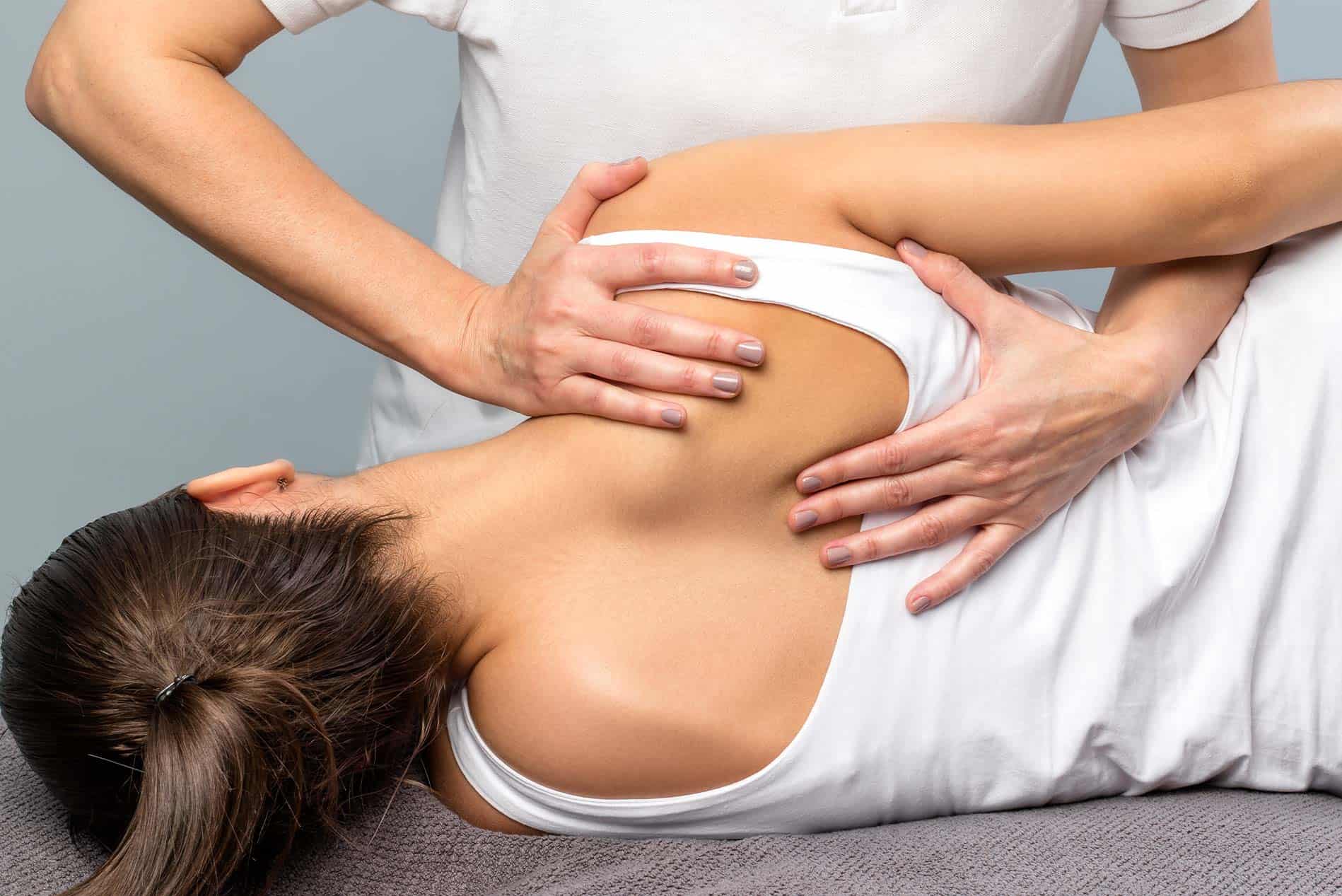
Treatment increases the mobility of joints, relieves muscle tension, promotes the blood and nerve supply to tissues and helps the body’s own healing mechanisms via a range of techniques, such as joint manipulation, articulation, soft/deep tissue massage, soft tissue stretches and often acupuncture. Advice on posture and exercise to address potential barriers to recovery is regularly provided too.
Similarities and Differences
In essence, all three professions assess and treat the same musculoskeletal conditions or complaints and are all able to manage these issues with good outcomes. However, the training and theoretical approach to the management of the patient may differ.
References