

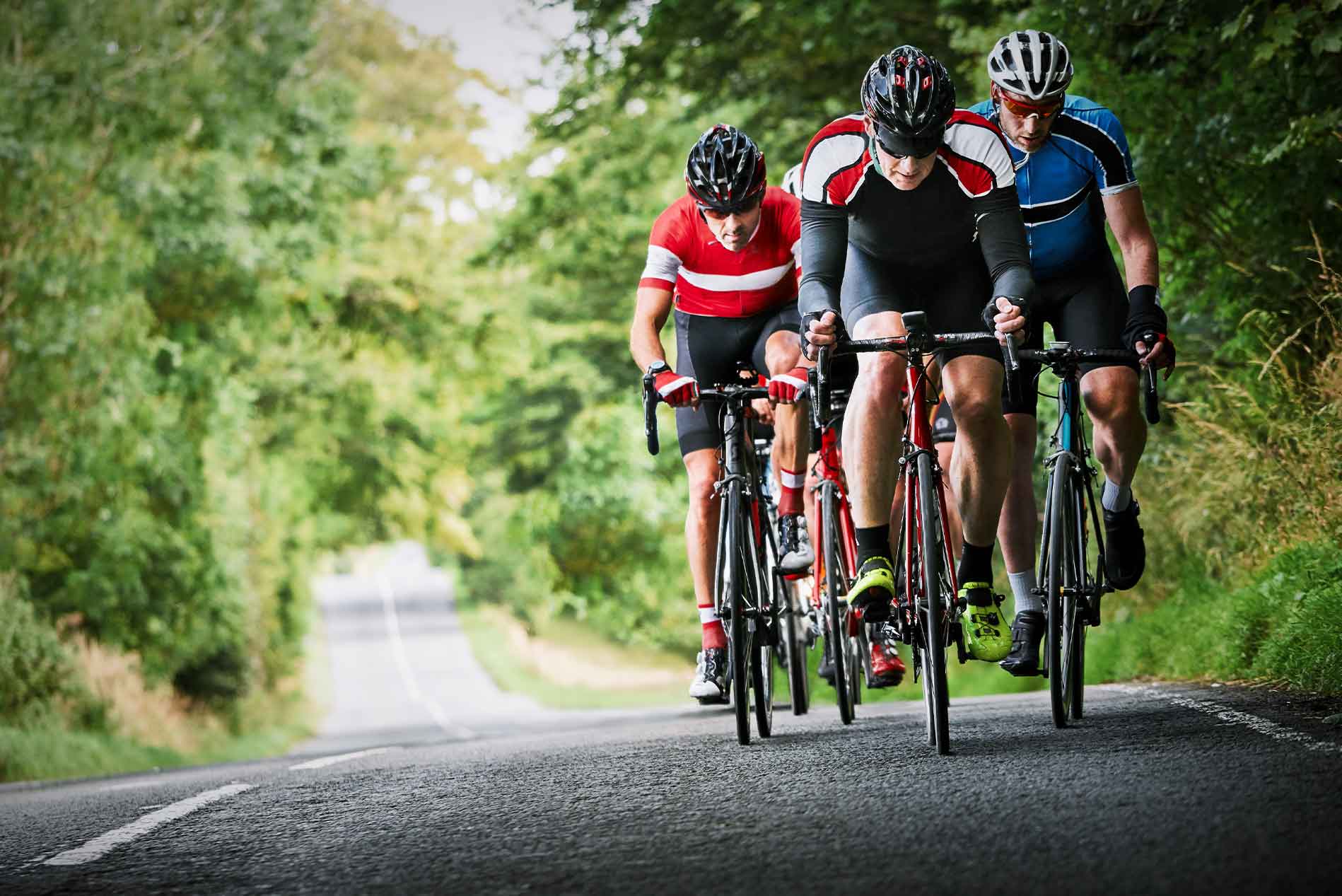
Cycling is a very popular sport and now the weather is improving you may be tempted to get out on the road for longer trips. At Blackberry Clinic we see cyclists who are suffering from back pain and here is an article with some advice on how best to avoid this problem. If you do suffer from back pain and it is affecting your sport, book an appointment with a physio, osteopath or chiropractor at Blackberry Clinic for a full assessment and treatment plan.
After the knees, the back is probably one of the biggest causes of pain for recreational cyclists. Interestingly, low back pain is also the most common injury among professional cyclists. Hunching forward on your bike, and probably also at work, places strain on your spine, loading structures for prolonged periods of time. Cyclists back pain is often due to mechanical factors, with a lack of flexibility and bad posture usually being the cause.
And yet because cycling is a low-impact sport, it is often actually recommended for back pain sufferers. Research has shown that when cyclists start to tire, their hamstrings and calf muscles become progressively more fatigued (as expected). However, this seems to produce undesirable changes in muscle movement patterns, of the entire lower limb and pelvis, which in turn affects the back. With prolonged flexed positioning the back extensor muscles, that help maintain correct posture in the lower back, become less effective at maintaining spinal stability, alignment and posture.
Chronic low-back pain sufferers, tend to ride with more flexion in the lower lumbar spine and often have a more flexed lumbar region (a loss of the natural lordosis/curve) in their standing posture. Both these factors compromise the ability of the deep back extensor muscles to support the spine. Added to fatigue over a longer ride, the muscles offer even less support and pain increases further.
MANAGEMENT AND REHABILITATION
The mechanical changes described means that structures in the back are put under abnormal pressure, and pain can start to be felt in the spine. Muscle spasm often develops as a
compensation to support the spine. This is why it’s often extremely effective to have your posture assessed if you cycle regularly. Treatment of back pain may include mobilising the lumbar spine through manual therapy techniques.
Massage and deep tissue release of shortened tight muscles including trigger point therapy and possibly acupuncture can also be very beneficial. Exercises will be prescribed to strengthen your core and lower back muscles. The localised hands on treatment may relieve the symptoms but without proper strengthening and postural correction you will be unable to maintain this and the benefit may only be temporary. If you sit for longs periods at front of a desk, or do a lot of driving, or lots of lifting and manual work it’s a good idea to get advice from your physical therapist regarding posture correction and good ergonomics to reduce back pain and promote a more erect posture.
BODY CONDITIONING TIPS
Core strength comes from a collection of deep muscles both big and small, including back extensors like multifidus, that work together to provide stability to your back and pelvis. As these muscle fatigue, performance dwindles and back support collapses. A powerful rider needs a strong base to work off.
Strengthening exercises for the core and lumbar-pelvic region may include planks, Pilates-type exercises, bridging, Swiss ball, squats, lunges, deadlifts, supermans, pike, and reverse crunches among others. Lack of flexibility, such as excessive hamstring and hip flexor tightness can contribute to low back pain. To manage or prevent this, ask your physical therapist for a progressive rehabilitation program, including stretches, specific to your posture and riding style.
Differences in leg length are common mechanical problems leading to imbalances and altered alignment in the spine. Have this checked during your consultation, a small insert may help level you out.
BIKE SET UP TIPS
Optimise your bike set up so that you maintain a straight position, without slumping or rotating. The angle of your back in relation to the bike can increase or decrease the strain. If your position is very aggressive with a long stem/top tube and low handle bars, think about raising them to alleviate pressure.
Adjusting saddle angle and seat height may too reduce strain on your back. Low back pain may be exacerbated in cyclists that push big gears, especially while climbing. Consider alternating climbing positions by standing up. Change the angle of your back and thereby the load, by alternating hand positions, especially during long rides or climbs.
The information contained in this article is intended as general guidance and information only and should not be relied upon as a basis for planning individual medical
care or as a substitute for specialist medical advice in each individual case. ©Co-Kinetic 2018
Blackberry Clinic