

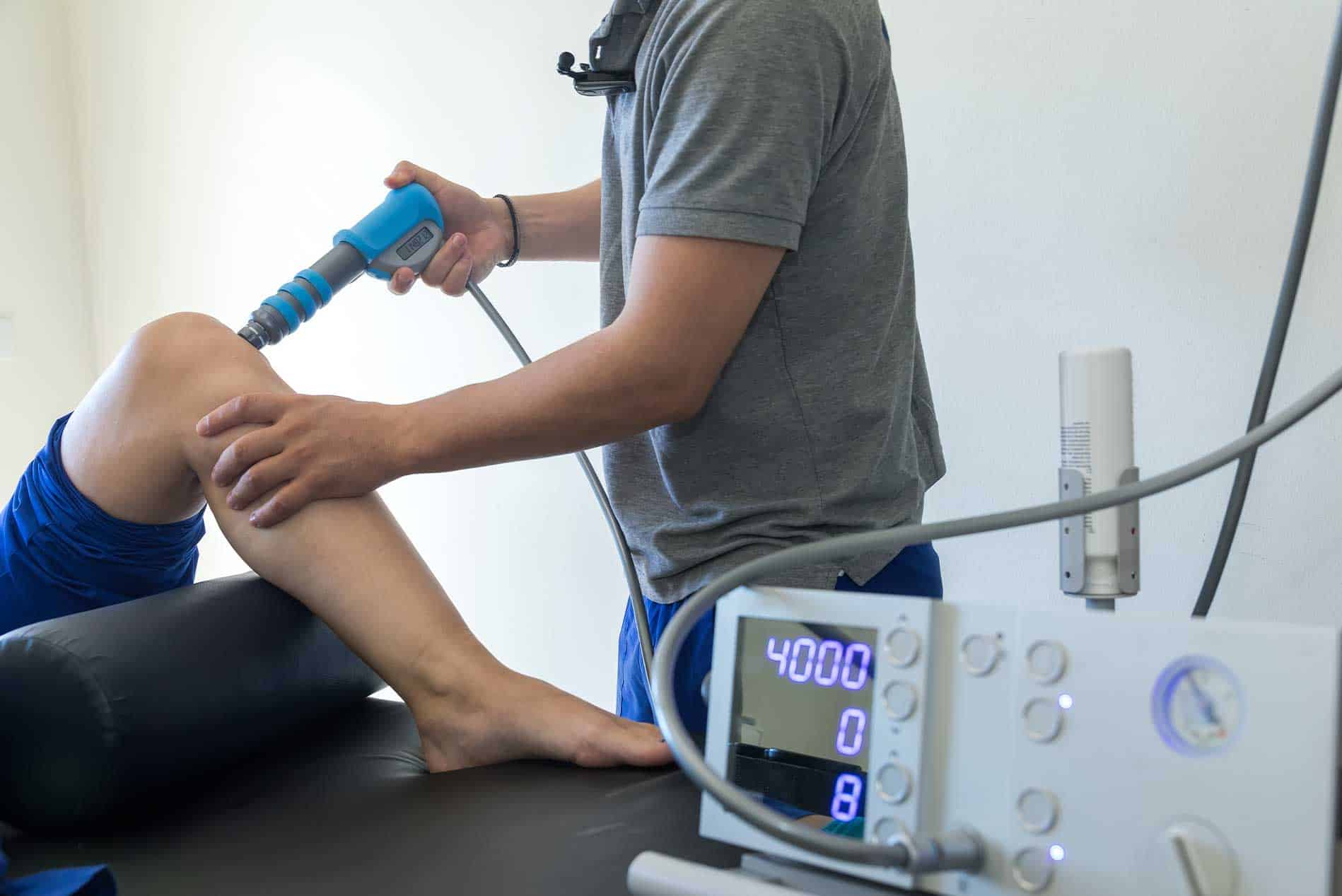
At Blackberry Clinic we offer a variety of treatments for painful MSK conditions including shockwave therapy. This is often offered if manual therapy has not been effective, or as an adjunct to manual therapy. For example, it may be used for achilles tendonitis if physiotherapy treatment such as soft tissue massage, exercises and stretches, and orthotics have been tried. Our patients often ask us questions about shockwave therapy such as: How does shockwave therapy work? What does shockwave therapy do? Is shockwave therapy painful? Does shockwave therapy work? Here we try to answer those questions and give you some more information about shockwave therapy and how it works.
Shockwave therapy, also called extracorporeal shockwave therapy (ESWT), is a type of treatment used in orthopaedics, physiotherapy, sports medicine, urology and even veterinary medicine. It is a non-invasive way of restarting the natural healing process. It does this by causing a short-term (acute) inflammatory response, much like the ‘normal’ process that happens after an injury. The treatment involves using a device to send shockwaves through your skin to influence the affected tissues beneath. The body responds by increasing the blood circulation to, and the metabolism in, the affected area.
The main benefits of shockwave therapy are fast pain relief and improved mobility. As it does not involve surgery and there is no need for painkillers, it is an ideal therapy to speed up recovery and manage acute or chronic (long-term) pain conditions including tendon and bone problems. Studies have shown a 70–85% success rate across a range of conditions. It may not work for everyone, but shockwave therapy can help most people even when other treatments have failed.
MECHANISM OF ACTION
Shockwave therapy uses an acoustic (sound) wave to carry high energy to painful areas and musculoskeletal tissues with acute and chronic conditions. In the shockwave therapy device, kinetic
energy from a rapidly moving projectile is transferred to the treatment head at the end of the applicator where radial shockwaves are generated which transfer the energy into the tissue. The energy promotes regeneration and repair processes in the bones, tendons and other soft tissues.
EFFECTS ON THE BODY
The high-energy sound waves used in shockwave therapy interact with tissue causing overall physiological effects of accelerated tissue repair and cell growth as well as pain relief (analgesia).
Formation of New Blood Vessels
Nutrients carried in the blood are needed to start and to maintain the repair process in damaged tissue. The energy from the sound waves creates tiny injuries (microtrauma) to the capillaries within the soft tissues, bone and tendon (wherever the treatment is being applied). This stimulates growth of new vessels. The new blood vessels improve blood supply and oxygenation of the treated area and support healing.
Reversal of Chronic Inflammation
Chronic inflammation occurs when the normal acute inflammatory response to injury is not completely stopped or resolved, and it can damage healthy tissue and cause chronic pain. The application of sound waves increases mast cell activation – a key component of the inflammatory process. Pro-inflammatory compounds are released which firstly enhance the inflammatory process (this is not a contradiction, as ‘acute’ swelling or inflammation is a critical step in tissue healing) and then subsequently help to restore the normal healing pathway.
Stimulation of Collagen Production
The production of collagen is necessary for the repair of damaged musculoskeletal and ligament structures. Shockwave therapy boosts the synthesis of procollagen (from which collagen is made), and then forces newly created collagen fibres into good alignment within the healing structures making them more dense and firmer.
Break-Down of Calcium Deposits
A build-up of calcium often results from microtears or other repetitive trauma to a tendon. The sound waves from shockwave therapy can break up these calcifications into small, granular calcium particles that are then removed by the lymphatic system.
Reduction of Substance P – a Pain Mediator
Substance P is a chemical messenger that helps transmit pain signals between nerves in the body and the brain. It is often associated with intense, persistent and chronic pain. Sound waves generated by shockwave therapy lower the concentration of substance P, which reduces the stimulation of nerve fibres that transmit pain and so reduces pain levels.
Release of Trigger Points
Trigger points can be the main cause of pain in the back, neck, shoulder and limbs. They are palpable nodules (‘knots’) in taut bands of muscle fibres. Trigger points result in reduced blood flow to the contracted area and cause a build-up of waste products within the muscle. This build-up can irritate nerve endings causing greater contraction and spasm within the muscle. This vicious cycle is called a ‘metabolic crisis’. It is thought that the energy from the sound wave unblocks the calcium pump which reverses the metabolic crisis, and so relaxes the muscle and releases the trigger point.
The information contained in this article is intended as general guidance and information only and should not be relied upon as a basis for planning
individual medical care or as a substitute for specialist medical advice in each individual case. ©Co-Kinetic 2022
Blackberry Clinic 2022