

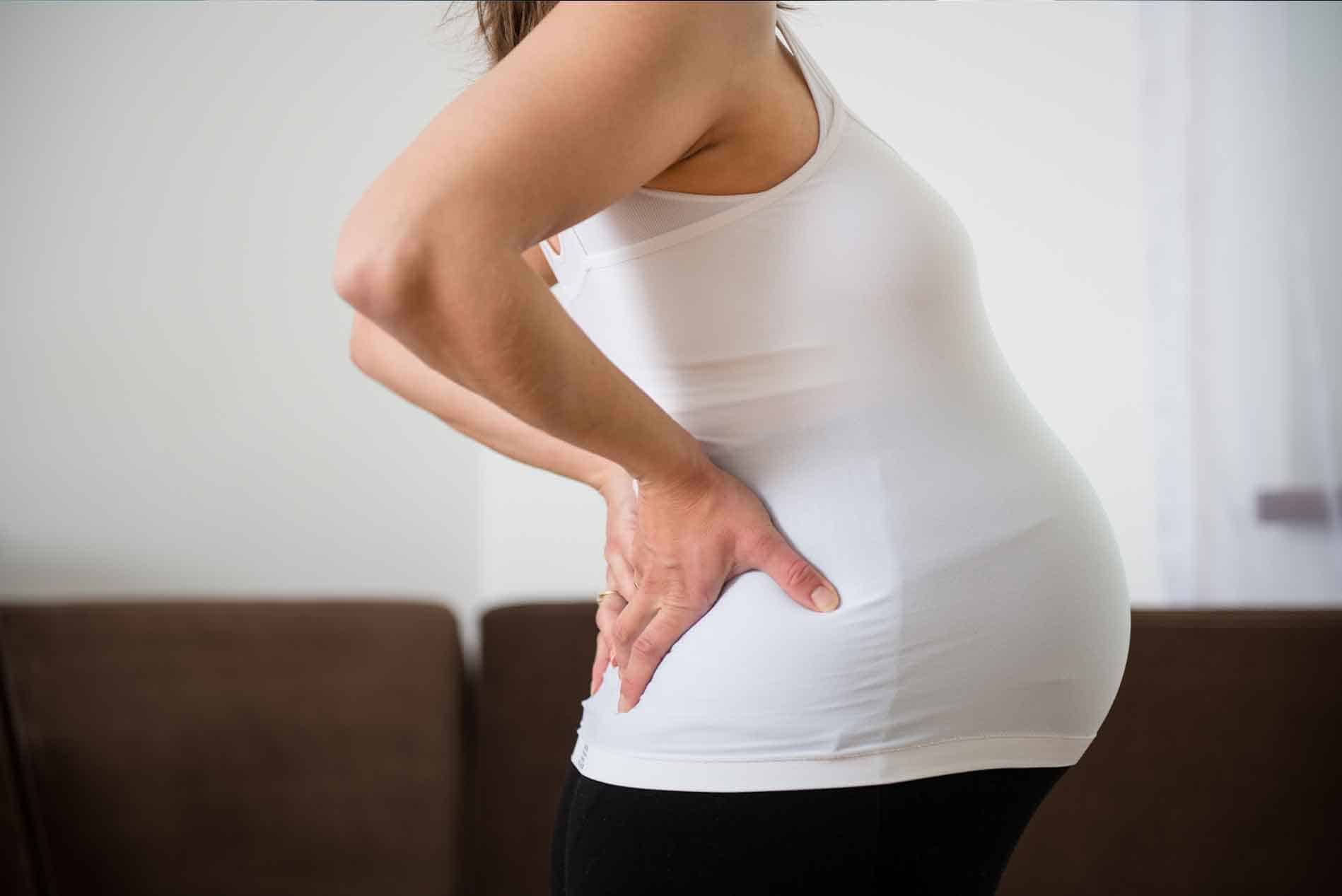
You may think that back pain in pregnancy is just one of those things you have to put up with but it can be severe and debilitating, preventing sleep and causing stress. At Blackberry Clinic we can offer help and advice to pregnant patients with back pain. This article aims to explain some of the causes of back pain in pregnancy, but we would recommend if you are suffering with back pain in pregnancy you should book in to see one of our practitioners. Shelley Terry, our chiropractor at Blackberry Clinic Milton Keynes has a special interest in this subject and is a highly experienced practitioner.
Back pain during pregnancy affects around 50% of women, and some studies suggest that percentage is even higher. Back pain experienced during pregnancy is normally as a result of changes in the body to compensate for the growing foetus. Leg pain during pregnancy is even more common than low back pain (LBP), and is also due to changes in the mechanical stresses on the vertebrae at the base of the spine [just above your tailbone (coccyx)]. The following article gives information on why these changes take place, suggests treatment options and gives advice on how to relieve the pain as well as the stresses on the body that are likely to cause pain.
INTRODUCTION
As the foetus develops during pregnancy and becomes heavier, your body posture adapts in order for you to maintain your balance when you are standing up. This change in weight distribution puts more pressure on the soft tissue structures (muscles and ligaments) in your lower back and may lead to you experiencing either low back pain (LBP) or leg pain during your pregnancy. In addition, the stomach muscles become weaker as a result of the increasing stretch of the growing foetus and they lose some of their ability to distribute the increasing weight and maintain a normal neutral posture. As pregnancy continues, the production of the hormone relaxin increases by about ten times its normal pre-pregnancy amount, which increases joint laxity to allow the pelvis to accommodate the growing baby. Unfortunately this can also weaken the static supports in the lumbar spine (lower back) and their ability to resist shearing forces, which then may result in pain from the facet joints of the vertebrae and the associated soft tissues such as muscles and ligaments in the area.
TYPES OF PAIN
The most common forms of LBP during pregnancy can be classified into 3 types:
1. LBP in the lumbar spine – around the lower curve (lumbar lordosis) of the back.
2. Leg pain around the back of your buttocks (sacroiliac pain) and potentially down to your hamstrings – this is four times more likely to occur than LBP.
3. Back pain that occurs at night time when you are lying down.
TREATMENT OPTIONS
Women who are physically active (engage in 45 minutes or more of physical activity per week) before they become pregnant are less likely to develop LBP during pregnancy; however, this does not seem to reduce the risk of sacroiliac pain. The weight gain and changes in hormone levels will put more strain on your lower back and pelvis at the same time as the ligaments and joints become more lax, so it’s important to minimise and manage mechanical stresses to the lower back. This means understanding what good (neutral) posture is, and being conscious of keeping this neutral posture as much as possible, particularly when you are going about your normal daily activities: for example, lifting items, playing sport, moving wet clothes from washing machines, carrying shopping, etc.
A NEUTRAL POSTURE IN STANDING INVOLVES:
Equal pressure distributed through both feet
Making sure you’re not tipping forward or leaning backwards as you stand
Feet hip-width apart (so you can run a straight line down from your hip, through your knee to your foot)
Drawing the shoulders back and down slightly
Lifting your chin so it’s not tilted down (imagine you have a grapefruit under your chin)
A NEUTRAL POSTURE IN SITTING INVOLVES:
Feet on the floor (or footrest)
Hips slightly higher than the knees
Lumbar area (low back) supported
Head / neck / shoulders / elbows / hips align and shoulders relaxed
Elbows bent at 100° or more
Wrists straight
Fingers slightly curled and relaxed.
WHAT TO AVOID
Heels – shoes with heels accentuate the curve in your lower back and increase the stress on the facets of your vertebrae.
Standing for long periods of time – this also increases the lumbar lordosis (curve of your lower back) – placing one foot on a stool can help.
Sitting for long periods of time – again resting one foot on a stool can help relax the muscle (iliopsoas) that increases this lumbar lordosis.
SEEKING PROFESSIONAL HELP
A programme of exercises is one of the most helpful things you can do but it is important that you know how to perform these exercises correctly so that you don’t increase stress on your back. A therapist can help advise on what exercises would help you most. It may also be helpful for the therapist to watch you doing your usual daily activities, for example using appliances in your house or replicating activities that you do regularly so that they can give you tips on how to keep a neutral spine as you do them. A range of manual treatment techniques are suitable for treating musculoskeletal problems in the pregnant patient and can be used to provide comfort and pain relief. These techniques, along with sleeping advice, exercise and postural advice, provide pain relief whilst coping with the changes the body undergoes during pregnancy.
Manual therapies provide a safe, gentle, drug free alternative for the relief of discomfort during pregnancy and can play an important role in ensuring that your body and spine are functioning normally. This can result in less pain for the mother to be and more room for the developing baby so that both mother and baby experience less physical and emotional stress. It may also be helpful to use heat or ice (on your back or buttock) for pain relief and this will depend on which application works best for you. You should only take medication as directed by your general practitioner.
A FINAL WORD
Unfortunately no known exercise regimen completely protects you against LBP during pregnancy but with advanced planning, exercise and awareness, there are many ways to help prevent or alleviate it. It is always worth seeking an assessment and appropriate advice and treatment from one of our physiotherapists, osteopaths or chiropractors.
The information contained in this article is intended as general guidance and information only and should not be relied upon as a basis for planning individual medical care or as a substitute for specialist medical advice in each individual case. To the extent permissible by law, the publisher, editors and contributors accept no liability for any loss, injury or damage howsoever incurred (including negligence) as a consequence, whether directly or indirectly, of the use by any person of the contents of this article. (Co Kinetic and Blackberry Clinic Group Ltd)