

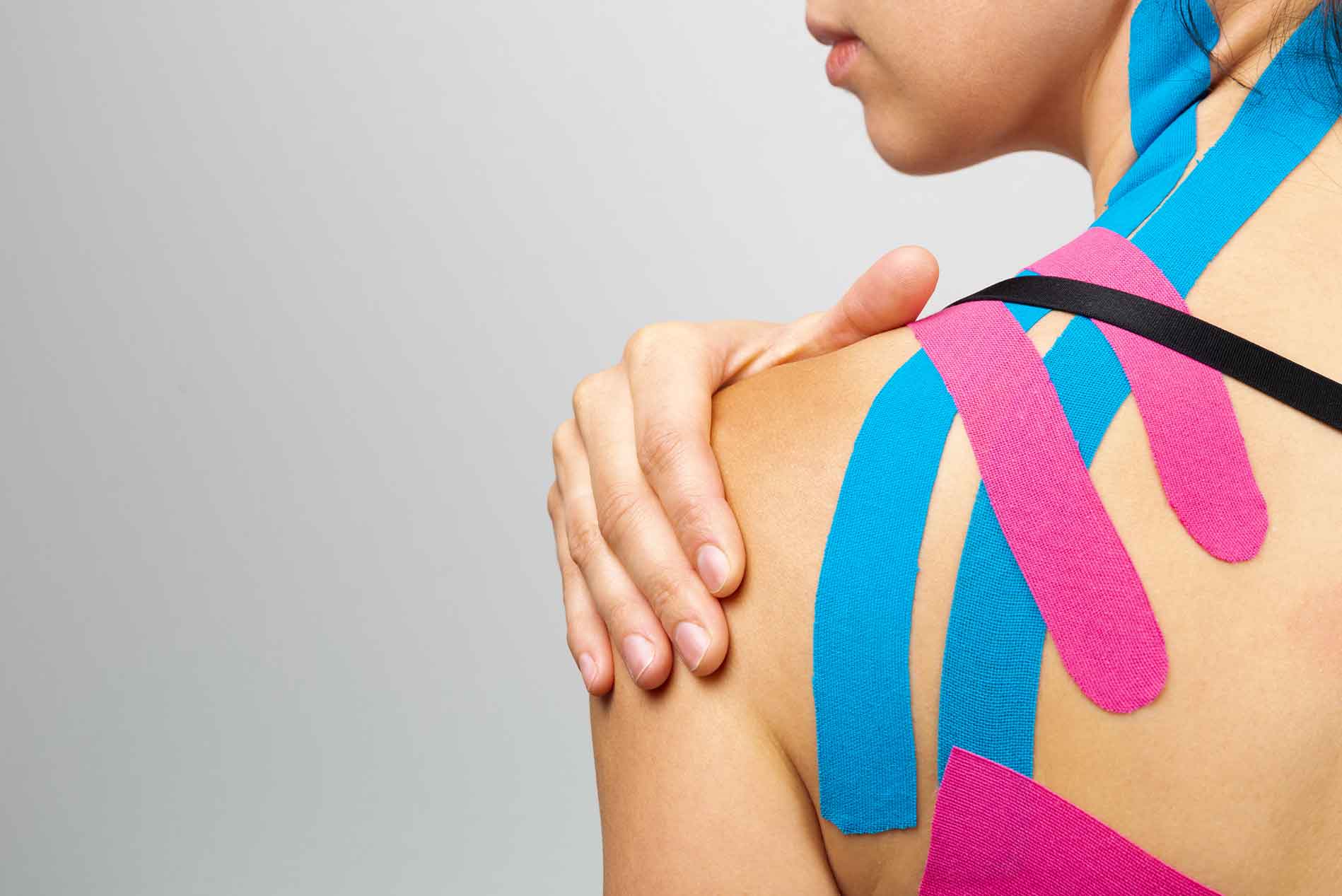
Do you ever wonder why you may come home from your physio appointment covered in bits of sticky and possibly bright blue tape? This is because taping is a useful tool to aid the healing process or prevent further injury.
There are various methods and types of tape that are widely used by both the sporting and the non-sporting population. Taping can be used for conditions such as muscle imbalance, unstable joints, impaired neural control or acute injury.
The tape aids recovery by supporting and protecting the injured structures from further stress; encourage the use of certain muscles or increase proprioception and joint function.
Our practitioners have been discussing their taping techniques using both the traditional rigid tape and also the very popular kinesiology tape.
In addition to the above, ‘K-tape’ as it is affectionately known, can be used for the regulation of myofascial tension; improvement of circulation and lymph drainage; increase range of movement and the treatment of trigger points.
For example, taping is often used for patellar tendinitis, this is one of the most simple taping techniques. Tape is applied just below the knee, compressing the patellar tendon which will change the angle and alter the force going through the tendon, alleviating the stress on the painful part of the tendon.
This type of taping may be used if you have been diagnosed with patellar tendinopathy or ‘jumper’s knee’ or Osgood Schlatter syndrome which is common in young athletes aged 7 to 16.

Anatomy of the knee, showing the patellar tendon inserting into the tibia
If you sprain your ankle or have instability in your ankle, taping can help to make you more comfortable as the healing process starts and it can work to stabilise your ankle too, to prevent further injury. There are lots of ways to tape an ankle. They include figure of eight, heel lock, stirrup and basket weave. Each type of taping will be chosen by your therapist, depending on which part of the ankle needs support and which ligaments are injured.
At Blackberry Clinic we treat all types of sports injuries, back pain, joint pain and muscle tears and strains. You may end up covered with bits of tape but come along and see how we can help. Our sole aim is to help you get back to a pain free life, return to sport and enjoy full fitness as quickly as possible.