

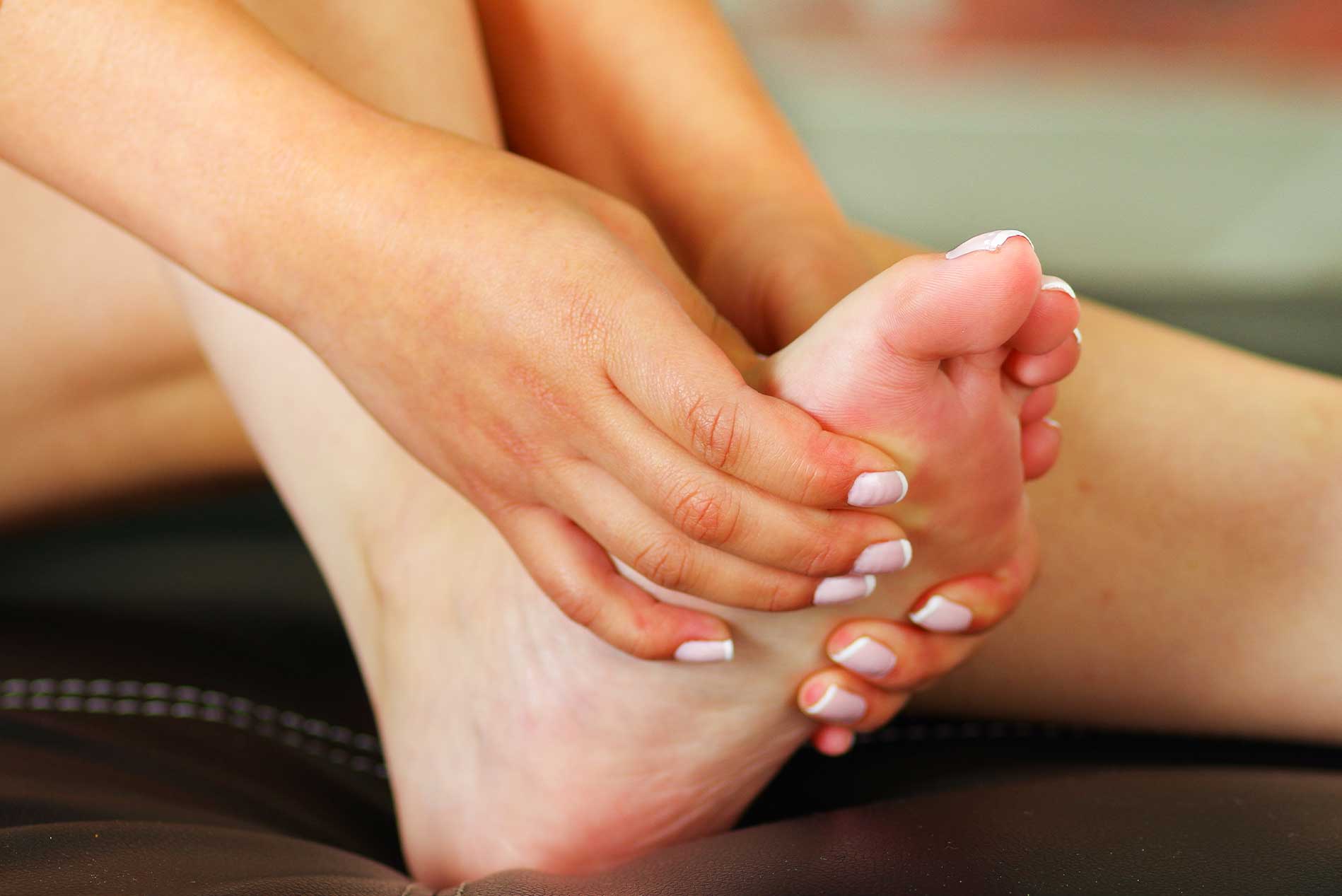
At Blackberry Clinic all our practitioners can diagnose and treat Plantar Fasciitis and if manual therapy is not working they may suggest Phits Orthotics which insert into your shoes to correct your foot position. These are custom made orthotics that are bespoke for you and the shape of your foot. You will undergo a full assessment and gait analysis and the physio can show you where the mechanical imbalances in your foot are that may be causing the inflammation. Further treatment can be offered in the form of injections which are for severe cases that do not respond to manual therapy. Read this article to learn more about Plantar Fasciitis and download the article for exercises which may help. However, we strongly suggest that you seek treatment first from one of our practitioners to make sure you have the correct diagnosis and that you don’t do exercises which may aggravate your condition.
Shelley Terry and Milly Dalton, our Phits certified experts are based at Blackberry Clinic Milton Keynes where we have a gait analysis lab for consultations and measurements.
THE INJURY
It’s not surprising that about 15% of all running injuries strike the foot. With each step your feet absorb a force several times your body weight. While the foot is in motion during running, the plantar fascia, a thick elastic tissue that stretches from the heel to the base of the toes, works with the Achilles tendon to store and return energy. Because of this powerful attachment, the plantar fascia stabilises the inner forefoot as forces peak during push-off at the end of a stride. Unlike bone spurs and stress fractures of the heel, plantar fasciitis tends to produce pain during the push-off phase while running, and not during initial contact when the foot lands on the ground. Recent research has shown it to be similar to a tendinopathy, where there is a degenerative process involved, including features of collagen breakdown, calcification, nerve and vascular ingrowth. This is why it can sometimes be referred to as plantar fasciopathy.
THE SYMPTOMS
A sharp stabbing pain or deep ache in the arch of your foot or in the middle of the bottom of your heel.
Stiffness or pain first thing in the morning (especially when you first get out of bed) that tends to lessen a bit with a few steps, but also tends to worsen as the day progresses and your body fatigues.
Pain that worsens when climbing the stairs or standing on one’s toes.
It is a notoriously nagging injury, and running through it, while possible, can delay healing. Often once you have warmed up and started running the pain eases only to return towards the end of a long run or later that day. Take care, this can become a vicious cycle.
THE CAUSE
Plantar fasciitis may result from a variety of factors, such as overtraining, doing vigorous repeated hill workouts or speed work, neglecting to stretch tight calf muscles, wearing unsupportive shoes, starting a running programme too aggressively or a general lack of foot strength.
It can also be attributed to biomechanical factors such as fallen arches. The excessive lowering of the arch in flat-footed runners increases tension in the plantar fascia and overloads the attachment of the plantar fascia to the heel bone, leading to eventual inflammation. Other biomechanical factors include an inward twisting or rolling of the foot (pronation) and tight tendons the back of the heel (Achilles tendon), with reduced ankle dorsiflexion (upward movement of the ankle) and poor foot flexion and eversion (twisting ankle outwards) strength.
THE FIX
Plantar fasciitis is considered a self-limiting condition of variable duration. With treatment, symptoms usually improve over 3-6 months. However, patients performing prolonged standing and painful loading of the tissue may require longer, up to 9 or 12 months.
Treatment includes mobilising tight structures and fascia and strengthening the foot muscles:
1. Lightly stretching and mobilising the fascia throughout the day by, rolling your foot over a golf ball or over a frozen water bottle. Manually stretching your foot by pulling your toes back is particularly useful first thing in the morning.
2. Wear supportive footwear with enough shock-absorbing cushioning through the day and avoid prolonged standing, especially on hard surfaces.
3. Physical therapy to mobilise and release tightened fascia on the foot, as well as the ankle joint, calf and Achilles tendon.
4. Massage therapy to release tight structures of the lower limb and foot.
5. Night splints (including the Strassburg Sock), which holds the foot with the toes pointed up and the ankle at a 90-degree angle, can reduce morning symptoms
6. Performing prescribed stretching and strengthening exercise for the foot and the hip/pelvis and your core.
7. Crosstrain with water running, swimming, ellipticaland cycling.
8. For severe cases surgery may be required to release the fascia, but this is needed in less than 5% of cases.
THE PREVENTION
Run on a variety of surfaces, especially softer surfaces such as dirt paths, grass or trails, rather than concrete or tarmac. Make sure your running shoes are the right fit and support for your gait by going to a speciality running store and getting a properly fitted pair. Ensure your training programme is right for your ability. Lastly, foot-strengthening exercises can go a long way to reducing future injuries. Tight hip flexors, a weak core and a history of low back pain can all contribute to injury – any of these issues can lead to subtle changes in your stride that you’ll feel in your feet. Have these issues addressed with physical therapy and a rehabilitation programme. Download the leaflet for an example of the exercises you may be given. We do not advocate that you do the exercises without having a full assessment and diagnosis from a professional.
Download Plantar Fasciitis for Runners Guide