

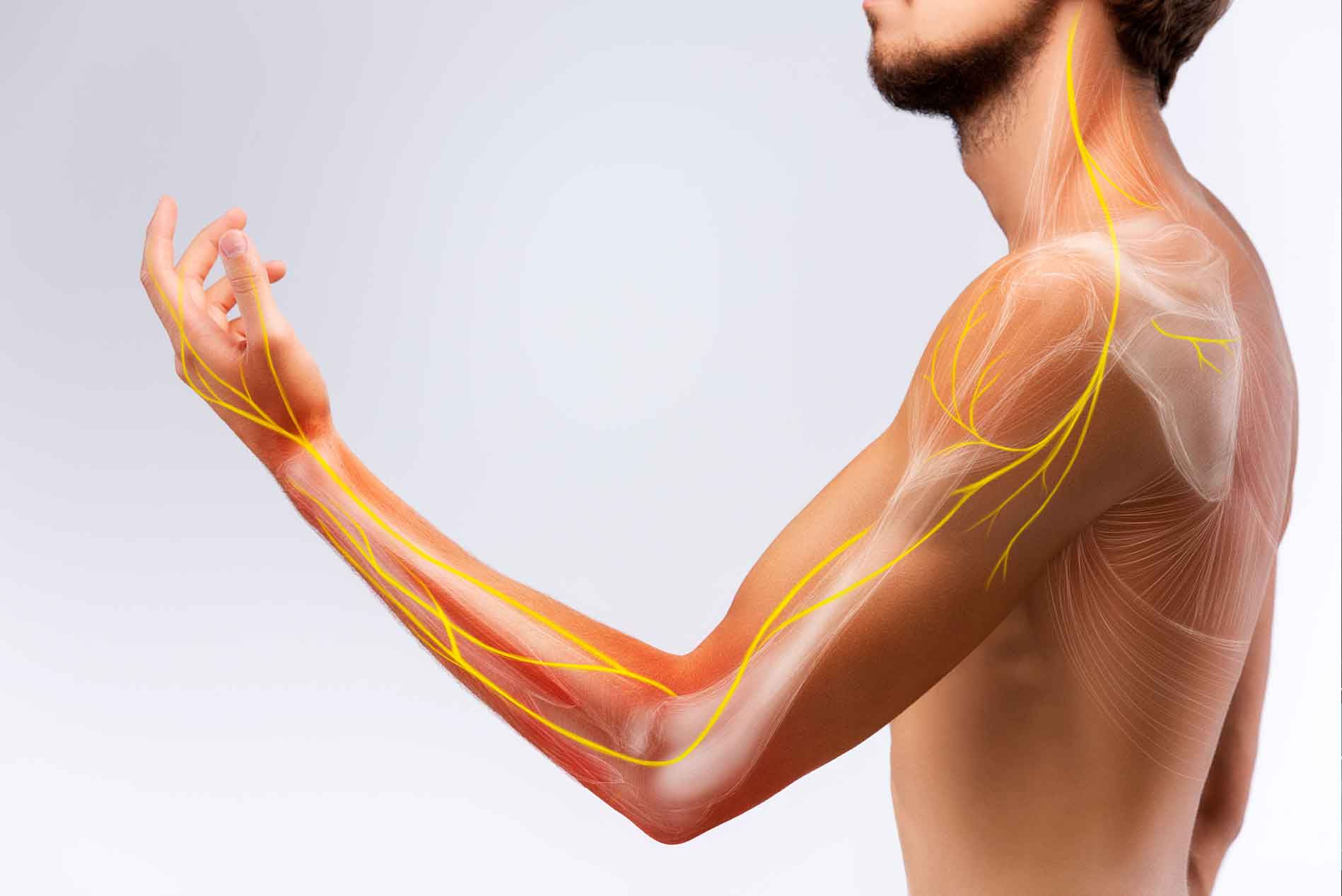
At Blackberry Clinic we see a huge variety of conditions requiring various types of treatments. Our team of Musculoskeletal and Sport and Exercise Medicine doctors, Pain Clinic Doctors, Physiotherapists, Osteopaths and Chiropractor are all experienced in examination and assessment, offering accurate diagnoses for the best possible outcome.
Jordan Smith, one of our physiotherapists at Milton Keynes outlines here some facts about Thoracic Outlet Syndrome which can be treated at Blackberry Clinic using manual therapy, mobilisation and other modalities including Connect Therapy and the Thoracic Ring Approach which is offered by Mark Suttie.
Thoracic Outlet Syndrome (TOS) refers to the compression of nerves and blood vessels that exit through the thoracic outlet region. This area sits just behind and below your clavicle (collarbone) either side. The condition is sub-divided into Arterial TOS (ATOS), Venous TOS (VTOS) and Neurogenic TOS (NTOS) depending on what structures are compromised.
There are numerous factors which may work individually or collectively to bring about thoracic outlet syndrome. These may include the presence of a cervical rib, shortening of surrounding muscles such as the pectorals due to posture, trauma to the clavicle and shoulder joint as well as hypermobility.
For the majority of TOS cases, there is little to be concerned about. With the appropriate conservative management of physical activity and hands on treatment, TOS can be resolved. However, in more severe and persistent cases, the use of medication and/or surgical intervention may be required.
TOS affects approximately 8% of the population with women 3-4 times more likely to experience TOS over their male counterparts with the mean age being 30-40 years old. Young adult athletes who perform vigorous arm activity under heavy load and repetition are also more likely to develop TOS. Females tend to have less developed muscles, drooping shoulders owing to additional breast tissue as well as an anatomically lower sternum resulting in an increased likelihood of thoracic outlet narrowing. A majority of cases are NTOS (95-95%) with the remaining 2-5% being either ATOS or VTOS.
Signs and Symptoms:
Due to the nature of TOS as a condition, the signs and symptoms vary person to person. It’s easy to jump the gun and immediately assume TOS, however it’s important to stay mindful of the low prevalence and severity rates of this condition. This means it is more likely to be something else related to the shoulder and arm.
· Pain in hand
· Pallor
· Cold intolerance
· Swollen arm – in particular lower portion
· Loss of sensation in arm/s or the arm feeling heavy, weak or fatigued constantly
· Loss of fine motor skills in the hand
· Occipital headaches
· Worsens when in a prolonged position and eases when exiting that position
· Sudden onset of signs and symptoms
If you are experiencing any of the listed signs and symptoms above, it is advisable that you seek a professional assessment and opinion from a healthcare practitioner. At Blackberry Clinic, our practitioners can provide you with an appropriate diagnosis and treatment plan whether you have TOS or another musculoskeletal condition causing you pain and discomfort.
Jordan Smith
Physiotherapist
Blackberry Clinic Milton Keynes