

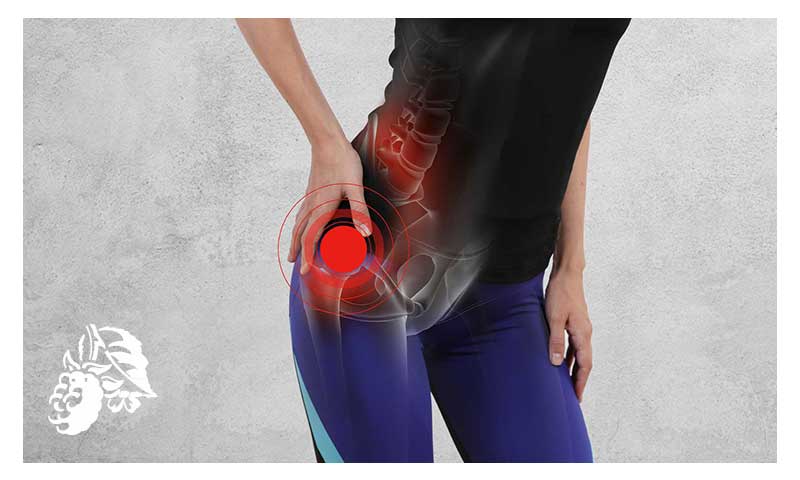
At our Blackberry Clinics we have a range of practitioners and doctors who can diagnose a huge range of conditions causing musculoskeletal pain. One of these conditions is described below by Thanasis, one of our physios at Blackberry Clinic Milton Keynes. If you have painful symptoms that are limiting your physical ability and activities, don’t just put up with it in the hope it will eventually go away! It might, but then it may come back and become a chronic problem that is harder to treat. Come and get a thorough examination and diagnosis from our experts at Blackberry Clinic, they will set you on the road to recovery.
Read Thanasis’ article below:
Greater Trochanteric Pain Syndrome (GTPS), previously known as trochanteric bursitis, affects 1.8 per 1000 patients annually, and can have a significant negative effect on work, physical activity and quality of life.
GTPS results from degenerative changes affecting the gluteal tendons and bursa. Pain over the lateral aspect of the thigh, that is exacerbated with prolonged sitting, climbing stairs, high impact physical activity, or lying over the affected area, is the main symptom someone might experience with Greater Trochanteric Pain Syndrome.
GTPS contains a range of causes, including the gluteal tendinopathy, trochanteric bursitis, and external coxa saltans (“snapping hip”).
The literature review states the following main causative factors.
- Repetitive activity
- Training errors: high-intensity training, high mileage
- Sedentary lifestyle
- Mechanical overload
- Scoliosis
- Leg length discrepancy
- Altered cellular response/failed healing
- Increased adiposity
Cited in a Journal of Sports Medicine, it is believed that the evolution of tendinopathy is caused by repetitive microtrauma, especially when an abnormal pelvic width is present. Additionally, studies have shown that GTPS has a strong correlation with female gender and obesity.
In order to diagnose GTPS, the practitioners rely on the history of the condition and the physical examination, and also on Ultrasound and MRI diagnostics as second-line investigations.
The initial approach to treat GTPS includes a range of conservative interventions such as activity modification, physiotherapy, pain-relief and anti-inflammatory medication, shockwave therapy (SWT), local corticosteroid injection, PRP injection, weight reduction, stress management and management of underlying related conditions.
Most cases resolve with conservative measures, with success rates of over 90%. Despite the good prognosis with conservative treatment and time, some patients may require surgical intervention.
Studies reviewed for the above article
- Laura Pumarejo Gomez; John M. Childress. Greater Trochanteric Syndrome.STAT PEARLS. May 6, 2020.
- Sara Steinmann et al. Spectrum of Tendon Pathologies: Triggers, Trails and End-State. Int. J. Mol. Sci. 2020, 21(3), 844.
- Christopher JB Speers,Gurjit S Bhogal. Greater trochanteric pain syndrome: a review of diagnosis and management in general practice. Br J Gen Pract. 2017 Oct; 67(663): 479–480.
- Paul A Barratt et al. Conservative treatments for greater trochanteric pain syndrome: a systematic review. Br J Sports Med. 2017 Jan;51(2):97-104.
- Yi-Meng Yen et al. Understanding and Treating the Snapping Hip. Sports Med Arthrosc. 2015 Dec; 23(4): 194–199.