

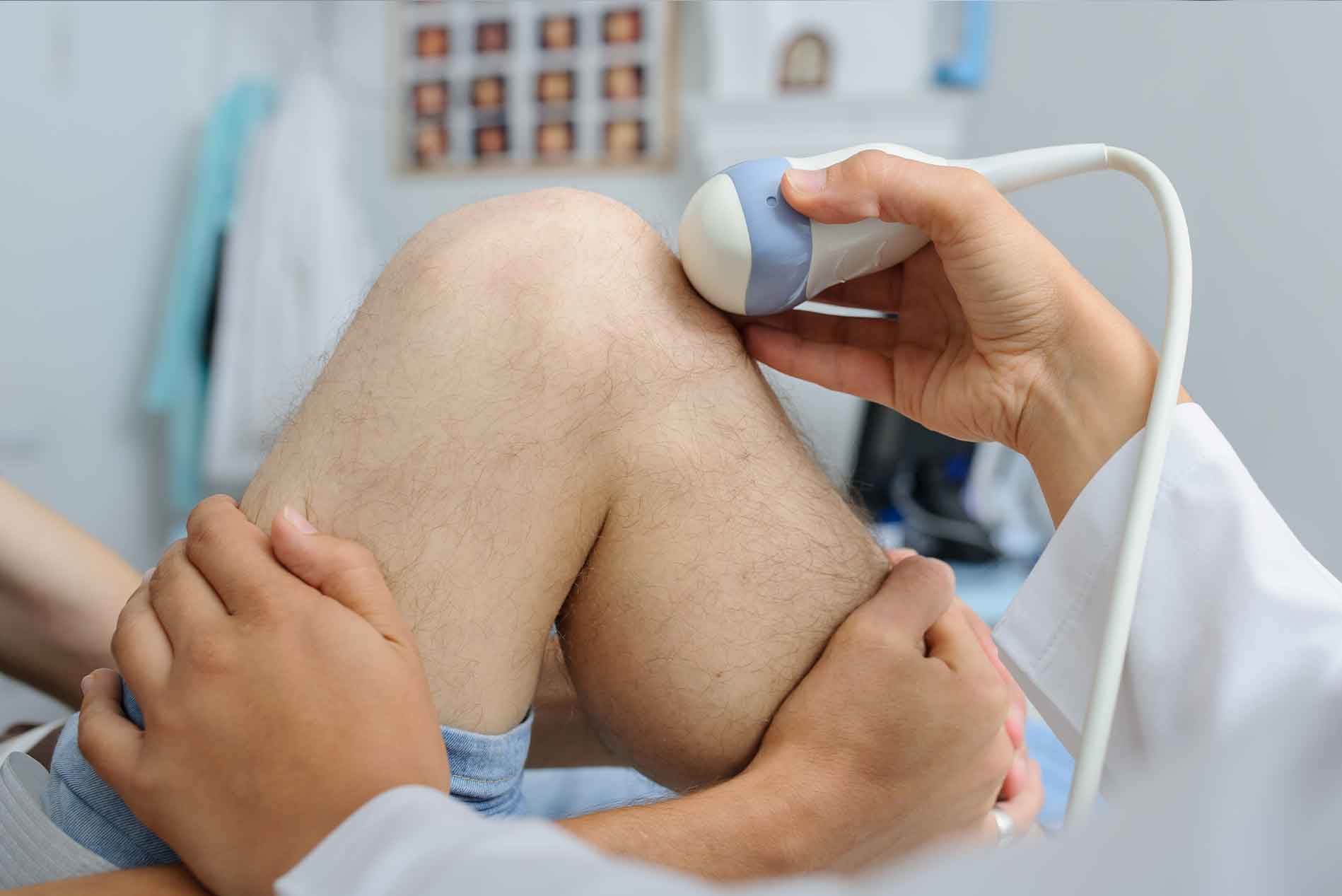
Our physiotherapists, osteopaths and chiropractors are able to treat all kinds of musculoskeletal conditions including knee ligament injury. Our Sport & Exercise Medicine and Musculoskeletal Medicine Doctors are also experts in this field and an appointment with them may be required for more serious ligament injuries.
Most knee ligament injuries resolve well with conservative management, however, surgery may be considered if there is significant ligament disruption with instability, for example a Grade III sprain. Surgery may also be required if there are significant combination injuries involving the cruciate ligament and/or meniscus. In these cases a knee specialist will guide the need for surgery. Successful surgical outcome depends on completion of a full rehabilitation programme with your physical therapist. Surgery alone does not guarantee you a full (or faster) return to preinjury sporting prowess.
REHABILITATION OF THE KNEE
The most successful and quickest outcomes result from the guidance and supervision of an experienced sports physical therapist. Whether it is conservative management or following knee surgery, focus on restoring full knee motion, strength, power and endurance are crucial. You’ll also require balance, proprioception and agility retraining that is individualised towards your specific sporting or functional needs.
WHAT DOES ALL THIS MEAN?
Consider a body builder – he may have done some serious strength training in his life but essentially moves like a brick. However if you watch a sport like rugby, your body not only has to be strong, but also has to move fluidly, bend, rotate, and be co-ordinated, quite the opposite of a body builder. So don’t be mistaken that rehabilitation means multiple repetitions with heavy weights in a gym. Proprioception is the sense of knowing where your body part is in space. This can be a difficult concept to grasp until you lose it, because so much proprioception occurs subconsciously.
Proprioceptive and balance exercises teach your body to control the position of a deficient (unstable) or an injured joint. When recovering from an injury or surgery, it is important that a careful post-operative or post-injury programme be planned. All the caution and careful rehabilitation in the world cannot account for what will actually take place out on the field. Having a knee
joint that is well-conditioned and responsive to unexpected movements or impacts may help prevent an injury.
Agility and sports-specific exercises aid in the development of improved quickness and speed required for your return to sport. Drills that replicate what will be required ofyour body and knee once back on the field of play.
Biomechanics is the study of human motion, and plays a huge role in determining what causes injuries. The way your foot and ankle move in relation to your leg, hips, pelvis and lower back can all impact on your knee alignment and therefore load/stress. Your therapist may assess your posture, both standing, walking and running to see how everything works in relation to each other and prescribe you orthotics and or strengthening or stretching exercises to ‘balance’ out your movements.
HOW TO PREVENT RECURRENCE OF MCL OR LCL INJURIES?
● A knee strengthening, agility and proprioceptive training programme is the best way to reduce your chance of a knee ligament sprain.
● Premature return to high-risk activities such as contact sports are best discussed with your physical therapist or surgeon, as too soon may result in re-injury.
● Biomechanical assessment, as mentioned above, may determine what is weak or tight, rotated in or out, flat or sluggish.
In sport, no muscle or joint moves in isolation, it requires a very well-conducted and orchestrated collaboration between the brain, nerves, your eyes and ears, limbs and trunk with any one component being out of tune disrupting the melody and causing injury. Be proactive and address any imbalances prior to sustaining an injury. Prevention is definitely better than a cure.
The information contained in this article is intended as general guidance and information only and should not be relied upon as a basis for planning
individual medical care or as a substitute for specialist medical advice in each individual case. ©Co-Kinetic 2019/Blackberry Clinic 2021