

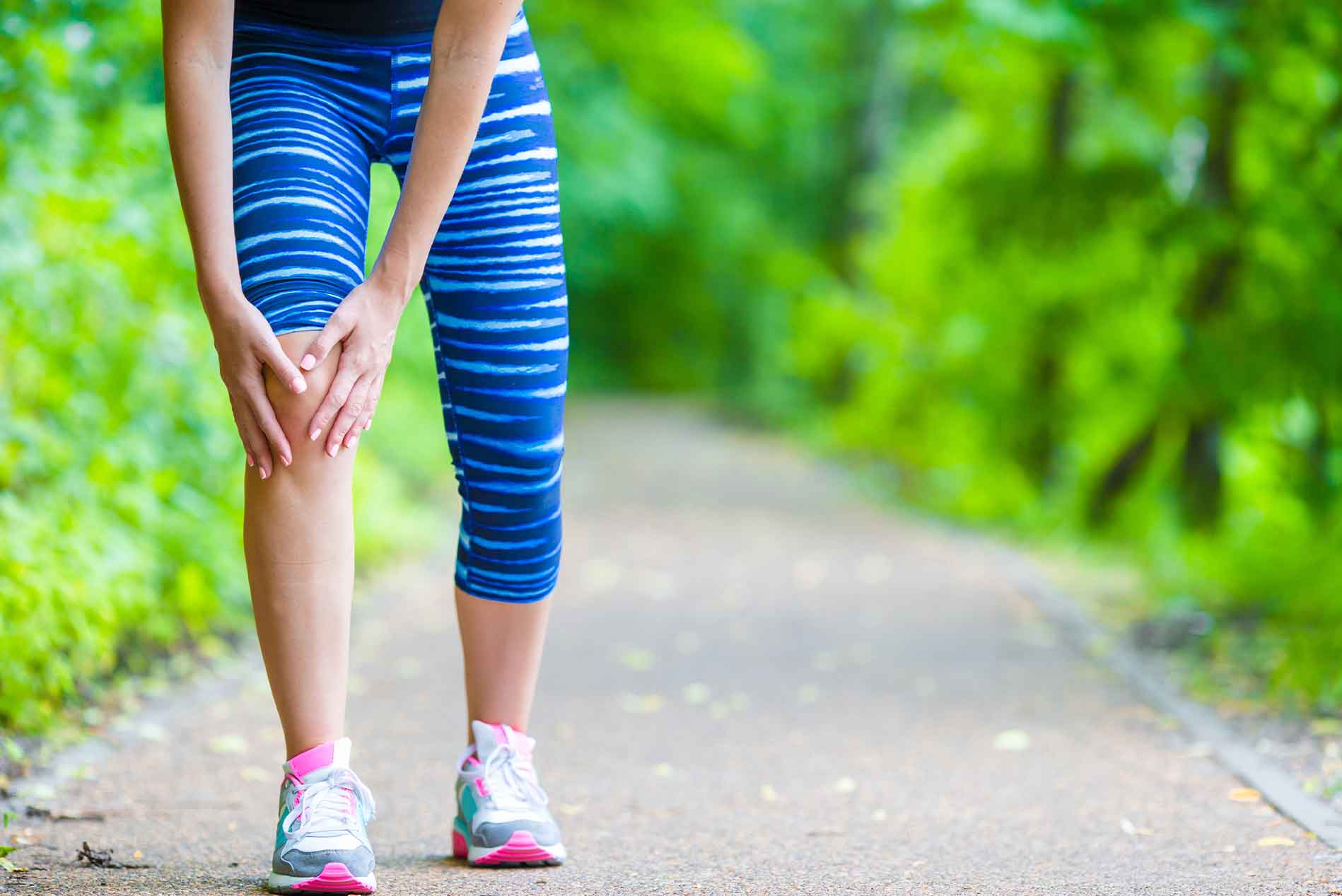
Patellar tendon pain, commonly also referred to a patellar tendinopathy, patellar tendonosis or patellar tendonitis occurs because your patellar tendon becomes overstressed. The different suffixes actually describe different states of the tendon. The suffix “osis” refers to long-term degeneration of the tendon usually without inflammation, ‘itis’ refers to a more acute inflammation stage and ‘opothy’ refers to general degeneration of a tendon.
WHAT IS PATELLAR TENDON PAIN?
Do you suffer from sharp pain on, or just below, the knee cap during physical activity, occasionally followed by a dull ache for some time after the activity? Do you feel stiffness in the knee, like a tight band is restricting movement, especially when bending the knee? And you can’t really remember a specific incident that trigged the pain, but instead the pain has been developing slowly over the past few weeks? If so, the chances are you probably have patellar tendon pain, commonly also called patellar tendinopathy, patellar tendonosis or patellar tendonitis. It occurs because your patellar tendon becomes overstressed. This occurs frequently in athletes involved in ‘jumping’ sports (hence why it is often nicknamed Jumper’s Knee).
HOW DOES PATELLAR TENDONITIS HAPPEN?
The patellar tendon runs from the bottom border of the kneecap (patella bone) and attaches to the shin bone (tibia). It acts as an extension of the thigh muscles and works to straighten the knee by transferring forces from the thigh muscles (quadriceps). The tendon works hard during activities like jumping, landing, and squatting and is therefore common in athletes who sports like basketball, volleyball, netball, or participate in ballet or running. But you don’t have to be an athlete to have patellar tendon pain, simple daily chores of climbing stairs, repetitive kneeling down at home or at work could also cause patellar tendinopathy.
HOW BAD IS MY INJURY?
Patellar tendon pain may seem like a simple injury because it’s easy to pin point the exact location of the pain but it is actually a relatively complex injury, and the pain is usually a symptom of a bigger underlying problem. The severity of the injury is often graded by a physical therapist, from grade 1; only having pain after exercise to grade 4; pain persisting throughout daily activities. This helps you and the physical therapist to understand the extent of the damage and to estimate the recovery period. If you don’t manage the condition correctly the pain could persist for months and prolong your return to sport or exercise. Long term knee pain may also result in weakening and wasting of the surrounding thigh muscles and reduce your mobility further. Patellar
tendinopathy frequently recurs if the underlying cause of the problem is not treated which makes it very difficult to treat properly without the input of a physical therapist.
WHAT CAN BE DONE ABOUT MY KNEE PAIN?
Patellar tendon pain can be very restricting and frustrating as the pain can linger for weeks. It’s possible that you won’t need complete rest and may not have to stop exercise all together. With a little self-discipline and help from one of our Blackberry Clinic therapists, your patellar tendon pain could be resolved in a matter of weeks.
Initial treatments may focus on pain relief. Massage therapy to the tendon and surrounding thigh muscles can promote the repair process and decrease pain. Manual therapy can be performed to stretch tight muscles surrounding the knee and relieve stiffness in the joint.
Taping or strapping can relieve pain in the short term, your therapist can apply this or teach you how to do it. Knee braces can also be helpful in pain relief.
Treatments will then focus on rehabilitation. This is the important part where you can take control of your recovery. The entire lower limb, from your pelvis to your foot needs to work together with the knee to withstand the forces of daily activities and exercise. So, strengthening weak calf, thigh and/or buttock muscles will help reduce the burden on the patellar tendon.
Your therapist will give you daily exercises to do that will progress in difficulty as your symptoms improve. Making sure your leg is well aligned will also ensure each muscle and joint is working together harmoniously. This may require stretching exercises to lengthen tight muscles.
You may require orthotics which will give your leg better support and alignment. At Blackberry Clinic Milton Keynes we offer bespoke custom made 3D printed orthotics – PHITS Orthotics.
Talk to your therapist about training intensity, what surface you are training on and your technique, as these can all contribute to the problem. Sudden increases in training intensity and/or training on hard surfaces increase the impact on the knee and can cause patellar tendon pain. Small changes in your training can help speed up recovery and prevent recurrence of the injury. If you believe your injury is from work or home, ask for advice on how this can be resolved.
Patellar tendon pain is not something you have to live with and accept. With some help and advice, you can be pain-free.
The information contained in this article is intended as general guidance and information only and should not be relied upon as a basis for planning
individual medical care or as a substitute for specialist medical advice in each individual case. Blackberry Clinic 2021