

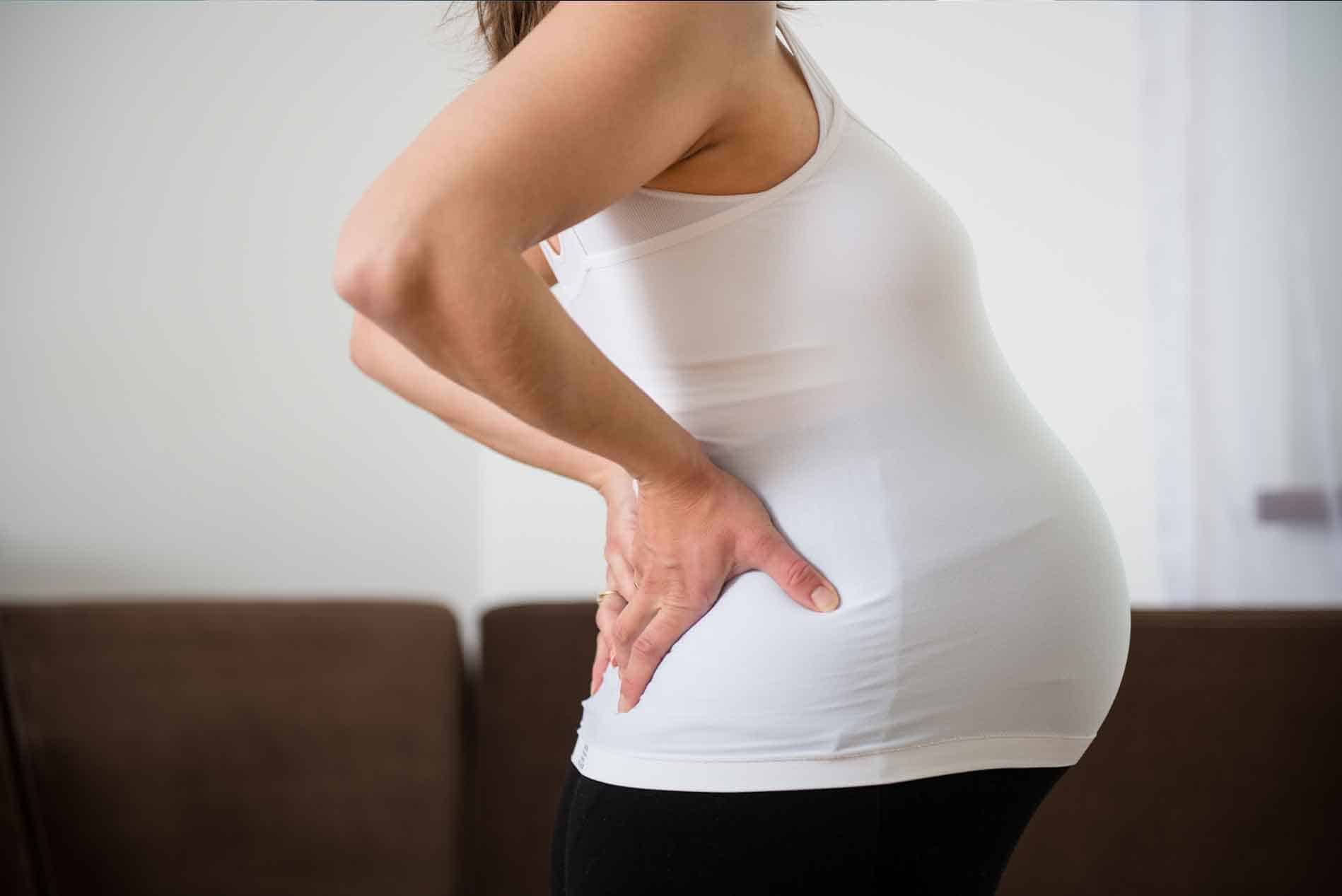
At Blackberry Clinic we often see pregnant women who are suffering from back pain. There are gentle and effective treatments available from our chiropractors, physios and osteopaths as well as our musculoskeletal medicine doctors and pain management doctors for more severe and chronic problems.
Back pain in pregnancy – Top tips!
Back pain is very common in pregnant women, it affects 50-80%, however only 10% of these have severe pains. Onset normally starts between the 5th and 7th months, but can be as early as 8 to 12 weeks. There is a higher incidence is women with pre-existing low back problems.
Pain presents in the lumbar region, often at the back of the pelvis. In more severe cases, pain can also extend down to the leg or foot.
What are the causes?
Increase in hormones
Support for the lumbar spine can reduce with the secretion pregnancy hormones. These hormones cause the pelvic ligaments to soften and therefore the joints to loosen.
Centre of gravity
As baby grows, the centre of gravity moves forwards. This results in postural changes.
Additional weight
The growth of baby adds additional weight that will need to be supported by the back.
Posture or position
In instances of poor posture or when standing excessively while pregnant, back pain can escalate.
Stress
Stress usually accumulates in weak areas of the body, therefore stress can reside in the pelvic area due to the increased pelvic mobility during pregnancy. This often increases back pain.
Tips to help:
Watch your posture – Use a chair with good support, a straight back and arms. A firm cushion and footrest can also be useful. Don’t cross your legs.
Take regular breaks – Walk or stand at least once an hour. A good mattress is also essential.
Avoid heavy lifting – if you do need to, do it slowly and stabilise yourself with a wide stance, bend at the knees (not the waist) and lift with your arms.
Maintain a healthy weight – A good balanced diet is essential to all rounded nutrition.
Wear good supportive footwear – A 2-inch heel is recommended, not high heels or completely flat shoes. Arch support and good heel control in a cushioned shoe is optimum. Avoid barefoot walking.
Use a stool – When reaching to high places don’t just reach out.
Regular exercise, mindfulness and relaxing practises – Pilates, yoga, walking, biking and swimming are all good practises. Pregnant women are advised to stick to 20-45 minutes of exercise 3-5x weekly. Stick within mild to moderate levels, avoiding exhaustion. Strengthening the stomach, with pelvic tilts for example, supports the lumbo-pelvic region. Exercise balls can also help.
Contrast hot and cold – Soothe sore muscles with cold compresses followed by warmth in 10 minute intervals. Also try massaging your back with the shower spray.
Soft tissue massage – Prenatal massage can be very helpful. Sports taping techniques can also increase lumbar support.
Disclaimer: The information contained in this article is intended as general guidance and information only and should not be relied upon as a basis for planning individual medical
care or as a substitute for specialist medical advice in each individual case. Blackberry Clinic 2021