

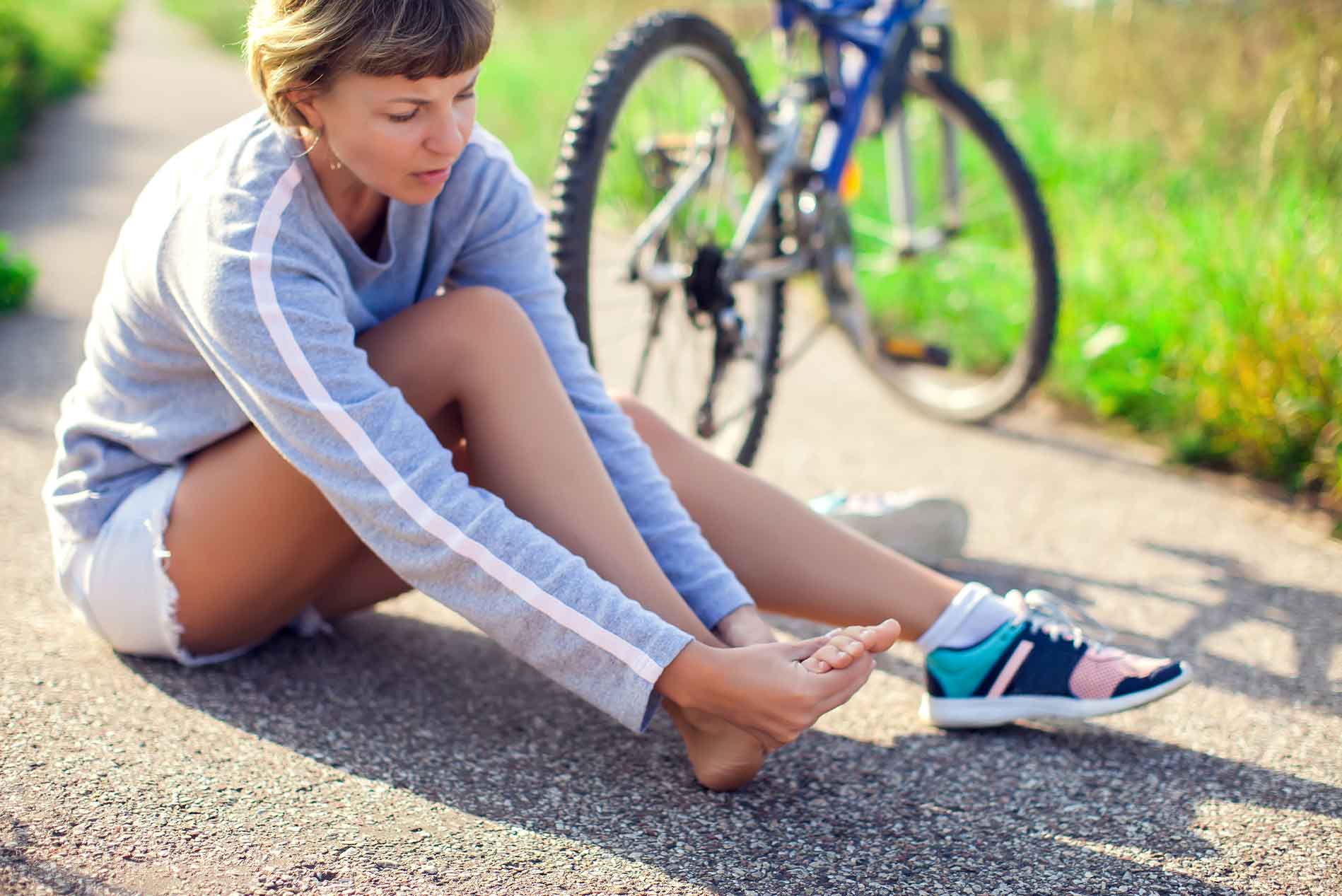
At Blackberry Clinic our sports and exercise medicine doctors, musculoskeletal medicine doctors and our physios, osteopaths and chiropractors are used to treating injuries in all parts of the body, in all levels of sports person. Sometimes it is general advice that can make all the difference, but often some treatment combined with the advice will be the answer for the optimum outcome. Metatarsalgia does not only occur in cyclists, if you think you may be suffering from this condition come and see us!
THE INJURY
Painful burning of the ball of the foot (also known as “hot foot” or metatarsalgia) is usually a result of hot weather and/or poorly fitting shoes on long, hilly rides. The hot burning sensation, numbness, and pain originates from the nerves supplying the toes. The nerves have to travel through a narrow space between the metatarsals (foot bones) and metatarsal heads (the foot’s ‘knuckles’, or ball of the foot), which is where you most often position your cleats. A combination of pressure and compression of the nerves, in one or both feet, triggers the symptoms. In addition, wearing inflexible shoes in which your feet swell (compressing the nerves further), complicates matters more. The longer and hotter the ride, the worse it usually is.
MANAGEMENT AND REHABILITATION
Nearly every solution to foot pain with cycling is aimed either at giving the nerves in your feet more space, or relieving pressure over the ball of the foot. Redistributing the pressure over the metatarsal heads can be achieved in a number of different ways, discussed below. If the symptoms are confined to one foot, and pain persists outside of cycling, it’s very occasionally due to a ‘Morton’s neuroma’ – a benign swelling around one of the plantar nerves that gets painfully compressed between the metatarsal heads. Specific treatment, including anti-inflammatory pain medication, steroid injection, insoles for everyday shoes and occasionally an excision, can fix the problem.
On completion of a ride, icing your feet, or rolling the sole of your foot over a frozen water bottle can help relieve the symptoms faster. Mobilising the soft tissues on the sole of your feet by gently massaging them or using a tennis ball or prickly ball can help alleviate the pain, improve circulation and reduce swelling. But really the treatment and prevention of ‘hot foot’ comes down to your cycling equipment.
PREVENTION
BIKE SET UP TIPS
Trying wider shoes with a roomier front end will prevent squashing your toes together and pinching the nerves between them. Loosening straps (even taking them off at café stops) may contribute to the solution. Buying new shoes towards the end of the day when your feet are most swollen is a good idea, too.
Before buying fancy new insoles it’s worth taking out your current insole and checking that there are no irregularities in the shoe bed pressing into the foot
(like cleat bolt holes).
Specifically-shaped shoe insoles can afford great relief. Look for those with a ‘metatarsal button’ – this is a small raised area just behind the ball of the foot that spreads the metatarsal heads apart to give the nerves more breathing space as they pass through the gaps. Insoles may also give more padding or cushioning to reduce pressure on the nerves.
Pay attention to socks, as different feet will be better off in different types. Thin, bony feet may need thicker socks for padding the ball of the foot, while bigger feet may benefit from thinner socks that leave more room inside the shoe. Additionally, thermoregulating socks may also help control ’hot-foot’ symptoms.
It can be worth experimenting with different pedal platforms. Switching to a larger platform pedal to more evenly distribute the pressure across your feet. Recessed mountain biking and commuting pedal and cleat combinations can be especially bad as they tend to have relatively small contact areas. For longer road rides, a dedicated road cleat and pedal set-up will be more comfortable.
A bit more contentious but definitely worth a try, is to move the cleats back as far as they will go (gradually, on both sides, and with a couple of millimetres drop in saddle height); some people even advocate drilling holes to move cleats back as far as 2cm. Moving them towards the heel may just take enough pressure off the forefoot to relieve the symptoms.
The information contained in this article is intended as general guidance and information only and should not be relied upon as a basis for planning individual medical
care or as a substitute for specialist medical advice in each individual case. ©Co-Kinetic 2018 Blackberry Clinic 2021