

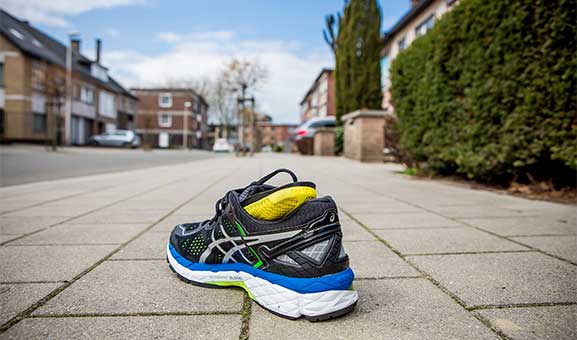
Our practitioners and doctors at Blackberry Clinic like to keep up with the latest trends in exercise so they are well placed to advise their patients. Jordan Smith, one of the physio team at Blackberry Clinic Milton Keynes, has been researching the benefits and disadvantages of barefoot running which is becoming very popular.
Running has become increasingly popular over the years and provides numerous health benefits including improved cardiovascular health, decreased risk of stroke and hypertension, increased bone mass and psychological benefits such as decreased depression and a positive effect on mood state. Despite its popularity and many benefits, runners still experience a high injury rate, with up to 79% of runners incurring an injury annually. Thus, runners have sought numerous strategies in hopes of reducing injury and running faster. One strategy is to run without any shoes at all – barefoot.
Despite the benefits of footwear, interest in barefoot running has increased among the running community, with proposed benefits including a decreased injury rate. Advocates tout the evolutionary success of man as a barefoot bipedal runner. There is also speculation that the development of modern footwear and the associated altered running gait patterns (including a hindfoot strike versus the forefoot or midfoot strike typical of unshod runners) have contributed to injuries seen in runners.
The term “minimalist shoe” is one that provides “minimal interference with the natural movement of the foot, because of its high flexibility, low heel to toe drop, weight and stack height, and the absence of motion control and stability devices.” Most studies indicate that running in minimalist shoes results in a lower physiological energy cost than running in conventional shoes, likely because of the lower weight of the minimalist shoe.
Humans are maladapted to wearing shoes in some ways that contribute to certain injuries. From an evolutional medical perspective, three novel consequences of wearing shoes may be relevant to injury:
· Shoes limit proprioception: Sensory feedback from the plantar surface of the foot works as an adaptation for sensing characteristics of the ground including hardness, roughness, unevenness, and the presence of potentially dangerous objects such as sharp rocks. Plantar (underneath aspect of foot) proprioception activates reflexes and helps the central nervous system make decisions that help increase stability and avoid injury.
· Modern shoes with elevated heels, stiff soles, cushioning, and arch support may either facilitate or encourage a different running form than appears to be common among habitual barefoot runners.
· Shoes can contribute to weak and inflexible feet, especially during childhood when the foot is growing.
· Barefoot runners often land on the fore-foot (fore-foot strike) before bringing down the heel, but they sometimes land with a flat foot (mid-foot strike) or, less often, on the heel (rear-foot strike). However. shod runners mostly rear-foot strike, due to the elevated and cushioned heel of the modern running shoe. Kinematic and kinetic analyses show that even on hard surfaces, barefoot runners who fore-foot strike generate smaller collision forces than shod rear-foot strikers. Fore-foot- and mid-foot-strike gaits were probably more common when humans ran barefoot or in minimal shoes, and may protect the feet and lower limbs from some of the impact-related injuries now experienced by a high percentage of runners.
· Shorter stride length and high stride frequency for bare foot runners.
· A significant increase in leg stiffness (shod runners land in more dorsiflexion but had less ankle motion than when running barefoot).
If you are contemplating trying barefoot running, in particular if you have an underlying injury that has not been addressed or fully resolved, it is advisable you seek professional guidance. This can be provided by one of our practitioners at the Blackberry Clinic.
One of our Phits Certified Experts can provide guidance through a gait analysis assessment and help decide whether barefoot running or a custom 3D print orthotic is a more suitable option.