

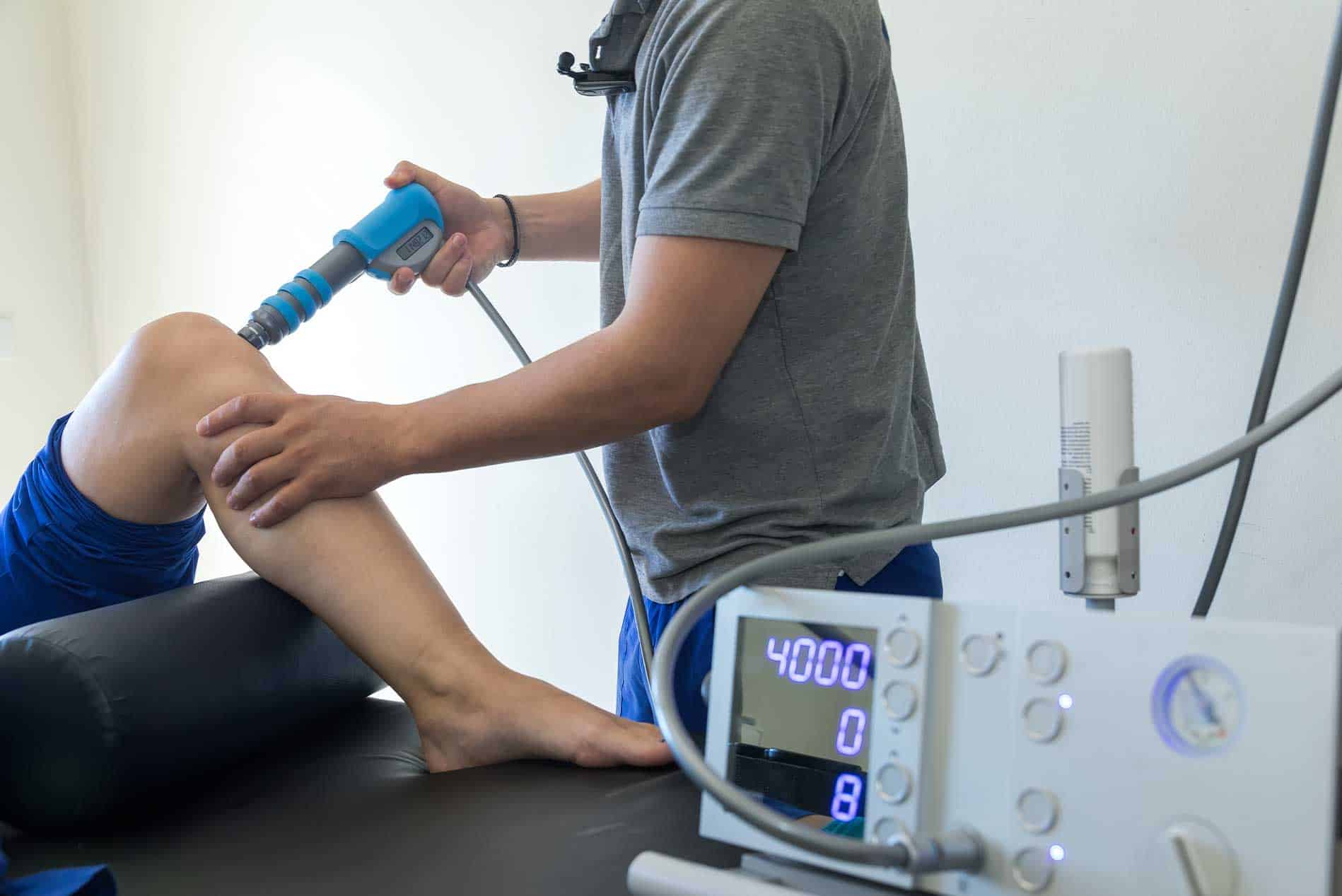
At Blackberry Clinic we offer shockwave ultrasound therapy as a treatment for a variety of conditions, see below for conditions that we can treat at Blackberry Clinic using shockwave ultrasound and other treatments such as physiotherapy, osteopathy and chiropractic, and steroid injections, prolotherapy and other interventional pain relieving injections. If you think shockwave may be of benefit to you come and have an assessment at one of our Blackberry Clinics.
What are Shockwaves?
Shockwaves are audible sound waves which are mechanical. They can be high or low pressures, high or low frequency.
In rehabilitation therapy, shockwaves are being used to accelerate healing process.
Shockwave Therapy (ESWT) involves passing sound waves into damaged tissues, which increases blood flow, has an analgesic effect (alleviating pain) and stimulates the repair and regeneration process. Simply, the treatment puts the cells into a repair mode and facilitates your body to regenerate an injured tissue.
The History of Shockwave Therapy
In the 1970’s shockwave therapy was exclusively used as an effective treatment technique for kidney stones, it hugely reduced the need for a painful, invasive surgery.
Later in the 1980s, clinicians noticed a secondary result of shock wave: an increase in bones mineral density. It inspired researchers to look into shockwaves applications in orthopaedics, especially in bone fracture healing. Over the coming decades scientists provided more data of its effects and the full potential for therapeutic use.
Is Shockwave Therapy Clinically Proven?
Yes. Shockwave Therapy is clinically proven and well approved by the top orthopaedic hospitals, and used by well-established professional sports clinics. Shockwave has both, NICE guidance and FDA approval for a large number of indications. Over 1000 papers have been published supporting the use of shockwave therapy in treatment of a plethora of conditions.
Benefits of Shockwave Therapy:
• Faster recovery
• Fewer potential complications
• No anesthesia
• Non invasive
• No medication
• Fast treatment: 20-30 minutes per session
• Significant clinical benefit: often seen 6 to 8 weeks after treatment
Shockwaves stimulate the regeneration of skeletal muscle tissue and accelerate repair processes.
Two Types of Shockwave Therapy
Shockwaves can be either focused or radial.
Radial shockwave therapy machines (also called radial pressure wave) produce pressure waves that are strongest at their source (the headpiece) and spread out into the tissue. The further they travel, the weaker they become and they can reach treatment depths of up to 5cm. Radial shockwaves perform on greater surface areas of application.
Focused shockwave therapy machines produce sound waves that are gathered (or focused) into deeper regions of the body, approximately 12.5cm. It is at this point that they reach their maximum energy. Focused shockwaves are used in the treatment of deep trigger points or areas, whereas radial shockwaves transmit outwards and do not reach as deep into the target area.
The type of shockwave therapy machine best for you depends on the conditions you are presenting with. Some therapists will use a combination of both for maximum effect.
Here are the differences between the two types of shockwave:
PENETRATION DEPTH
Focused: 0-12.5 CM Radial: 3-5cm
ENERGY CAPACITY
Focused: High Radial: Low
REPETITION OF SESSIONS
Focused: Fewer necessary Radial: More needed
EFFECTIVE AGAINST CHRONIC CONDITIONS
Focused: Yes Radial: Depends on the indication
FOCAL POINT
Focused: Inside tissue Radial: At transmitter tip
PRECISION
Focused: High Radial: Wider Spread
PAIN
Focused: Low Radial: Low-Mid
INDICATION RANGE
Focused: Large Radial: Standard/soft tissue
OVERALL EFFECT
Focused: Cell & Tissue Matrix Radial: Tissue Matrix
NOISE LEVEL
Focused: Lower Radial: Higher
What can be treated with a shockwave therapy?
Shockwave therapy is clinically proven to provide fast and effective results, along with the added bonus of no medication and its non-invasive nature.
Common indications
Jumper’s knee
Painful shoulder
Heel spur
Insertional pain
Chronic tendinopathy/chronic pain
Calcifications
Achilles tendinitis
Myofascial Pain Syndromes
Musculoskeletal conditions (you can find specific facts and stats here.)
Calcific tendonitis
Hamstring tendinopathy
Non healing wounds
Non-unions fracture
Coccydynia
Chronic Pelvic Pain Syndrome
What are the Therapeutic Effects of Shockwave Therapy?
The therapeutic effects of shockwaves on the musculoskeletal system for pain relief and healing are based on body cellular and molecular mechanisms.
Modulates Nerve Fibres and Inhibits Pain
It was shown that shockwaves are able to induce:
· a selective silencing of sensory unmyelinated fibers,
· reduction and dispersion of pain mediators and nociceptive metabolites (shockwave application reduces the number of CGRP- and SP-positive neurons which are main players in triggering a nociception in the dorsal root ganglia).
· prevention of local tissue re-innervation,
· altering pain neurotransmission. hyper stimulating the non-nociceptive nerve fibres, this blocks pain transmission and therefore strengthens the analgesic effect (this mechanism is known as the Gate Control Theory).
(Ryskalin et al, 2022).