

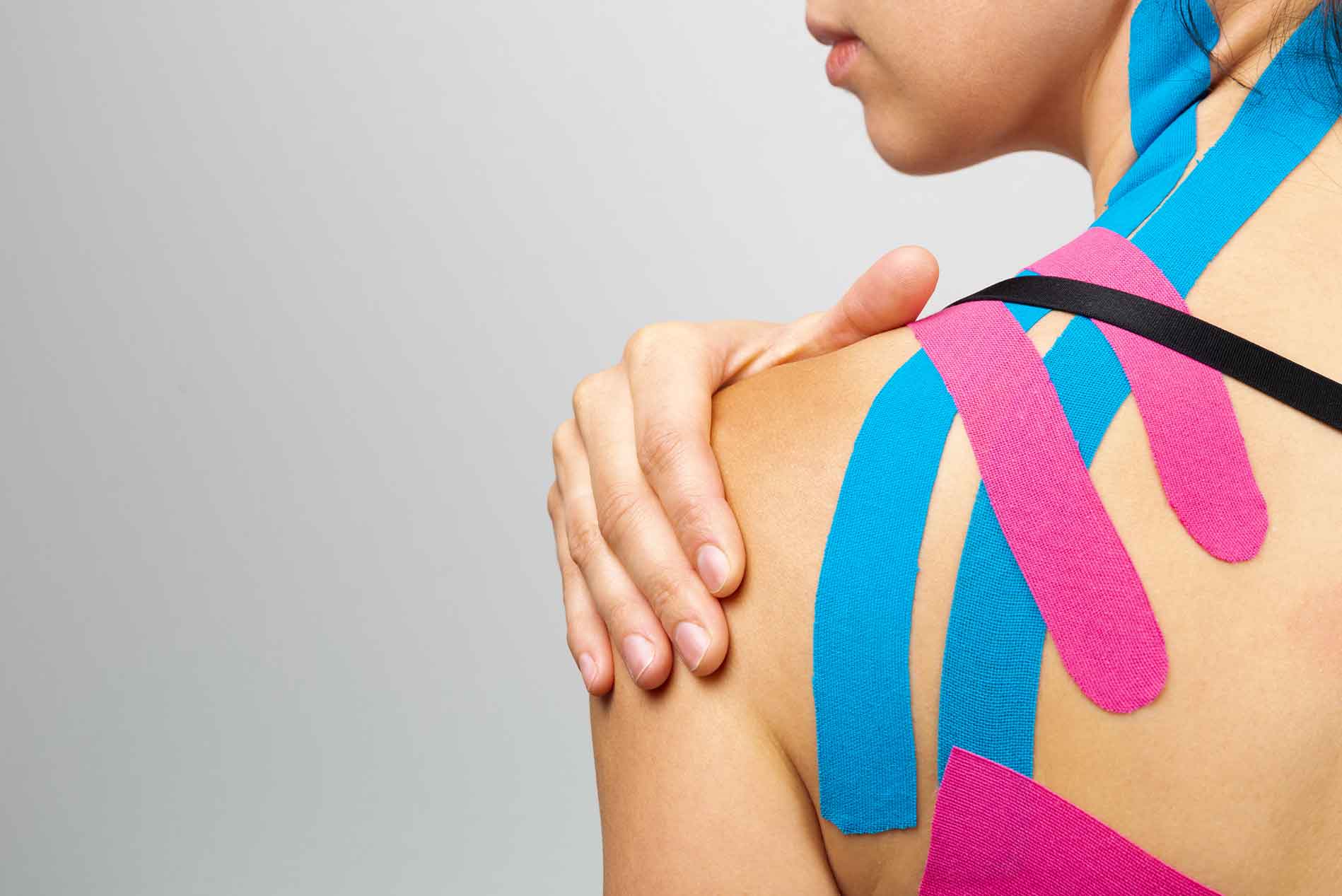
At Blackberry Clinic we treat musculoskeletal conditions and sports injuries using a variety of manual therapies and interventional treatments such as epidurals, radiofrequency denervation and facet joint injections. We have a team of physios, osteopaths and chiropractors as well as a medical team of highly qualified pain medicine doctors, MSK doctors and Sport & Exercise Medicine doctors. Our practitioners use a variety of manual treatments depending on your diagnosis and may often give you exercises and stretches to perform at home as part of your rehabilitation.
Milly Dalton, one of our physios at Blackberry Clinic Milton Keynes, explains the science behind why you may leave your physio appointment with blue tape on you! Taping can be a useful addition to treatment for postural rehabilitation.
Kinesiology Taping (KT) for Postural Support
KT is a well-used therapeutic tool used for both injury prevention and treatment purposes. The Japanese Chiropractor, Dr. Kenzo Kase, developed its use in the 1970’s.
KT mimics the physical qualities of skin. It is approximately the same weight and thickness of the epidermis (the outer layer of the two main layers of cells which make up the skin). KT has also inherited the elastic properties of skin, it has the ability to stretch to 120-140% of its original length.
Key benefits:
· Proprioceptive facilitation (awareness of position and movement, e.g. being able touch your nose with your eyes closed).
· Reduced muscle fatigue
· Muscle facilitation
· Reduced delayed-onset muscle soreness
· Pain inhibition
· Enhanced healing (reducing swelling and improvement of lymphatic drainage/blood flow)
What is the tape made of and how does it work?
KT is comprised of polymer elastic, wrapped in breathable (100% cotton fibres), that allow moisture evaporation. It is manufactured pre-stretched to 15-25% and following it’s application under further stretch, will recoil back towards its natural length. The glue is heat-activated so will adhere well to skin and can even be worn in the shower. On average it will last up to 3-5 days.
How may this help posture related pain?
There are three main components of postural correction:
1. Spinal Alignment
KT relieves pressure on the points of pain in the back. It also sends correct signalling to the muscles encouraging them to relax, allowing the spine to sit in a more neutral alignment.
2. Posture Rehabilitation
The lifting effect of the tape creates a wider space between the skin, the muscle and interstitial space. This increases blood and lymph circulation, which initiates the necessary healing effect to improve chronically compromised tissues. KT is also a physical support, acting as a postural aid.
3. Posture Habit Re-Education
Improving postural proprioception and awareness can aid the re-education of postural habits. This is because, the pressure or continual stretching of the skin within the taped area, increases in muscle excitability, promoting postural engagement.
Precautions:
On occasion skin irritation does occur. If this is the case the tape should be removed immediately and the area washed with warm soapy water to remove any residual adhesive.
Taping should not be used in cases of malignancy, infection, cellulitis, open wounds or DVT. And should be used with care in cases of diabetes, congestive heart failure and fractures.