


 Ligaments help to provide stability to joints. They prevent the joint from moving more than the ‘normal range’ (though what is ‘normal’ varies from one individual to another). Some people have lax ligaments that allow greater than ‘normal’ movement in the spine and elsewhere. After the treatment of prolapsed discs or chronic back pain, instability may be a significant cause of recurrent problems. The use of Prolotherapyreduces the risk of recurrence and helps people return to activities faster.
To view a short video of the technique as used in the Blackberry Clinic: http://www.youtube.com/watch?v=ZkDkd09UeBc
In the spine there is a complex arrangement of ligaments, both between each vertebral segment and between the spine and pelvis, which allows flexibility in some directions and produces restraint in others.
Sometimes ligaments can be overstretched, or even torn (as in a sprained ankle). The ligament may then not control the joint adequately – thus leading to ‘instability’ which may put abnormal stresses on the joints and discs in the spine.
In women, the pelvic joints need to be supple for child bearing, and so the ligaments soften and stretch more readily. Sometimes they do not tighten up after childbirth and therefore allow too much movement – hence ‘sacroiliac instability’.
Prolotherapy works by stimulating the body to make new fibres which are laid down within the substance of the ligaments, thickening and strengthening them. The solution is a 25% mixture of dextrose in local anaesthetic, and a small amount is injected into each end of the ligament, close to its attachment to the bone. We occasionally use a solution of phenol dextrose + glycerol if required. This initially provokes inflammation, attracting the cells that make collagen fibres to the area. Over the ensuing weeks, the fibres are incorporated into the existing ligament. Each ligament has to be injected three times, at intervals of a week, in order to produce sound fibrous development. Hence three injections are given as a course of treatment. The interval can be up to three weeks.
As Prolotherapy for ligaments is not widely practised, it has not as yet been licensed for this particular type of treatment. Our 50% glucose ampoules are provided by a licensed manufacturer, as are the ampoules of P2G that is occasionally used in difficult cases. Because the organic compounds in the solution are rapidly disposed of by the body, it is safe to have a repeat course of treatment – should it be necessary.
There have been several widely published clinical trials on its usefulness in low back pain and knee arthritis with positive results. Prolotherapy does not create scar tissue but thicker healthy collagen fibres in the lax ligaments. Injections are commonly given in the lumbar region, sacroiliac region, thoracic and cervical spine along with the knee and hip. They are also useful in the ankle and shoulder region.
History of Prolotherapy
Prolotherapy was developed in the 1940s by Dr George Hackett, using injections of a sclerosing agent commonly used at the time for varicose veins. He targeted ‘lax’ or ‘weak’ ligaments with these injections to make them stronger.
Hackett believed that if ‘weak’ ligaments were the cause of most joint and ligament pain, strengthening them would resolve the pain. He published 16 articles and a textbook on this procedure, and claimed an 80% success rate for the treatment of low back pain as well as many other painful conditions. A growing number of Prolotherapy studies over the last 40 years have indicated good to excellent results from this type of treatment, with doctors in the UK, USA, Australia and elsewhere continuing to use glucose injections (now using more advanced glucose solutions) with no side effects for painful conditions affecting joints, ligaments and tendons.
Evidence-based medicine has become a popular pre-requisite for medical providers in the last 20 years. But scientific research has become out of the financial reach of most researchers, unless they are supported by large grants or the Pharmaceutical industry. As a result, it has been difficult to find good high-level evidence research on Prolotherapy.
Three researchers, Professor Michael Yelland from Australia and Professors David Rabago and K. Dean Reeves from the USA, have produced some excellent studies published recently, including a randomised control trial for treatment of knee arthritis (2013). Also one on Achilles tendinosis (British Journal of Sports Medicine, 2009). Dr John Lyftogt has also published six level 4 studies in the Australasian Journal of Musculoskeletal Medicine since 2005.
What does Prolotherapy treat?
The range of injuries and conditions that Prolotherapy treats is varied; from instability and toe pain to chronic headaches caused by instability in the neck. Prolotherapy is often used in conjunction with other injections to help stabilise a joint following injury. The commonest area in which it is used is the spine, where Prolotherapy can be used to treat chronic back pain by stabilising the bones to prevent abnormal movement. It is also used extensively following treatment of Sciatica (or slipped disc) to reduce the risk of recurrence.
 Prolotherapy stimulates the repair of injured and damaged structures, helping to strengthen tendons and ligaments while stabilising the joints they support. It involves the injection of natural substances (along with anaesthetics so the injections will not cause unbearable pain) at the exact site of an injury to stimulate the immune system to repair the area. The exact term for the natural healing process that occurs after an injury is inflammation. Prolotherapy causes an inflammatory reaction at the exact site of injuries to such structures as ligaments, tendons, menisci, muscles, growth plates, joint capsules and cartilage to stimulate these structures to heal. These areas are often injured through sports-related activities or due to degenerative changes such as arthritis.
Specifically, Prolotherapy causes fibroblastic proliferation (where the term Prolotherapy comes from). Fibroblasts are the cells that actually grow the ligaments and tendons. By proliferating the fibroblasts, new, strong, collagen tissue is formed which is what is needed to repair ligament/tendon sprains and other sports injuries. A detailed explanation of the mechanisms of Prolotherapy can be found under the Prolotherapy section.
If you are suffering from knee pain, torn meniscus, ACL tear, neck pain, back pain, shin splints, plantar fasciitis, hamstring strain, IT band injury, turf toe, or any other sports injury, Prolotherapy can help to get you back to your sport or activity while reducing pain and reducing the risk of recurrence. The great part of receiving Prolotherapy is that patients can continue to train while receiving treatments. We see and treat patients with chronic back pain, unstable joints and athletes of all levels – from amateur athletes to professional footballers and Olympic Gold medallists, wanting to return to sport as quickly as possible.
Treatment Costs
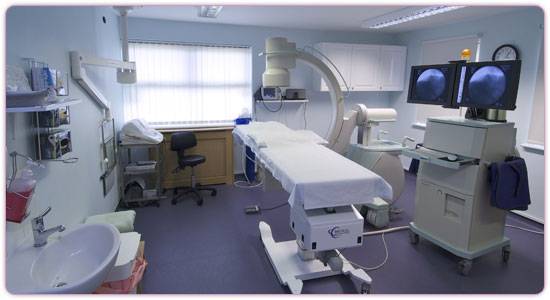
Our state-of-the-art Prolotherapy suite is located at our flagship clinic in Milton Keynes. Please visit the Our Clinics page for the address and opening times.
To book an appointment please call 01908 604 666 or book online via our Contact Us form – and we will be happy to advise costs upon confirmation of your booking.