

At Blackberry Clinic our physios and other practitioners are skilled at treating and diagnosing pain which may be specific or non specific in origin. Sometimes you may think it is your shoulder that is injured, but a full examination and assessment might pin point a problem with your neck and the treatment will vary according to the assessment from your practitioner. More complex conditions may require a longer assessment, which is why we offer a 45 minute appointment for your first consultation. This allows ample time for full examination and history taking so your practitioner can determine the root of the problem and offer an accurate diagnosis and appropriate treatment.
First rib dysfunction can be complicated and present with many symptoms. If you think you are suffering from this condition do not hesitate to get in touch with your local Blackberry Clinic.
Here is some information about first rib dysfunction, prepared by one of our physios at Milton Keynes, Milly Dalton.
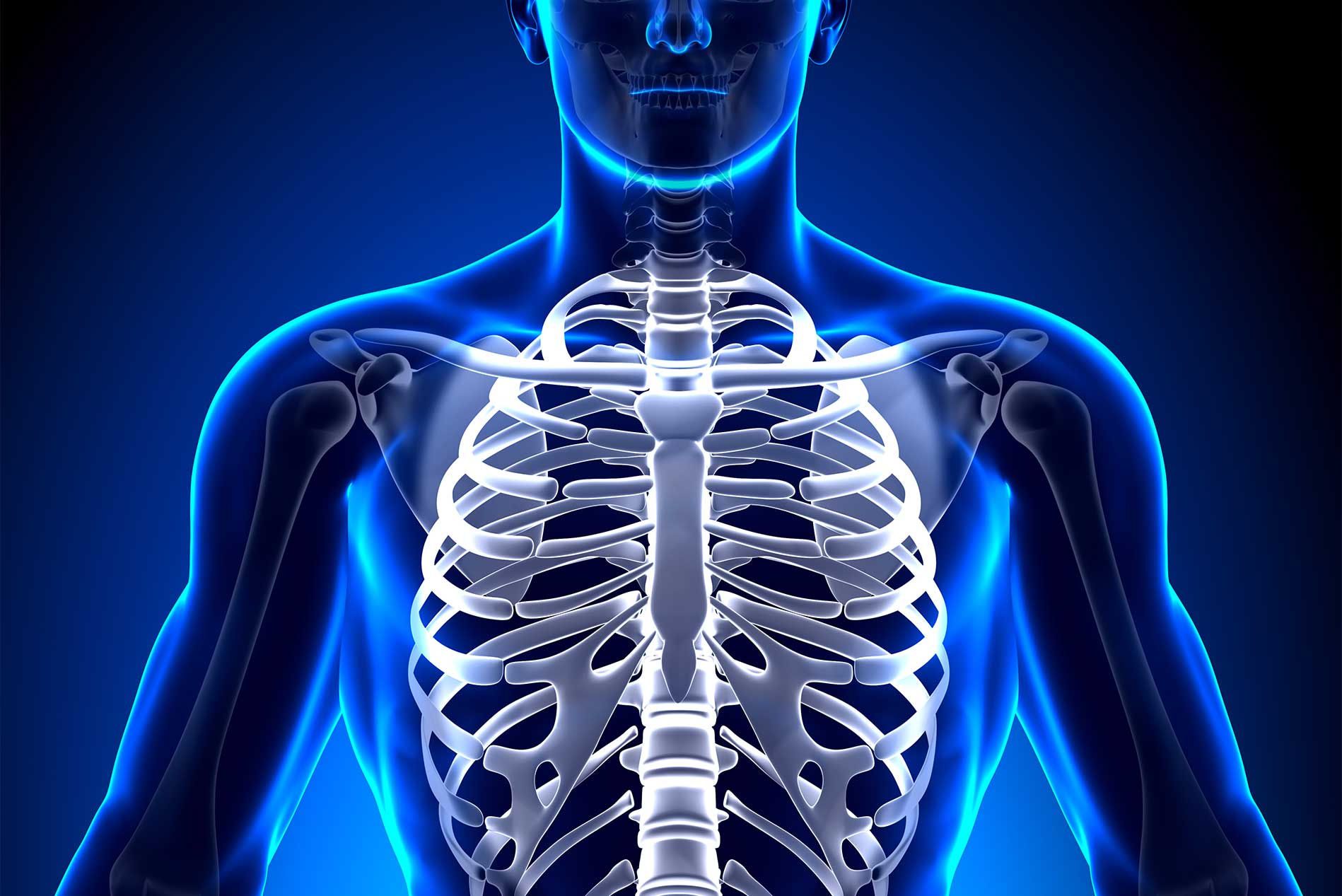
The first rib is the uppermost of the twelve ribs. It differs slightly in anatomy from the rest of the ribs, apart from the 11th and 12th ribs which also differ. It forms a ring at the top of the thorax and is separated by intercostal space from the rib below. The first seven ribs increase in size, the second seven reduced in size again. Ribs are highly vascular and have a thin outer layer of compact bone.
First rib dysfunction can cause:
- Neck and shoulder pain
- Upper limb, chest or trapezius paraesthesia / referred symptoms including pain
- Neurological symptoms
- Headaches
- Jaw pain
The first rib serves as an attachment point for the scalene muscles, subclavius and serratus anterior. If the scalenes are too tight, they can pull the 1st rib superiorly (upwards) and cause the joint to become stiff. When the first rib is elevated the Brachial Plexus (the nerve bundle that sends sensation to the arm and hand) as well as the arteries and veins that go between the clavicle (collarbone) and first rib can become compressed causing symptoms down the arm.
First rib dysfunction is often a result of poor posture “Upper Crossed Syndrome” or “Forward Head Posture”. This posture occurs when the head sits anteriorly on the spine, which loads up the posterior musculature (upper trapezius, levator scapulae, etc) and tightens the pectoralis major/minor. The normally lordotic cervical spine becomes more kyphotic (shoulders round forwards) and the thoracic spine becomes stiff and hyperkyphotic. The deep neck flexors at the front of the neck become long and weak, as do the rhomboids, middle and lower trapezius.
Other common causes of an elevated first rib can be trauma such as whiplash where the head and neck get side bent, sleeping on the stomach and/or with the arm overhead, or repetitive usage of the arm overhead.
An elevated first rib usually can be corrected with:
- Muscle energy techniques or manipulation
- Dry needling of the sternocleidomastoid and scalenes for associated myofascial pain.
- Stretching and trigger point release
- Strengthen lower trapezius, rhomboids and deep neck flexors
- Mobilize thoracic spine (foam roller, massage balls)
- Mobilize the 1st rib
- Work on improving posture
- Take regular breaks from computer work at a desk
- Keep head back closer to headrest whilst driving
- Strengthen rotator cuff muscles