

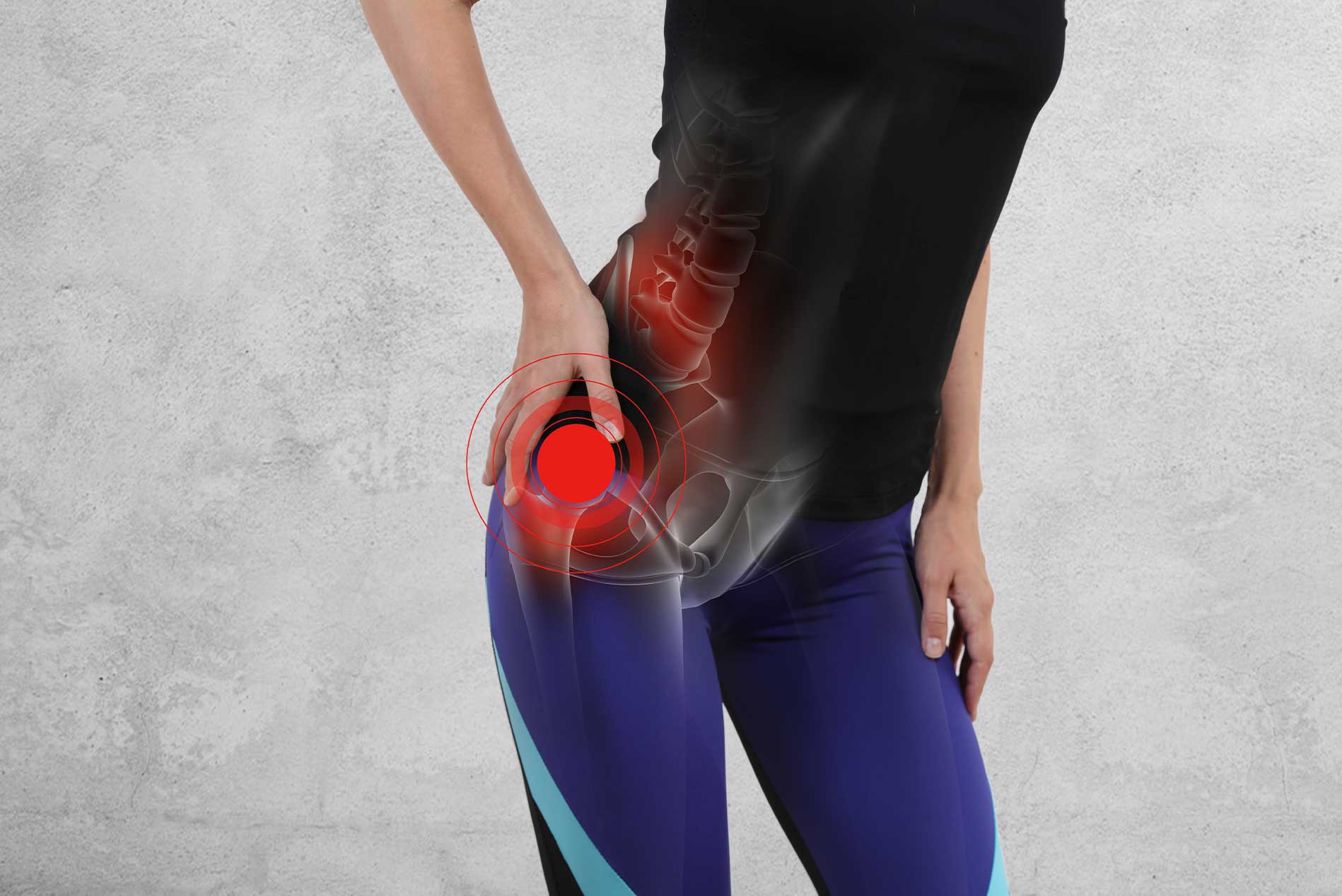
At Blackberry Clinic we treat all parts of the musculoskeletal system causing pain and discomfort. We have specialist doctors and physical therapists who can offer treatment programmes and rehab for hip pain and weak abductor muscles.
Discussing ‘hips’ involves some of the most ambiguous terms in athletic performance. Tight hips, loose hips, strong hips, weak hips – these phrases get tossed around frequently and not only in the sporting world. Does the average athlete or civilian have any idea what they actually mean? It can pose a serious dilemma because if someone doesn’t understand an issue, he or she won’t be motivated to address it. Unless you’re a candidate for a hip replacement, when someone talks about your hips they aren’t talking about the actual bones. They are more likely to be referring to groups of muscles that cause movement in and around the hip joint. There are roughly 17 of these muscles and they’re often divided into large groups depending on what they do.
Extensors – pull your leg back behind you
Rotators – cause both inward (internal, pigeon toed) and outward (external, duck or ballerina stance) rotation of your leg
Flexors – pull your leg forwards in front of you or lift it off the ground
Adductors – squeeze your legs together or cross your leg over the midline to the other side
Abductors – pull or lift your leg out to the side away from the middle of your body (your midline)
Studies have shown that small increases in hip muscle strength can result in significant improvements in sprinting and running performance. It is thought that the foundation for good running performance starts with your hips. If you can hold a good, athletic posture while moving forwards, backwards, side-to-side or rotating – that’s a sign of strong hips.Not only do the muscles in and around your hips play a critical role in performance, they also help you stay injury free. Research shows not only better performance in athletes with stronger hips but also fewerinjuries to the lower back and lower limbs. Having weak hips causes a lack of full range of motion which leads to muscular imbalances. This can, in turn, cause faulty mechanics, poor movement patterns or in some cases shearing forces on opposing muscles potentially causing injury. Weak hips cause a ripple effect of improper mechanics throughout the body, meaning they can greatly increase your risk of overall injury.
THERE IS AN EPIDEMIC OF WEAK HIPS – BUT WHY?
Part of the reason for this can be traced to our lifestyle. Although those with desk jobs are our society’s biggest sitters, anyone can find themselves in a seated position for the mvast majority of their days. Whether you’re sitting in class, studying, gaming, driving or taking public transport – the odds are you’re in a seated position with your hands in front of you, your hip flexors (the muscles on the front) are shortened and your hip extensors (essentially your buttocks) are lengthened. Spending large amounts of time in positions like these can lead to postural problems, muscle imbalances and weakness.
Specifically, hip abductor muscle weakness is not only common but can have knock-on effects throughout your,lower limbs and back. Hip abduction is used every day when you step to the side, get out of bed and get out of the car. It’s not just that the hip abductors are important and often forgotten muscles, they contribute to your ability to stand, walk and rotate your legs with ease. The hip abductors are also necessary for stabilising the pelvis when walking or standing on one leg (which happens when climbing stairs or even running). Weakness in these muscles can cause pain and interfere with proper movement. The hip abductor muscles include the gluteus medius, gluteus minimus and tensor fascia latae.
WHAT CAUSES WEAK HIP ABDUCTORS – AND WHAT DO WEAK HIP ABDUCTORS CAUSE?
As mentioned above, hip muscle weakness can be a result of your lifestyle. The hip abductors are closely related to the core muscles and are crucial for balance and athletic activity. As a result of extended time spent sitting during the day, many people develop weak gluteal (buttock) muscles, which include the hip abductors.
Being inactive for a long time can lead to the body essentially ‘turning off’ these muscles, making them harder to use (activate) during exercise. This can make your body resort to using other muscles not meant for those tasks. Using the wrong muscles can lead to pain, poor performance and difficulty with certain movements. Hip abductor weakness can lead to overuse injuries like patellofemoral pain syndrome (pain behind the kneecap) and iliotibial band syndrome (ITBS). It’s not clear whether hip abduction weakness is a cause of or a result of knee problems. Findings about the relationship between hip abduction and knee issues are mixed. In general, however, strengthening these muscles delivers benefits in reducing pain and improving function.
Quite often it is a case of the chicken or the egg, especially in athletes or people who are physically active. Pain or a past injury to the hip, knee or even foot can result in changes to a person’s gait (how they walk) over time. This in turn alters the way you recruit and use your muscles, possibly causing weakness in certain groups. Contrary to this an underlying weak hip abductor muscle can result in changes to the person’s biomechanics and joint alignment which in turn brings on pain, wear and tear on a joint possibly causing osteoarthritis in the hip or knee.
Hip tendonitis, tendinopathy or abductor tears are often caused by overuse through playing sports that require a lot of jumping. This can be an acute injury (in the case of a weekend warrior) or chronic overuse. Tendonitis of one of the abductor muscles can also be caused if the nearby supporting muscles are too weak or too strong, causing a muscle imbalance. Tendon overuse can also cause micro-tears in the tendon or muscle belly itself. Knee valgus refers to when the knees cave inward, giving a ‘knock-kneed’ appearance. This is most commonly seen in young women and older adults or in those with muscle imbalances or improper form during exercise.
Knee valgus is associated with a lack of hip strength and studies have shown that hip abduction exercises can improve the condition. The gluteus medius muscle is susceptible to the development of myofascial pain syndrome. Such pain most often occurs as a result of repetitive microtrauma to the muscle from activities such as running and overuse of exercise equipment or other repetitive activities that require hip abduction.
Trigger points (painful ‘knots’ in the muscle) that develop within the muscle can refer pain around the hip, down the leg and into the groin area and buttocks. This referred pain can often lead to misdiagnoses or be attributed to other organ systems, thereby leading to extensive evaluations and ineffective treatment. There can be other medical reasons one may have weak abductor muscles:
– nerve injury or nerve entrapment;
– dysplasia of the hip, congenital dislocation of the hip, congenital coxa vara or coxa valga, slipped capital femoral epiphysis (here the muscle is normal but it is at a mechanical disadvantage);
– following hip replacement surgery, or femoral fixation (after femur or neck of femur fracture); and
– muscular dystrophy, cerebral palsy, stroke or hemiplegia.