

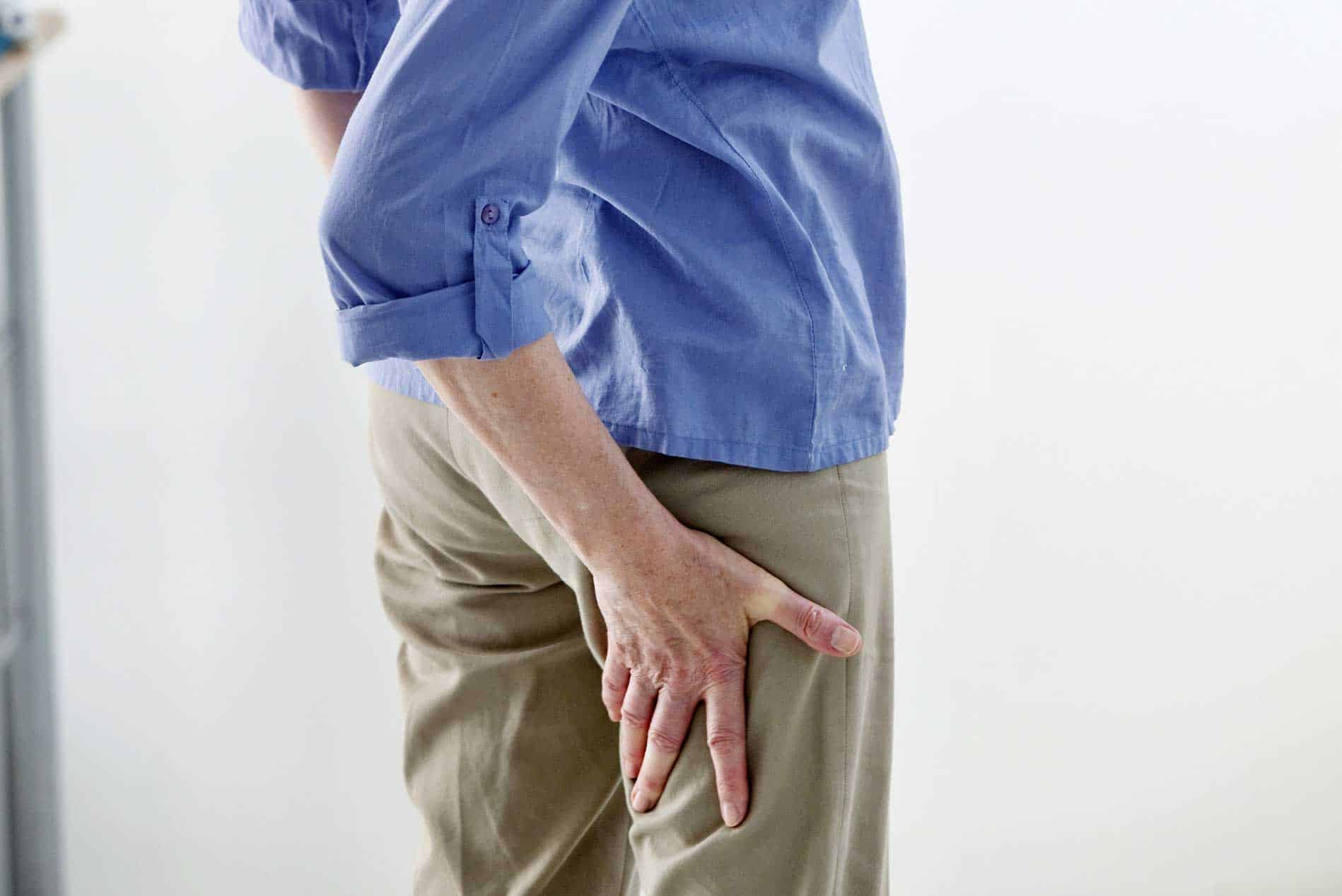
Our physio, Lorena Solarte, at Blackberry Clinic Guildford explains the importance of accurate assessment and diagnosis of musculoskeletal pain as so often pain can appear to be coming from one place but the cause may be somewhere completely different. Individual treatment plans and specific rehab exercises are prescribed and tailor made for your diagnosis and problem.
Here Lorena writes about a common issue which is pain down the back of the leg, also known as sciatica.
Describing your sciatic pain may be difficult. Sometimes you feel your leg is heavy, tingling, or can shoot pain down to your knee or calf, sometimes you feel it is just a gluteal discomfort and it can come and go with your back pain.
Working as a Musculoskeletal physiotherapist at the Blackberry Clinic in Guildford for over 7 years, I have come across this question many times. And there is never a fixed answer and fixed rehabilitation plan. We always have to do a detail assessment of the individual person and their relation with movement.
Here at Blackberry Clinic we look at our patients as a whole. We discuss with our patients how their daily routines and ergonomics can affect their pain. On their physical assessment we will look at the biomechanical side, how your joints and your muscles are responding to movement. We use clinical tests and palpation skills that will help with the diagnosis and treatment plan. Our assessment skill will help differentiate if your leg pain is coming from your back or from your tight piriformis muscle in your gluteal area.
Let’s talk about anatomy!
The piriformis is a superficial muscle that originates on your sacrum and inserts on the greater trochanter of your femur. It moves your hip but it can also affect your pelvis and back.
The main function is to rotate the hip laterally in standing and abduction when your hip is flexed in sitting. It also helps with tilting the pelvis laterally and posteriorly. All these is useful to know so you can relate how your movement pattern is affecting your pain.
What is the relation between the piriformis muscle and the sciatic nerve?
The nerve enters the gluteal region below the muscle to continue as a thick bundle on each side of your body towards your hips, buttocks and down the leg, ending below the knee. This close relation could provoke irritations on the area. If the piriformis gets tight then it can put pressure on the sciatic nerve provoking nerve pain and muscle tension on the whole area of your lower back, buttocks and leg. It can make you experience pins and needles or a tingling sensation on your leg, it can make you feel a sharp / pulling pain when walking or transferring.
To go in depth, see https://www.physio-pedia.com/Piriformis
Can sciatica occur down both legs?
Sciatica pain usually affects only one leg at a time. However, it’s possible for sciatica to occur in both legs. Assessing how your spine, pelvis and hips are moving, we can determine where the sciatic nerve is been irritated. It could be an irritation coming from the spine or it can be coming from your buttocks.
Presentation of pain
– Constant pain of buttock and hip area
– Walking or sitting for long periods
– Transferring: Getting out of bed, driving, sitting to stand
– Pain in the buttock worsened by hip movements.
– Sleeping and turning in bed.
Pain. Where is it coming from?
We know where the irritation of the sciatic nerve and how the pain can correlate with other areas of your musculoskeletal system.
For example, the pain can inhibit your muscles to work in the normal sequence they used to do before having no pain. With pain they have to work different and they can get fatigue very quickly.
This can provoke tension in the muscles around the gluteal area, back and thigh and it can cause myofascial referred pain from the trigger points in the piriformis and adjacent muscles.
This dysfunction of the hip muscles can also lead to sacro iliac joint (SIJ) dysfunctions creating instability on your pelvis and inhibition of your core muscles to support your back and pelvis.
Spinal conditions can also lead to a sciatic nerve irritation and are more related with back pain, leg pain and therefore can lead to chronic biomechanical changes. These can include slipped or herniated discs, OA, spinal stenosis.
As you can see, the relation between the piriformis muscles, your sciatic nerve and your biomechanics (the way you move), can lead into a chronic cycle where your musculoskeletal system needs physio help to get better.
What to do next?
Book an appointment with your physio!
The physiotherapy goals for your rehabilitation will include an exercise programme based on improving your posture and loading mechanisms, making ergonomic and biomechanical changes, increasing your core strength and strengthening different group of muscles of your back, abdomen, gluteals and hips.
It will also involve a flexibility programme to stretch those tensed muscles.
Releasing the tensed muscles with a form of massage, acupuncture, foam rolling.
Manual therapy for your SIJ or lumbar mobilizations can also help if other parts of your pelvic region have been affected.
And finally encouraging circulation with functional exercises like walking, swimming.
If you are suffering from a nerve irritation from your sciatic nerve it will affect your muscles to work correctly and you will start creating muscle imbalances and changes in the way you used to move before you had pain or discomfort. To prevent further changes, book an appointment with your physiotherapist to get a diagnosis and a treatment plan.
For chronic pain and acute sciatica your physio may refer you to one of our musculoskeletal medicine or pain management doctors for further treatment and investigation.
References
https://www.physiopedia.com/Piriformis_Syndrome?utm_source=physiopedia&utm_medium=search&utm_campaign=ongoing_internal
Bahat PY. A missed syndrome in chronic pelvic pain: piriformis syndrome. Sajog 2019; 25(3):72-74
Patil DY. Effect of Passive Stretching v/s Myofascial Release in Improving Piriformis Flexibility in Females-A comprehensive Study. Indian Journal of Physiotherapy and Occupational Therapy 2019;13(4):57-61
Focusing on Hip Muscle Strengthening and Movement Reeducation: A Case Report. Journal of Orthopaedic & Sports Physical Therapy 2010;40(2):03-111 https://www.jospt.org/doi/10.2519/jospt.2010.3108
Jankovic, D., Peng, P. & van Zundert, A. Brief review: Piriformis syndrome: etiology, diagnosis, and management. Can J Anesth/J Can Anesth 2013; 60: 1003–1012. https://doi.org/10.1007/s12630-013-0009-