

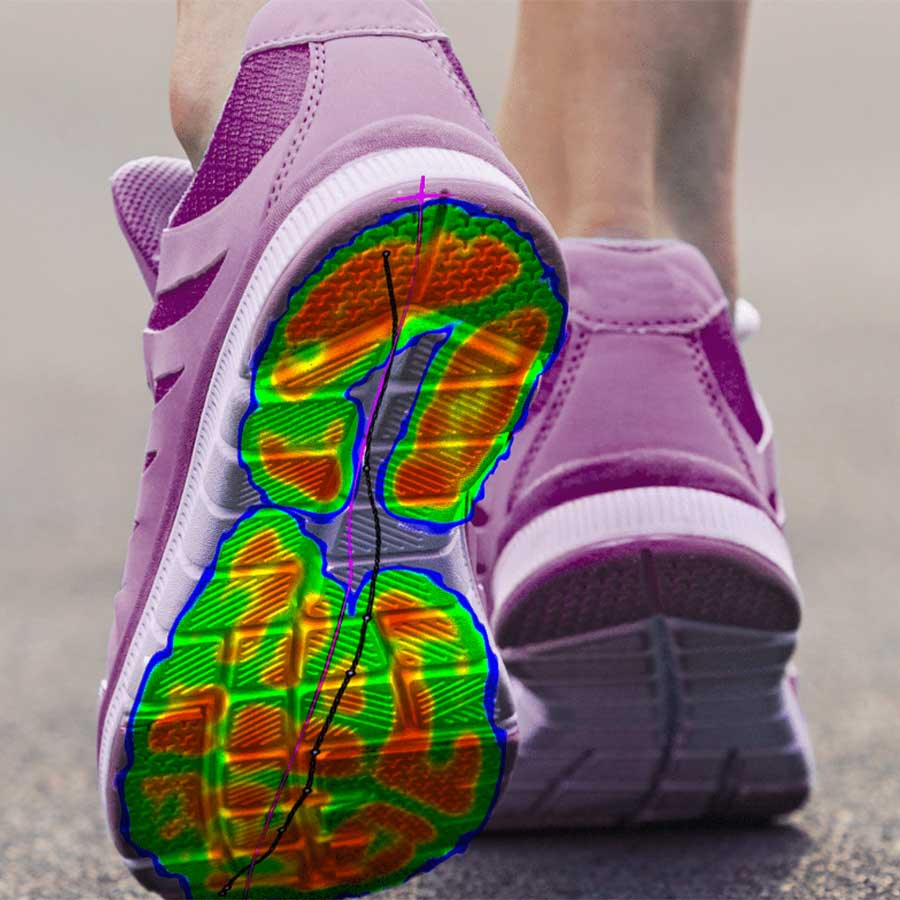
FOOT STRIKE PATTERN
Changing your foot strike pattern can shift load which can have a positive or negative impact on your body. Changes to foot strike pattern should be small and gradual, avoiding a big change, for example, changing from rearfoot to forefoot. Be aware when changing the strike pattern in a runner who over-strides has little effect and may actually lead to further loading/injuries. The point here is, if you don’t or haven’t had major injuries, apply the motto ‘don’t fix what ain’t broke’ and stick with a running style that is comfortable to you. If you have been advised to change your foot strike pattern consulting a professional trainer or running coach would be a good idea.
OVER-STRIDING
The easiest way to reduce load is to reduce over-striding – essentially the length of each stride. This can be achieved by running with a metronome to increase cadence (the number of steps you take per minute). Increase the cadence by 5% for a short period of time and assess for any changes. Research has suggested that optimal step rate for runners is around 3-8% higher than what they self-select. However increasing cadence does not always lead to a reduction in load. If you already have a high step rate of 175-180 then increasing this further will have a limited impact on reducing load.
PLYOMETRICS
Runners may benefit from exposure to small volumes of high load activity such as plyometrics to improve the ability to produce propulsion and absorb load. Tendons for example work like springs, as you load them they compress and store the energy like a squeezed spring, then they release the energy as they spring back, hence the propulsion. Think ‘spring’ when wondering what plyometric exercises are. They mostly involve jumping, hopping and bounding.
PSYCHOLOGICAL FACTORS
Psychological factors, as mentioned, are another form of ‘load’ to consider. Psychological factors such as lack of sleep or stress at work can delay healing or recovery by up to 60%.
IN CONCLUSION
Too often when you are injured you focus with a magnifying glass on that specific area, or condition. Your rehabilitation concentrates on that joint or muscle. However, it is important to consider some of the points above, to aid in recovery and prevent subsequent injury. Runners (young and old, new and experienced) quite often have underlying weaknesses or past injuries (even unrelated to running) which could benefit greatly from a targeted strengthening programme, potentially keeping an injury at bay. If you are new to running start slowly and listen to your body. Any time you experience persistent pain with every run, particularly if that is increasing, you should seek advice and assessment from a physical therapist trainer or other qualified health professional.