

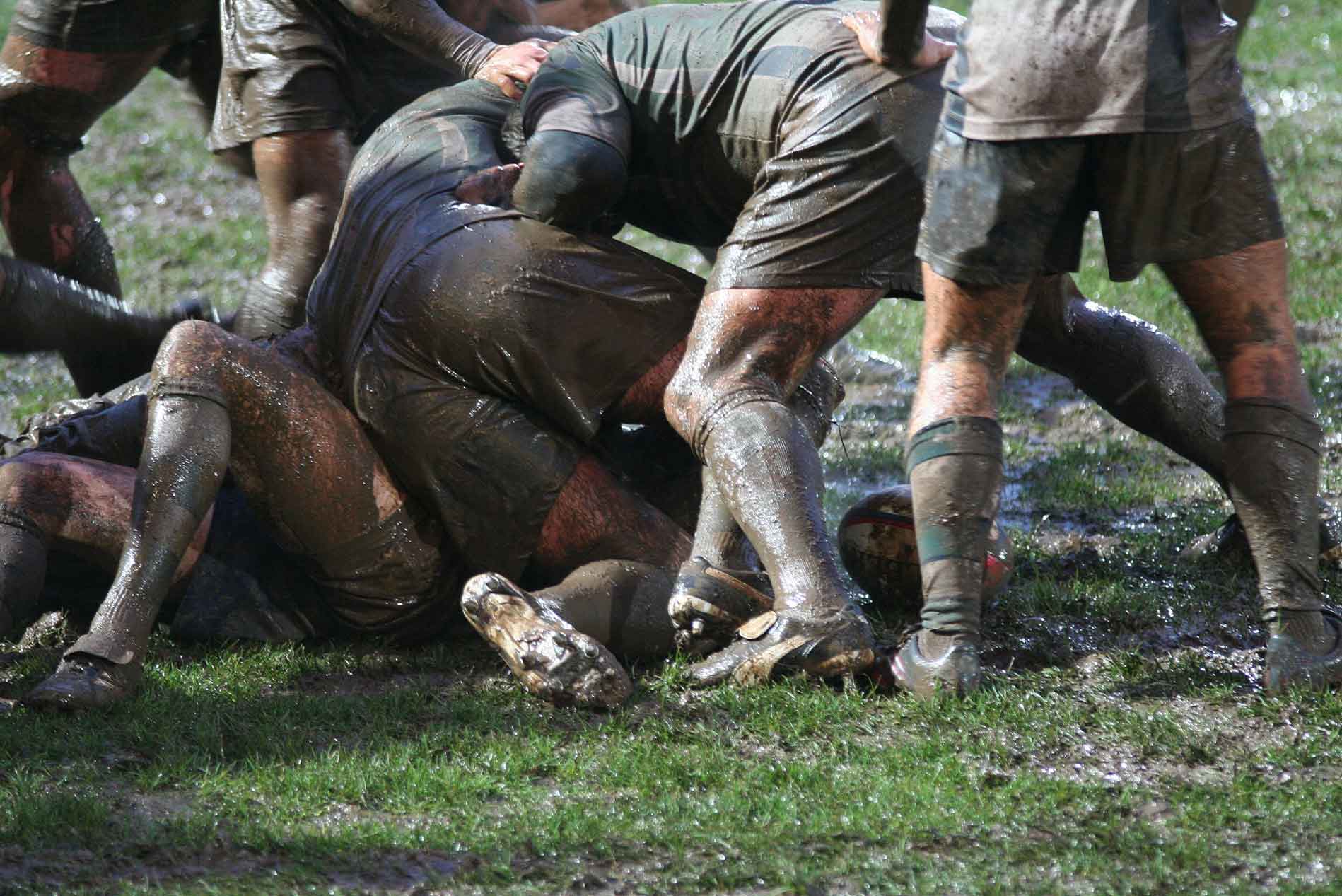
Rugby is a fast-moving and high-intensity team sport. Although historically dominated by males, the sport is gaining popularity among females. The enjoyment comes from all ages and at all levels of rugby, be it a tag rugby tournament or up to an elite level, the game can be played for fun and fitness as well as a professional career.
As we are constantly reminded of the importance of physical activity for our health (at all ages), rugby can be a sport that is played throughout school, club and community level. The fitness required benefits our heart, bones and muscles and can help prevent disease. It may help combat anxiety, stress or depression. A team sport is also a great way to make friends, enjoy camaraderie, learn about resilience, improve our communication skills or simply have fun. However, if you watch the game you’ll know that this contact sport is not for the faint-hearted!
THE NUMBERS
As many as 1 in 4 rugby players will be injured during a season. Rugby injury rates are reported to be nearly three times higher than soccer. On average each player performs 20-40 tackles per match and the tackler is more commonly injured than the ball-carrier being tackled. Almost 25% of neck injuries occur when there is a mismatch in experience between the two opposing front rows. For example a lower ranked or less skilled team within the division, or schools rugby where boys are matched by age and not physical development (size) – we’ve all seen those early bloomers.
Children and adolescents aged 10-18 years, experience the most injuries, however adults aged 25–34 years have also been found to be at high risk. Rugby injuries occur more often during matches than in training, possibly due to the intensity of a match and the determination to win. In addition to this injuries occur more often in the second half of the match when fatigue and lack of concentration puts your body at higher risk.
Here are some injury statistics:
● Over 40% of injuries are muscular strains or contusions (bruising)
● 30% are sprains (ligament sprain at a joint), followed by dislocations, fractures, lacerations, and overuse injuries
● Sprained ankles are a common injury representing almost 1 in 7 rugby injuries
● Between 5-25% of rugby injuries are head injuries, of which 44% are concussions.
THE INJURIES
Cuts, lacerations or abrasions are probably the most common injuries in rugby, but with some basic first aid and possibly a stitch or two they will heal perfectly well. In addition to
this, contusions are very common. That is essentially a bad bruise often called a dead leg or ‘lamie’ or corker, caused by a player’s knee or shoulder colliding into a muscle. It causes bleeding within the muscle and presents as a stunning shade of purple. It can be very painful and can affect your ability to contract the muscle or even walk. Physical therapy can help reduce the pain and swelling and ensure flexibility is returned to the muscle, as well as adequate strength.
Although concussion is commonly classified as a head injury it is more accurately a brain injury. Whether it is caused by a direct blow to the head in a tackle or from a whiplash movement of your head it is a very serious injury that is too often neglected. If not managed correctly it can lead to serious long term deficits in brain function and even death. Greater awareness and education is needed in order to identify a player with a concussion, no matter how mild it may seem at the time, the safest place for the concussed player to be, is on the bench. Mismanagement of a concussed player can also lead to prolonged symptoms and can impact on the player’s ability to work, or perform at school. Appropriate rest (both physical and mental) is needed, as well as
specific exercises to re-train balance and movement, followed by a controlled slow specific exercises to re-train balance and progressive return to sport. This can be done under the guidance of your physical therapist.
The more common musculoskeletal injures in rugby include joint or ligament sprains, or muscle strains, and dislocations. These can sometimes be hard to prevent as they are often caused by the nature of a contact sport or a sudden change in direction that twists the knee or ankle. Luckily most of these injuries don’t require surgery and with proper physical therapy treatment, a full recovery and return to rugby can be achieved within a matter of days or weeks. Ensuring you follow the rules of R.I.C.E immediately after an injury, and then follow-up with rehabilitation, a faster recovery and reduced risk of re-injury is possible.
HOW TO PREVENT INJURIES
With the high risk of injury, some of them quite serious, what does that mean about playing rugby? We shouldn’t play the game? Whilst there are some very serious injuries that can occur, like catastrophic neck injuries (resulting in permanent disability or even death), or a concussion (that can have very serious long term consequences), there are ways to make the game safer and reduce your risk of injury.
1. Coaching on safe and correct techniques, how to tackle and scrum correctly have proven to reduce injury incidence
2. Referee ensuring safe play at all times and avoiding foul play can reduce injury risk
3. Training and education on identifying an injury, be it a serious neck injury or concussion, and how to ensure the safety of that player, to remove them from play and refer them for medical help, is critical to ensure a good outcome. This is applicable to all coaches, parents and even players.
4. Scrum law changes have significantly reduced the number of serious neckinjuries
5. Adequate warm-up before training and match play can help prevent injury too
6. Preparation, in the form of pre-season training and strengthening can help prevent injuries. The stronger you are the better your body can withstand the forces and loads experienced during rugby.
7. Complete rehabilitation of past injuries before returning to play. Too often a small niggle is ignored or when an injury starts to feel better you rush back into training only to sustain another injury later that season. Complete your rehabilitation programme to ensure optimal recovery and prevention of another injury.
8. General fitness. The majority of injuries occur in the latter half of the game, coinciding with the onset of fatigue. Being sufficiently fit to play the full length of a game (whatever that may be for your age and level) is crucial.
This may all sound a little overwhelming, unless you are in a professional team with multiple coaches and medical staff. Whether you are a coach, player or parent, there are ways you can get more information, on the topic of safe techniques and rules by using your national rugby union website.
At Blackberry Clinic our physiotherapists and other practitioners are trained in diagnosing these injuries and well equipped to help you work through treatment and rehabilitation. You don’t have to wait to be injured before you see one of our Blackberry Clinic practitioners (physio, osteopath or chiropractor) , part of prevention or pre-season preparation includes ‘checking’ your body for any niggles, weaknesses or muscle imbalances. Your practitioner can work through this with you and prescribe exercises and stretches to reduce your risk of sustaining an injury and being ‘benched’ for the rest of the season. Thanasis has a great deal of experience in dealing with rugby injuries and he is based at Blackberry Clinic Milton Keynes.