

At Blackberry Clinic we often see patients with acute soft tissue injuries in the first stages of their recovery and are frequently asked how to manage these injuries. We like to stay at the forefront of current research and guidelines and there have been some changes to the protocol suggested for early treatment of soft tissue injuries. If you have injured yourself it is always a good plan to seek some professional help and advice so that you have the best chance of a full and speedy recovery. Our therapists can guide you from a severe or mild injury right back to playing your favourite sport. The risk of re injuring yourself is also reduced if you have physio, osteopathy or chiropractic treatment and you follow a personalised rehab programme.
However, we also advocate self management as a useful adjunct to professional help and here is a guide to the most current research on self-management of soft tissue injuries.
Are you unsure how to treat your ankle sprain or hamstring strain? Traditionally rest, ice, compression and elevation (RICE) has been the first port of call for at home management of soft tissue injuries, whether you have rolled your ankle on a light jog or taken a bad slide tackle during a Saturday league football game.
This simple acronym has guided initial treatment of acute injuries over the years. However, more recently a new acronym PEACE & LOVE has been proposed to address gaps in RICE and encompass not only immediate care but ongoing management.
Following an injury PEACE will initially guide your approach.
Protect- try to restrict movement of the area for 1-3 days to help minimize internal bleeding and reduce risk of aggravation to injury. However, once this period is over prolonged rest should be avoided as it can compromise tissue strength and quality during healing.
Elevate- keep limb higher than heart to reduce swelling to the area.
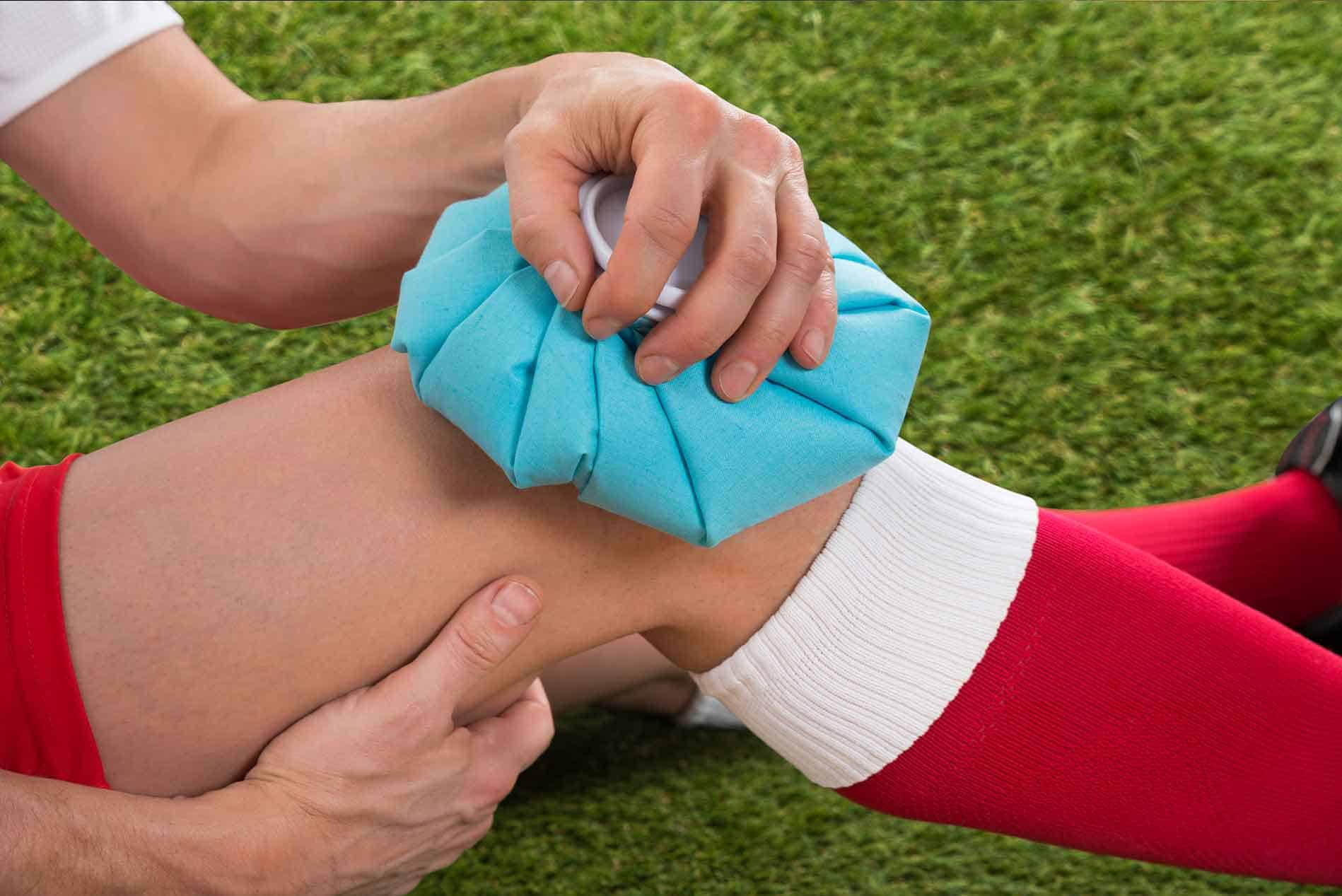
Avoid anti-inflammatories- the various phases of inflammation are meant to help repair damaged tissues, inhibiting this could harm long-term healing. The evidence for using ice is mixed, it is shown to provide a reduction in pain but can impair healing. For this reason it is advised to use in moderation, only 10-20 minutes at a time and leaving at least 30 minutes in-between application.
Compression- external pressure with taping or bandages limits edema. Especially after ankle sprains evidence has shown a reduction in pain and improvement of quality of life.
Educate- Education on the benefits of an active approach to recovery is advisable. Education on the condition and its management will also help with knowing how to treat injury. Setting a realistic time frame for recovery is also important in managing expectations.
After the first few days of recovery LOVE should be introduced.
Load- mechanical stress should be added early on in recovery and normal activities should be resumed as soon as possible. Optimal loading without increasing pain is key for tissue repair and remodeling.
Optimism- being optimistic has shown to correlate with better patient outcomes and prognosis. Psychological factors like fear of movement can be major barriers to recovery.
Vascularization- early mobilizations and aerobic exercise will improve physical function. Therefore, supporting return to work and reducing the need for pain medications.
Exercise- Strong levels of evidence suggest the use of exercise in recovery reduces risk of recurring injuries. Exercising helps to regain mobility, strength and proprioception. Pain levels should be used as a guide to progressing your exercise difficulty.