

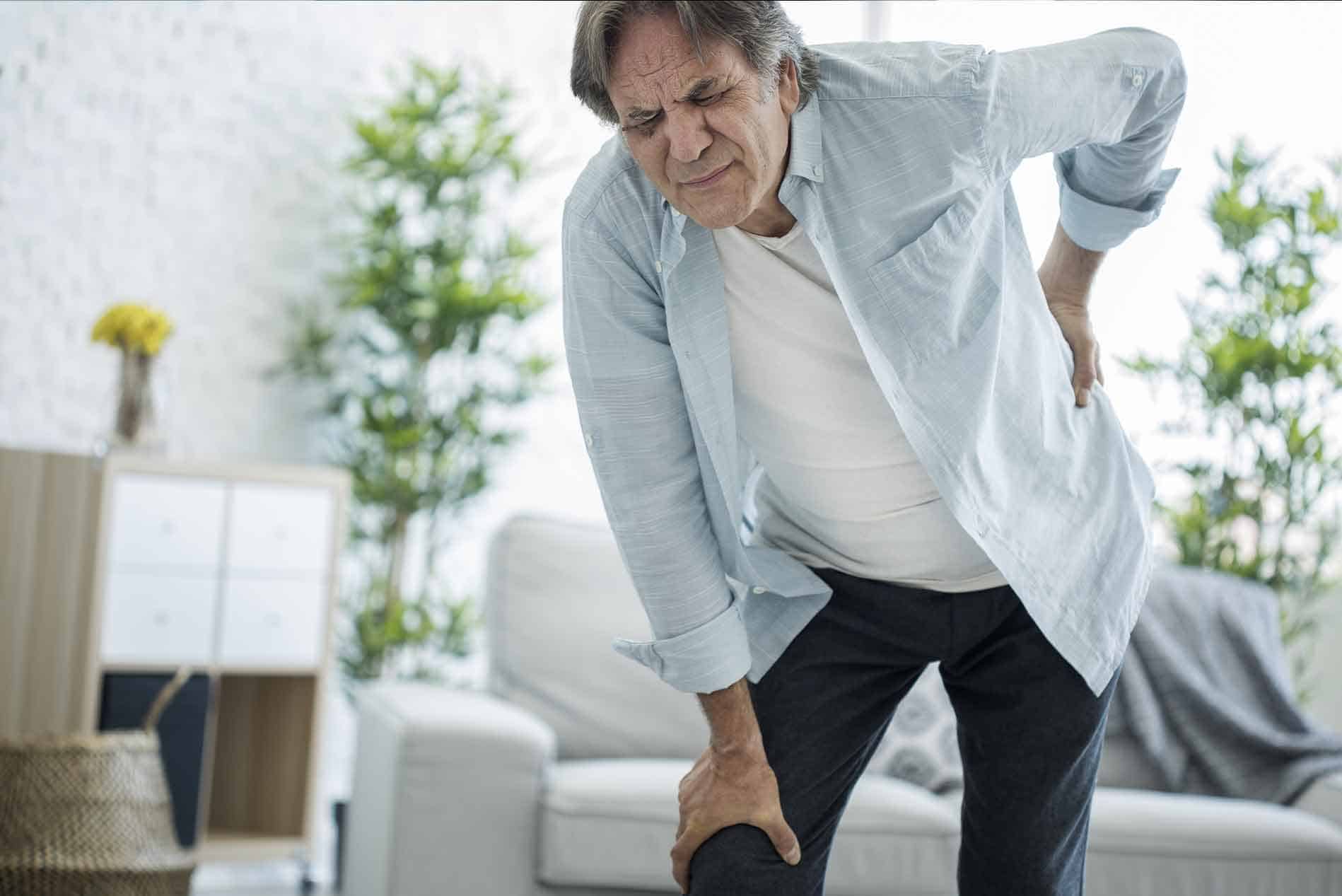
Degeneration of the spine occurs when the articular cartilage in the facet joints deteriorates and new bone forms in the subchondral areas and at the margins of the joint. The ends of the bone become exposed when the cartilage degenerates, this in turn causes spurs of new bone tissue to be desposited in an attempt by the body to reduce friction. The spurs fill the joint space and are the main cause for reduced, restricted movement and sometimes pain.
The cartilage discs between the vertebrae also dehydrate which further narrows the joint surfaces placing stress on other structures. This process is also known as degenerative disc disease (DDD).

Osteoarthritis is normally seen in the elderly although when young it can result from a combination of obesity, irritation of joints, injuries, muscle weakness, and abnormal wear and abrasion.
The amount of osteoarthritis in a joint does not necessarily correlate with the severity of symptoms as seen in a number of x-ray investigations where marked osteoarthritic changes have been noted within asymptomatic patients. Symptoms can vary between people however, pain and stiffness in the neck and back are the most common complaints. Unfortunately there is no cure for osteoarthritis, but mild symptoms can often be managed and relieved greatly by a number of treatments, exercise and heat therapy.
Treatments include Osteopathy, Chiropractic, Physiotherapy, medications such as painkillers and surgery or injections. Manual therapy treatment techniques involve traction, hot/cold therapy, exercise programs to stretch and strengthen muscles, soft tissue massage, mobilisation and manipulation of the joints and surrounding areas. Home traction is also another modality often used.
References
Tortora, Gerard J., and Bryan Derrickson. Principles of Anatomy and Physiology. Hoboken: John Wiley & Sons, Inc, 2006. Print.
“Osteoarthritis of the Spine.” Spine-Health, Web. 12 Feb. 2012. http://www.spine-health.com/conditions/arthritis/osteoarthritis-spine.
“Osteoarthritis .” Bupa UK. Web. 2 Mar. 2012. http://www.spine-health.com/conditions/arthritis/osteoarthritis-spine.