

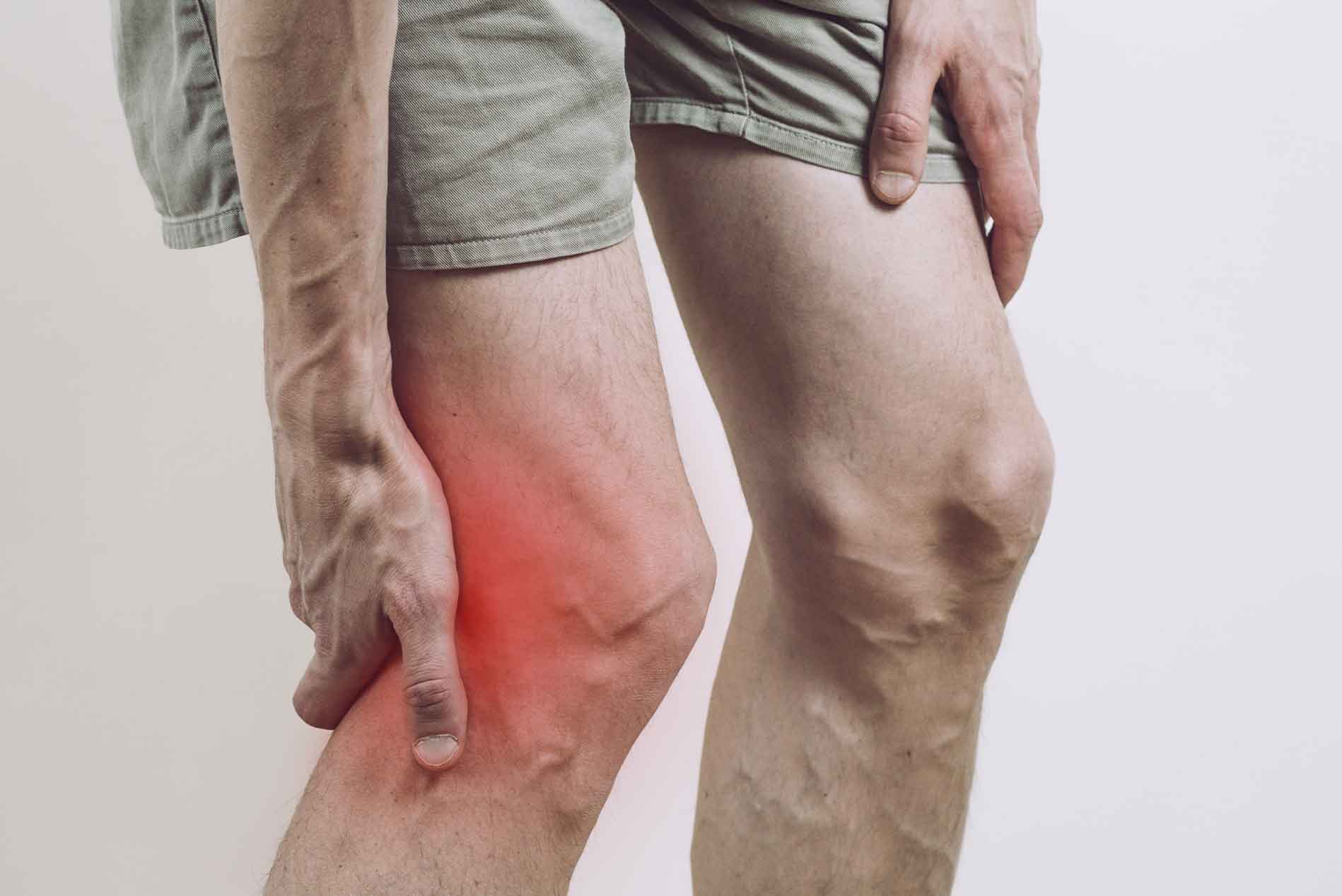
At Blackberry Clinic we treat a variety of musculoskeletal conditions but one of the most common injuries is a torn meniscus. This article explains what this means, what are the signs and symptoms and how it can be treated, not always with surgery! Our physios, osteopaths and chiropractors can treat this injury and if necessary refer you to our Sport and Exercise Medicine Doctors or Musculoskeletal Medicine doctors. If you have had surgery for a torn meniscus it is important to rehab the muscles surrounding the knee so that you regain full function. Our practitioners can provide a complete exercise programme to get you back to full mobility and fitness.
The meniscus in your knee, is a piece of cartilage that separates your thigh bone (femur) from your shin bone (tibia). Each knee joint has a medial (being on the inner side) meniscus and a lateral (being on the outer side) meniscus. Your meniscus act like a wedge to help with the rotational stability in your knee, working together with other ligaments. The meniscus also acts as a shock absorber. As you walk, run, and jump the knee absorbs tremendous forces. Your meniscus helps to absorb these forces so that the bone surfaces are not damaged. The amount of force increases exponentially as the speed of movement increases from walking to running to jumping.
WHAT IS A MENISCUS TEAR?
In the younger population, your knee meniscus is usually torn traumatically, by twisting on a slightly bent knee. This may be done when changing direction whilst running, or twisting to pass the ball to another player. The meniscus can be torn in several places, and depending on the ‘shape’ and location of the tear on the meniscus, your prognosis may differ from a few weeks of rehabilitation to the need for surgery. The natural recovery of the meniscus often depends on the location of the tear and the blood supply to the area. In the older adult, the tear may be due to a natural age-related degeneration of the meniscus, with arthritic changes. Degenerative meniscus tears can happen slowly over time as a chronic overuse injury. A large meniscus tear that is inadequately treated can cause premature arthritic changes in your knee joint.
SIGNS AND SYMPTOMS OF A MENISCUS TEAR
● Traumatic incident/tackle
● Clicking, popping, or locking of the knee
● Pain along the knee joint line and a joint swelling
● Unable to squat due to pain and stiffness
● Unable to fully straighten knee
You doctor or physical therapist can perform some tests and diagnose an injury. If a more severe injury is suspected they may refer you for a MRI scan, which is the most accurate non-invasive test to confirm a meniscus tear. X-rays do not show a meniscus tear.
CAN A MENISCUS TEAR HEAL ON ITS OWN?
Depending on the location of the tear, a meniscus can heal well on its own and with rehabilitation. However, some areas with poor blood supply will never heal and therefore require arthroscopic surgery. Depending on your level of sporting ability, the demands of your sport as a competitive or professional athlete, surgery may be advised for a milder injury (that would otherwise be treated conservatively) but requiring a faster return to sport.
WHAT HAPPENS IF YOU LEAVE A TORN MENISCUS UNTREATED?
An untreated meniscus tear can deteriorate and may come loose within the knee joint. This can result in knee locking or giving way. Untreated meniscus tears can also increase in size and extend the damaged area of the meniscus.
TREATMENT FOR KNEE MENISCUS TEAR
A small meniscus tear will usually respond quickly to physical therapy treatment. One of the major roles of your meniscus is shock-absorption. Luckily, the other vital shock absorbers around your knee are your muscles. Strengthening your leg muscles, will reduce the stress on your meniscus and allow it time to heal.
Your physiotherapy treatment will aim to:
● Reduce pain and inflammation with hands-on techniques and massage and the use of electrotherapy and cryotherapy (ice)
● Normalise joint range of motion
● Strengthen your knee, especially the quadriceps and hamstrings (the muscles on the front and back of your thigh)
● Strengthen your lower limb, calves, hip and pelvis muscles
● Improve patellofemoral (kneecap) alignment
● Normalise your muscle lengths through stretching and improved flexibility
● Improve your proprioception and balance
● Improve your biomechanics with function eg. walking, running, squatting, hopping and landing.
● Minimise your chance of re-injury.
Meniscal injuries are commonly associated with other knee injuries, like ligament sprain, which need to be treated in conjunction with your meniscal tear.
HOW LONG DOES IT TAKE TO RECOVER?
Your meniscal tear will commonly take up to six or eight weeks to fully heal. It is important to avoid activities and exercises that place excessive stress through your meniscus and further delay your healing. In some cases, your physical therapist may advise you to keep weight off your knee by using crutches or to do exercise with less impact like cycling or swimming for the initial few days.
Following surgery, rehabilitation with a physical therapist will be required as mentioned above, and recovery can vary from 3 weeks up to 8 weeks depending on how extensive the surgery was.
The information contained in this article is intended as general guidance and information only and should not be relied upon as a basis for planning
individual medical care or as a substitute for specialist medical advice in each individual case. ©Co-Kinetic 2019 Blackberry Clinic 2021