

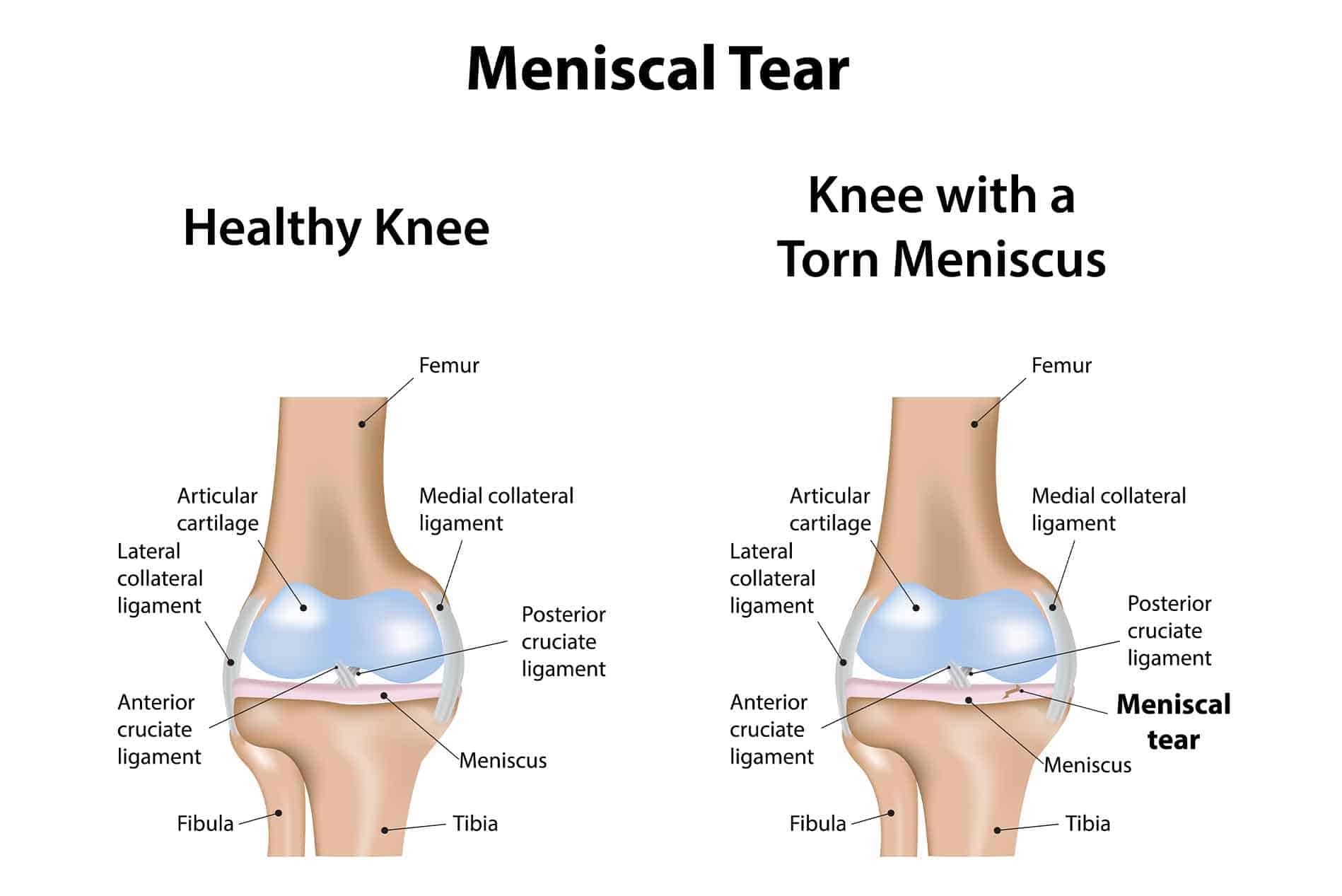
What is meniscus?
The meniscus is located in the knee joint and is commonly known as the ‘cartilage’ of the knee. There are two menisci located in the knee, one medial and one lateral of the joint. Both are formed from fibrocartilaginous c-shaped structures and serve to provide mechanical support and stabilisation for the knee. The meniscus also aids in lubricating the joint and provides shock absorption during walking and running (Peter, 2012).
What is a meniscus tear?
A meniscus tear is a rupture of the cartilage within the knee joint. The meniscus is the most commonly injured structure in the knee and usually occurs following a traumatic injury or degenerative changes within the joint (Shiraev et al, 2012). Traumatic tears can occur to any active individual aged 10-40 during a rotational movement of the leg whilst the knee is flexed. Degenerative tears are most common in individuals aged 40 and over, and occur with osteoarthritic changes of the knee joint where less force is required to produce a tear (Laible et al, 2013). Meniscus tears are grouped according to their type; with longitudinal, bucket handle and flap tears being amongst the most common (AAOS, 2009).
What are the symptoms of a meniscus tear?
Swelling of the knee joint usually develops over a number of hours following the injury. Knee locking can also occur which gives significant pain and the inability to move the knee for a couple of seconds. Turning and twisting movements and weight bearing on the knee will all greatly aggravate the symptoms (Souza, 2009).
How is a meniscus tear diagnosed?
Our practitioners at Blackberry will take a detailed case history to identify whether a meniscus tear is likely, followed by a thorough physical examination using appropriate orthopaedic tests to confirm the presence of a meniscal tear. A referral for an MRI scan may be helpful in determining the type and extent of tear, although this is not necessary for every patient.
What can Blackberry do to help?
There are a number of meniscus tears that can be treated conservatively. Treatment provided by one of our qualified Chiropractors, Physiotherapists or Osteopaths may involve gentle mobilisation techniques, soft tissue massage, stretching and muscle energy techniques to muscles surrounding the injured knee joint. An exercise and strengthening programme may also be given, as well as advice about returning to sport and time to recovery. Depending on the extent of the tear; injection therapy can be used to strengthen and improve shock absorption in the knee.
Occasionally meniscus tears may require surgical repair to remove a part of or repair the torn tissue. This would be carried out by an orthopaedic surgeon external to the Blackberry clinic, usually following a GP referral.
Following surgery the manual therapists at Blackberry can provide hands on treatment, advice on training techniques and a gait analysis to prevent recurrent meniscus tears.
Contributing Author:
Laura Maidment, M.Ost
References:
AAOS. (2009). Meniscal tears. [Internet] Available from < http://orthoinfo.aaos.org/topic.cfm?topic=a00358> [Accessed on 02/10/2013].
Laible, C. Stein, D. & Kiridly, D. (2013). Meniscal repair. The journal of American academy of orthopaedic surgeons. 21(4), pp. 204-13.
Nathan Wei. (2004). Causes of meniscus tears. [Internet] Available from: < http://www.arthritis-treatment-and-relief.com/causes-of-meniscus-tears.html> [Accessed on 02/10/2013].
Peter R. Kurzweil. (2012). Sports-related injuries of the meniscus. Saunders: US.
Shiraev, T. Anderson, S. & Hope, N. (2012). Meniscal tear- presentation, diagnosis and management. Australian family physician, 41(4); pp. 182-7.
Souza, Thomas. (2009). Differential diagnosis and management for the chiropractor. Jones and Bartlett Publishers International: Canada.