

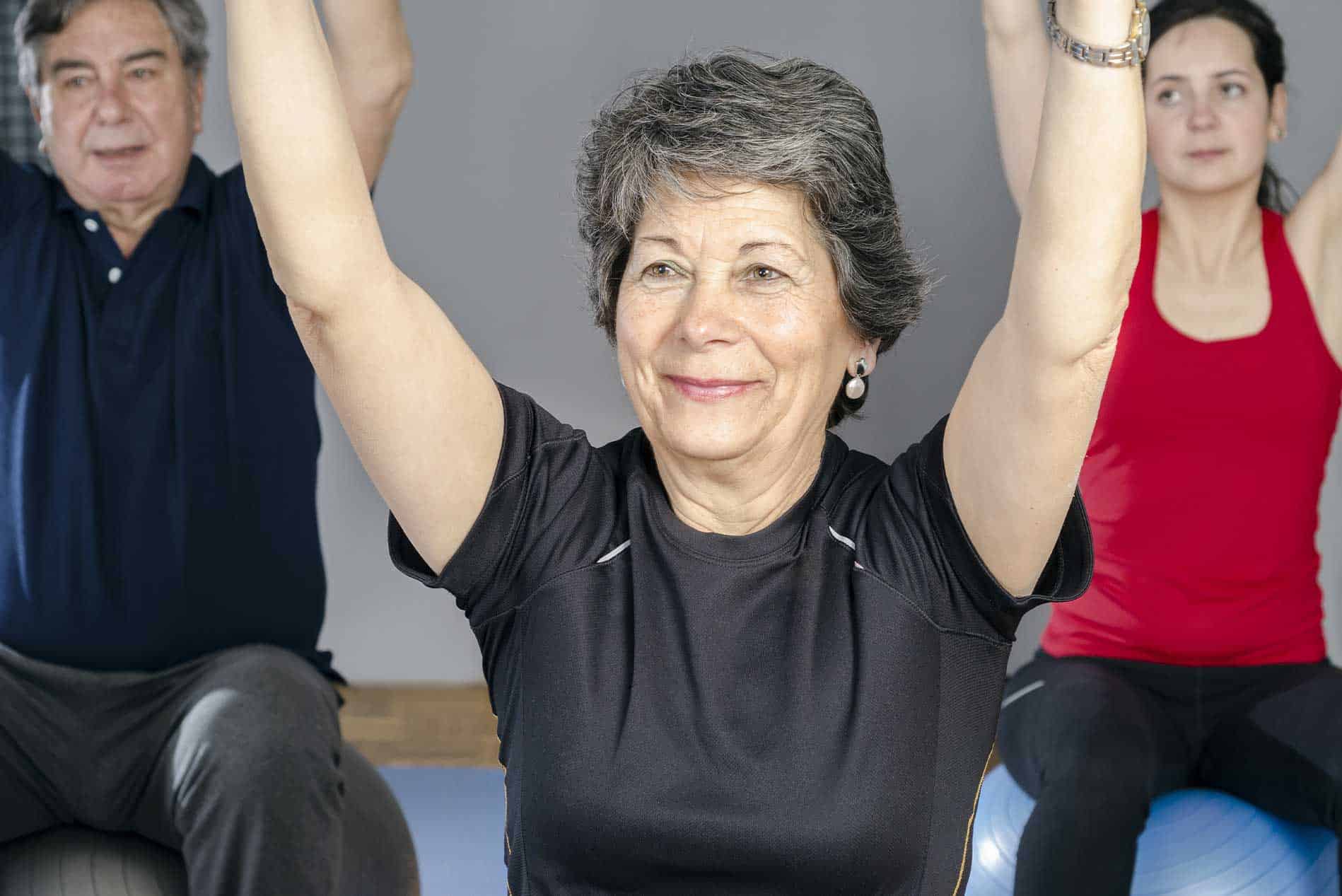
At Blackberry Clinic we treat all ages and abilities of patients, from elite athletes to armchair athletes! Getting you back to your daily life, pain free, is our over riding aim for all our patients. Sometimes you will have to put a bit of work in too, and our team is here to guide you with their expertise.
Graduated exercise programmes, daily stretches and lots of confidence building can make a big difference to your life if you have suffered a fall or injury but it is important that you seek a professional opinion so you can exercise safely and within your own limitations.
Jordan Smith, one of our physiotherapy team at Blackberry Clinic Milton Keynes, has these encouraging words for the older generation.
Jordan outlines here the benefits of resistance training and dispels some of the concerns that are voiced to him when he suggests an exercise regime to his patients.

Jordan Smith, Physiotherapist
Get stronger!
It’s common belief that as we get older, we gradually just become weaker, more fragile and therefore should just be accepting of this. However, although this is true to some extent, there are things we can do to help not only slow this process, but actually prevent and reverse it.
One method we continuously promote as healthcare practitioners is the use of resistance training. Resistance training involves the use of bands, free weights and resistance machines to promote an increase in strength via the building of muscle mass and bone density. Not only does resistance training improve general strength and mobility of an individual, it also decreases the likelihood of future injuries as well as helping to fend off age related conditions from arising such as heart disease, diabetes, osteoporosis, arthritis and poor sleeping patterns.
By implementing some form of resistance training into your life, you reduce your future dependency levels and therefore improve your quality of life.
Facts vs fiction:
· “I will get too muscular”
This is a very common misconception regarding resistance training. As we get older, our natural testosterone levels, a hormone in both men and women that is fundamental for muscle gain, steadily declines. Therefore, unless an individual is utilising anabolic steroids, synthetic derivatives of testosterone, one will be unable to achieve a dramatically muscular look during their elderly years, especially for women.
· “Lifting weights is bad for my joints”
The truth is actually the complete opposite. Our joints are designed to move against resistance and multiple studies have shown that individuals who regularly partake in some form of resistance training are less likely to develop joint related conditions such as osteoarthritis. As we perform resistance training with correct technique over a prolonged period of time with adequate rest and recovery, our muscles around our joints strengthen.
By doing so, it helps to support the joint structures and therefore alleviates some of the stress of everyday life reducing the risk of injury or gradual deterioration.
· “I’m going to hurt myself if I lift weights”
Again, this couldn’t be further from the truth. Studies have shown that elderly individuals who carry out even the simplest of correctly executed resistance training programs are drastically less likely to sustain an injury, in particular during a fall, than those who perform no resistance training.
This is due to the strengthening effects resistance training has on muscles, tendons and bones making them less susceptible to injury.
Where do I start?
It’s never too late to start resistance training. To ensure that you are safe to go ahead and start, it is advisable to seek professional advice from a practitioner such as a musculoskeletal doctor, physiotherapist, osteopath or chiropractor for example, especially if you have any underlying health conditions or niggling injuries.
By doing so, you can not only get the all clear but you will also receive guidance in regards to the type of resistance training you should be doing, as well as a specific, correctly tailored exercise program.
Jordan Smith
Physiotherapist, Blackberry Clinic Milton Keynes