

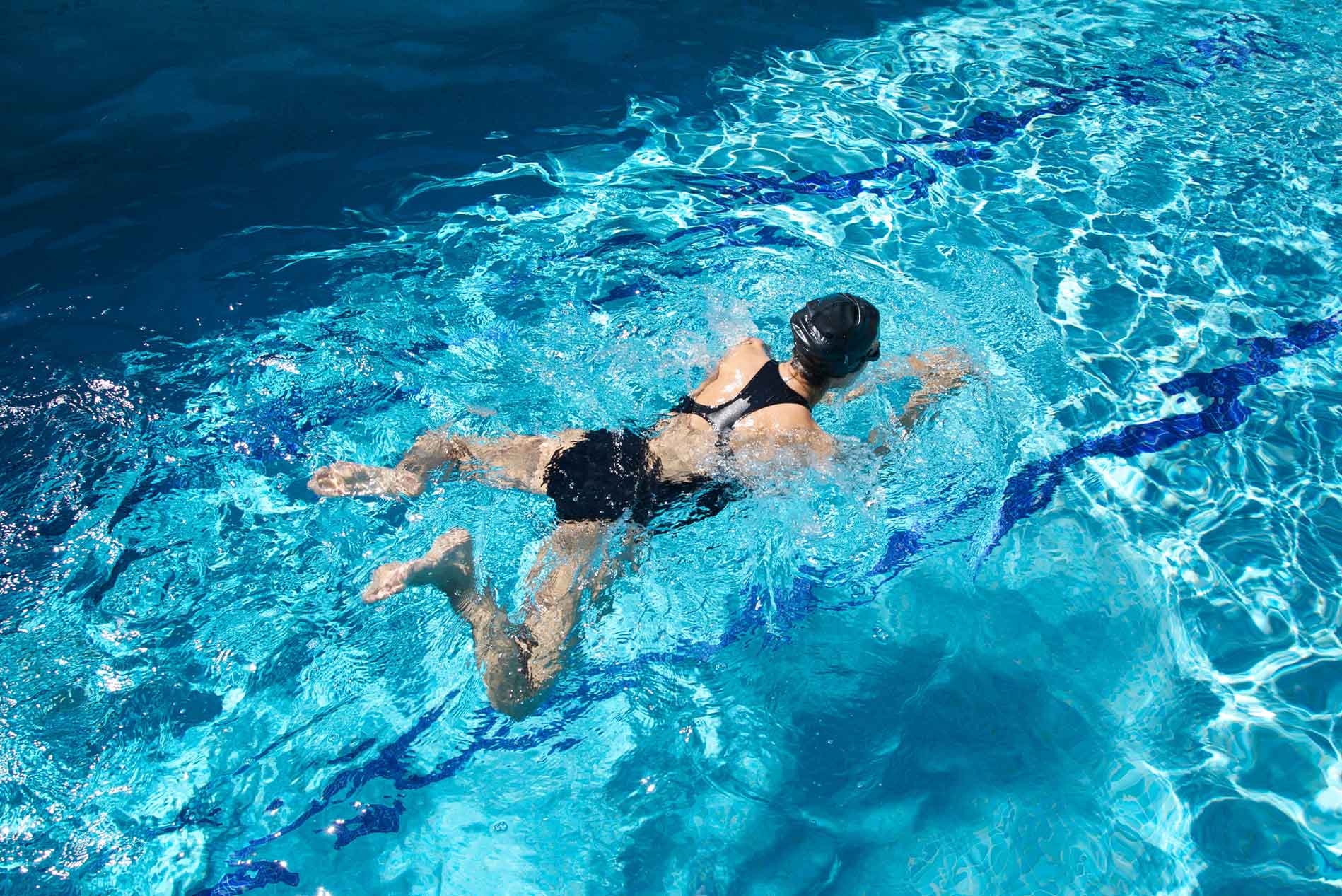
At Blackberry Clinic we treat common swimming injuries. Here are the most common swimming injuries and why they happen!
Swimming is one of the most popular sports in the world.
We swim in the sea, pools, lakes, streams, rivers and even ponds. And given 70% of the Earth’s surface is water, we’re not short of opportunities.
Swimming is considered a ‘low-impact’ sport due to the fact that the water supports a large percentage of your bodyweight. And exactly for that reason it’s often used in the rehabilitation of injuries to joints affected by weightbearing ie. back, hips, knees and ankles.
However, if you swim for general fitness, or in competition, the risk of developing an overuse injury is high because of the repetitive and forceful nature of the shoulder revolutions as well
as stress on the back, to hold you level in the water. In fact, 84% of regular swimmers suffer from overuse type injuries. So, what does all of this mean to you? You shouldn’t swim? You should reduce your training or change your sport? Let’s face it, anyone who is prepared to have their head in the water for hours, essentially participating in a solitary sport, must love doing it and therefore want to be able to manage their injury risk and still continue to swim.
The benefits of swimming – whether it’s for general fitness and physical activity, the desire to win competitions, or just to find your quiet place for stress relief – far outweigh the risk of injury. With this in mind, we’ve put together a set of resources to help you manage, or better yet prevent, swimming injuries altogether.
SINK OR SWIM – THE INJURIES
So, let’s dive in at the deep end and explore the injuries that are most likely to sink your swimming efforts.
The Shoulder
If you’ve invested even a moderate amount of time training swimming up and down that black lane line, it’s likely that you will have encountered some form of
‘swimmer’s shoulder.’ Given that swimmers annually perform hundreds of thousands of arm rotations it should be no surprise to learn that this type of work and frequency places a lot of stress on the shoulder muscles and joint.
It will probably come as no surprise, that swimmer’s shoulder is the most common injury in swimming. It is basically a blanket term for a number of things that can be injured in and around the shoulder joint. During one arm revolution, the shoulder is in a position of impingement (pinching structures) for 25% of the time. Multiply that by a million strokes per annum and it’s hardly surprising that there will be some cumulative damage to the squashed structures.
And before you assume it’s an injury that only affects freestyle and butterfly swimmers, the research has shown that shoulder injury is common across all strokes, at any age or level of swimming competition. It doesn’t discriminate! This may be due to the fact that with a generated to propel you forward comes from the arms and shoulders, and because freestyle is the primary stroke for training and fitness, regardless of your stroke specialism. However, the shoulder alone is not the only joint susceptible to injury.
Swimmer’s Knee
Knee pain closely follows shoulder pain in swimming. This is more specific to breaststroke swimmers who usually develop pain on the inner side of the knee. Again, this is due to repeated loading of the knee joint in unnatural angles. If you’re a Darwin supporter, maybe somewhere along the evolutionary timeline our ‘legs’ kicked like frogs, but the current human knees were not designed to bend and kick with the foot turned out. This applies extreme loads to the inner knee structures and muscle attachments resulting in injury over time.
Neck and Back Pain in Swimmers
Neck and lower back pain are also common complaints in swimmers. These are often closely related to poor posture ‘on land.’ Swimming may not be the primary cause, the pain merely expresses itself in the water. Strong stabilising muscles on the front of the neck, as well as strong core muscles are crucial to ensure good alignment of the vertebrae and reduce strain on the joints. Identifying problems with your stroke is critical but remember to look elsewhere too and focus on the activities you do most during the day such as sitting, driving, lifting and carrying,
computer work – if the ergonomics of these activities are not addressed you will battle to completely eliminate your pain.
Read our blog Swimming injury rehab for treatment of these injuries.