

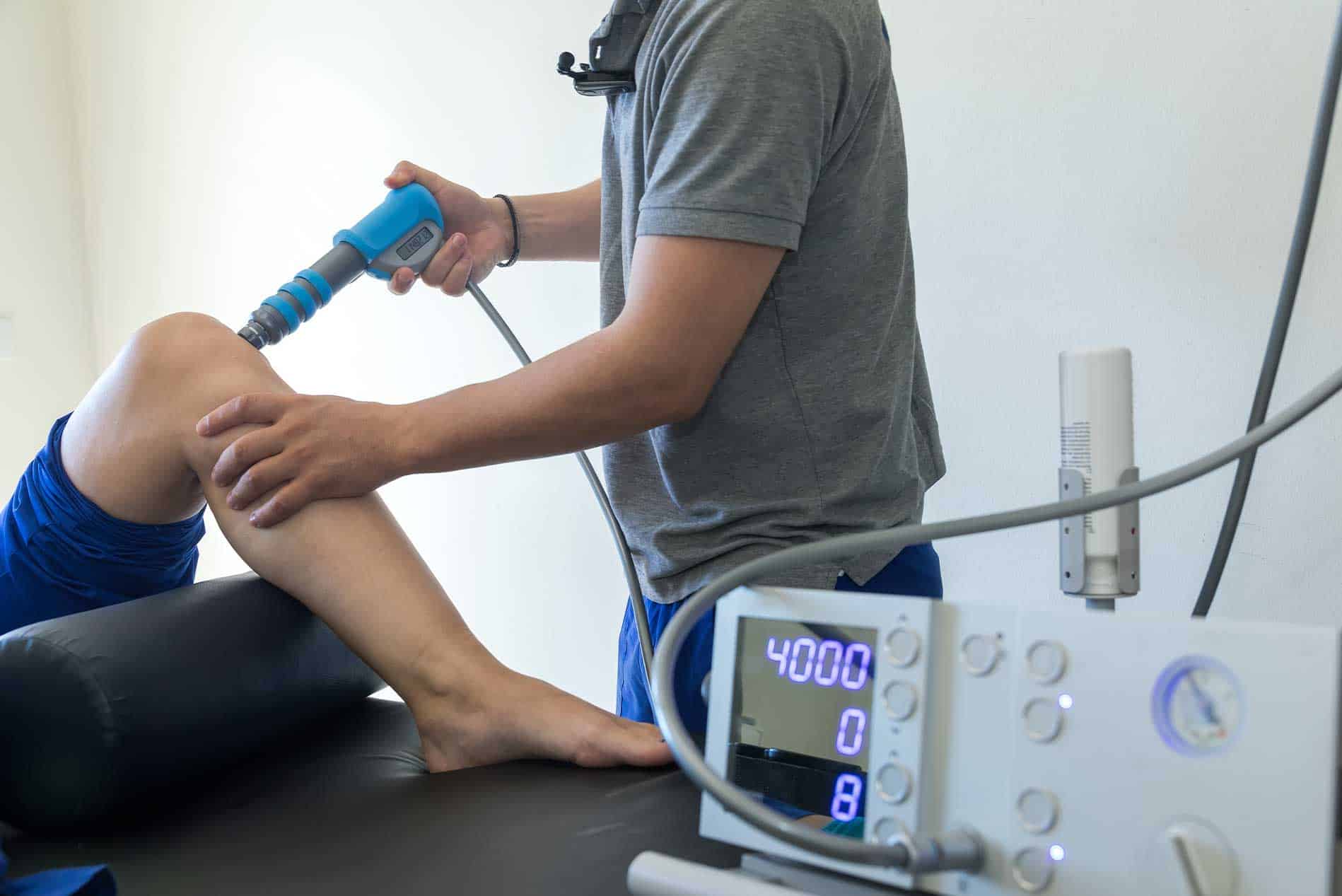
Shockwave therapy is a non-invasive treatment, and is easy to administer. Firstly, the therapist will assess and locate the area to be treated using their hands. Secondly, gel is applied to the treatment area. The gel allows better transmission of the sound waves to the injured area. In the third and final step, the shockwave therapy device (a handheld probe) is touched to the skin over the injured body part and sound waves are generated by the touch of a button.
The treatment lasts between 5 and 10 minutes. The device is a little noisy and treatment can be uncomfortable, but speak to your therapist if it becomes too sore as the intensity can be reduced.
The number of treatment sessions needed will depend on the reason for the therapy and how the tissue responds to it. The effect of the treatment is cumulative, so you will typically need more than one treatment, usually 3 to 5. Very often though, you will experience some degree of relief after the first application. The treatment sessions are usually done 3–10 days apart, depending on your tolerance and the tissue response.
Over the course of treatment, your physiotherapist will continue to discuss important injury management strategies, such as exercise therapy and activity modification.
HOW CAN YOU PREPARE FOR YOUR TREATMENT?
Shockwave therapy works best when sessions are delivered approximately 1 week apart. Most injuries require a minimum of 3 sessions, so ideally you want to plan to be available for 3 consecutive weeks without skipping a treatment for the best results. It is important that you do not take non-steroidal anti-inflammatory medication (NSAIDs) for 2 weeks before your first session and over the duration of your treatment, as this may interfere with treatment effectiveness. Clarify this with your doctor or therapist as there are other pain medications available should you need them. Plan what to wear – the treatment area needs to be exposed, so loose-fitting clothing or the option to wear shorts or vest, for example may be necessary.
WHAT ARE THE RISKS OR SIDE EFFECTS?
Some people find shockwave treatment to be uncomfortable, but most are able to tolerate it well. The treatment can be adjusted to your individual response or tolerance. Some discomfort, redness or bruising may develop after treatment, but this usually subsides after a few days. There is an extremely small risk of
tendon rupture or damage to the soft tissues following shockwave treatment, but the potential benefit far outweighs any risk.
WHEN SHOULDN’T YOU HAVE SHOCKWAVE THERAPY?
There are relatively few contraindications to shockwave therapy; however, it should not be performed if you are pregnant, being treated for cancer, have an infection or wound at thetreatment site or have had a steroid injection within the previous 6 weeks.
Caution would be advised if you have metal pins, plates or a prothesis in the area being treated;have a blood clotting disorder or are under 18, are taking anticoagulant medication, have had a serious tissue rupture at the injury site previously, or have loss of sensation at the site of injury.
WHAT HAPPENS AFTER A SESSION AND TREATMENT?
After a treatment session you can leave straight away. If discomfort persists then taking regular pain medication, such as paracetamol, is OK but avoid any NSAIDs, such as ibuprofen, as this may interfere with the treatment effect. Ice therapy to relieve pain or tenderness should also be avoided as this too can interfere with treatment efficacy. You will be able to drive straight after treatment and can continue with your normal day’s activities like work and light exercise.
Avoiding strenuous or high impact exercise for 48 hours after a session is normally advised. Following this you may resume your normal activities and exercise therapy regime.
Follow-up sessions will be booked, and your response monitored. Most patients experience immediate pain relief following treatment. However, within 2–4 hours after the treatment, some people may experience some tenderness in the treated area, which should be tolerable and not limiting.If you do find the aftereffects too sore, please advise your therapist as they can adjust the treatment dose.
It should be remembered that although shockwave therapy can be very effective in reducing pain and promoting healing, there are some key areas that are important to discuss with your physical therapist, which include any underlying flexibility or strength issues around the joint or muscle as well as the cause of the injury (overloading, training habits, poor biomechanics for example). Identifying and correcting these issues will help to prevent a recurrence of your injury.
The information contained in this article is intended as general guidance and information only and should not be relied upon as a basis for planning
individual medical care or as a substitute for specialist medical advice in each individual case. ©Co-Kinetic 2022 Blackberry Clinic 2022