

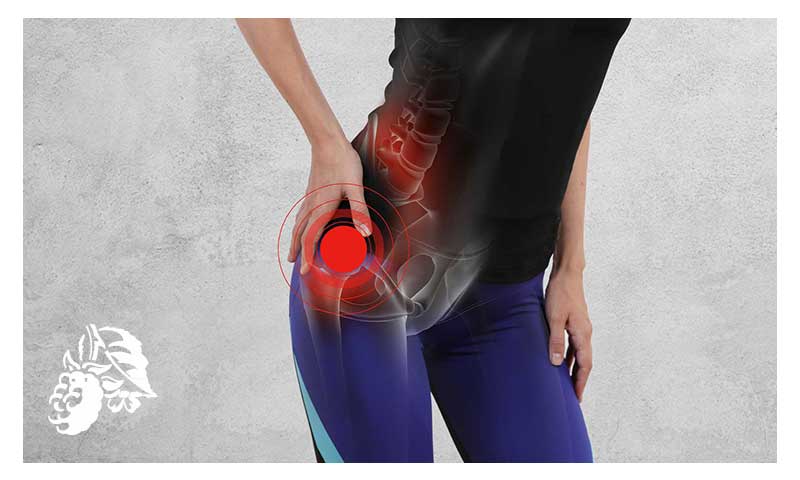
At Blackberry Clinic we treat a lot of patients who suffer from hip pain. This can be caused by a variety of reasons. Some of the conditions are harder to diagnose than others which is why it is important to seek expert opinion if you are suffering from hip joint pain. Our multi disciplinary team of physios, osteopaths, chiropractor, and MSK and SEM doctors are often able to offer accurate diagnosis which leads to more effective treatment . Here is some information about one of the causes of hip pain.
What is an acetabular labral tear?
A hip (acetabular) labral tear is damage to cartilage and tissue in the hip socket. The labrum is a band of tough cartilage and connective tissue that lines the rim of the hip socket, or acetabulum. It cushions the joint of the hip bone, preventing the bones from directly rubbing against each other. The labrum also helps keep the leg bone in place and increases stability of the joint.
The labrum can tear for many reasons. Some people get a torn labrum from falls or car accidents. Sports that require regular rotation of the hip like golf, football, hockey, and ballet all increase the risk as do running and sprinting.
Almost 75% cases of torn acetabular labrum have no known direct cause. Instead, these tears may develop gradually. Labral tears in the hip have been linked to osteoarthritis but it’s not clear if they contribute to its development or are a symptom of it.
Labral tears of the hip are more common in women. They also occur more often in people who have abnormalities of the hip structure, like hip dysplasia and other conditions.
What are the symptoms of an acetabular labrum Tear?
An acetabular labrum tear can cause a wide variety of symptoms. Some people don’t have any discomfort. Others have sharp pain around the groin, which may extend into the upper leg or buttocks. Pain can come on suddenly or develop gradually. Rotating your leg may be particularly painful.
Acetabular labral tears often cause a feeling of the leg “catching” or “clicking” in the hip socket as you move it. It may also feel like the leg is locking up. Over time, the increased stress on the joint could lead to further deterioration and permanent damage.
How is an acetabular labral tear treated?
If you’ve been diagnosed with an acetabular labral tear, you will probably start with conservative treatment, dependent on the location and severity of the tear. Physiotherapy may help an acetabular labral tear. You can learn to avoid putting too much pressure on the joint while building muscle strength to support the joint.
If conservative measures don’t work, you may be recommended arthroscopic surgery. This is a minimally invasive approach. Surgery usually provides short-term improvement. Surgery is less likely to be successful in people who already have other problems in the hip like arthritis or hip dysplasia. Following surgery, you will need physiotherapy to rebuild strength and mobility.
Since the success of arthroscopy and surgery for an acetabular labral tear is by no means certain, discussion regarding the pros and cons with a qualified professional is advised.
If you are suffering from hip pain that presents similarly to that described, it is strongly advised that you seek a professional opinion and treatment with an
appropriate healthcare professional such as a physiotherapist, osteopath, chiropractor or musculoskeletal doctor.