

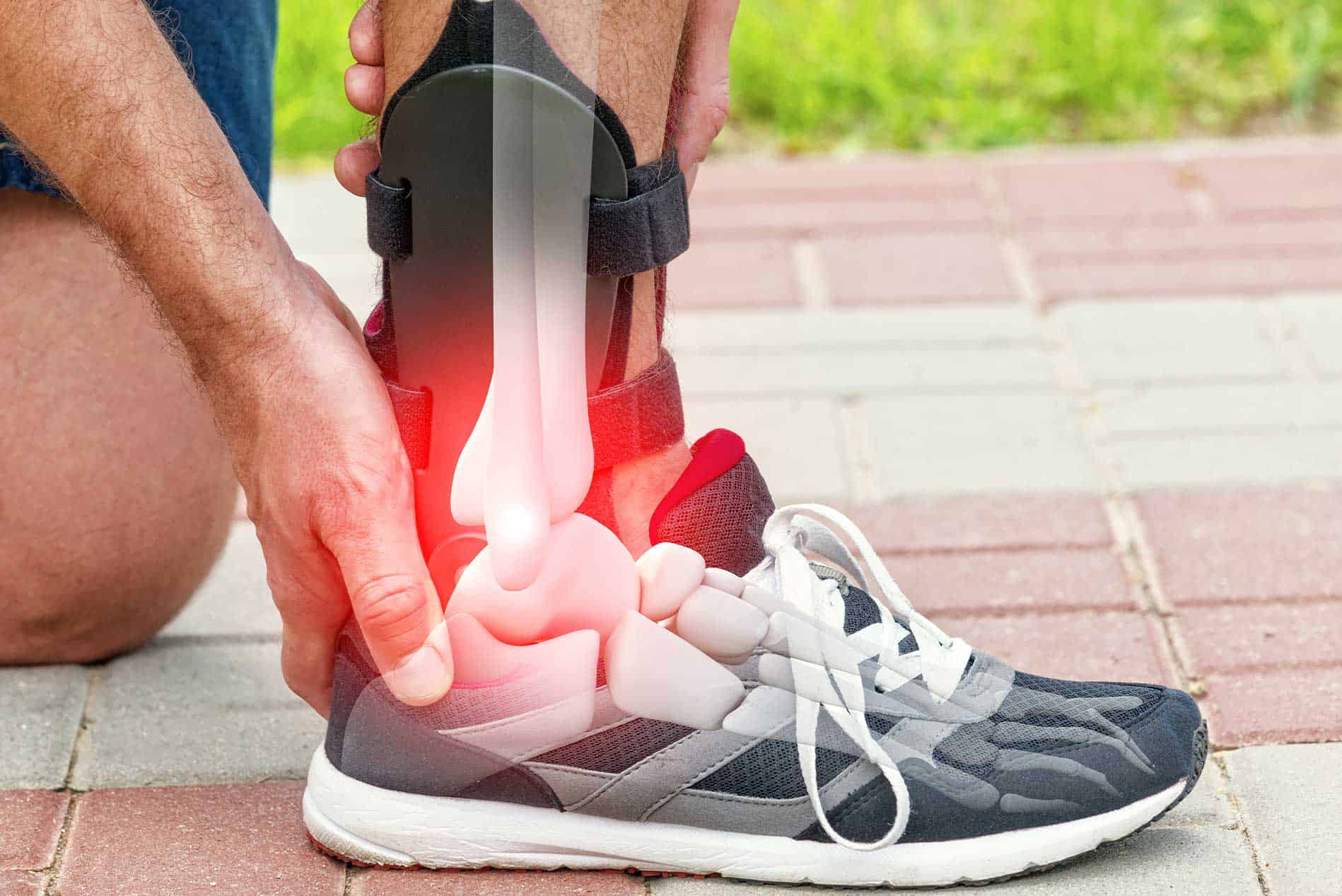
At Blackberry Clinic our practitioners are skilled in treating a variety of musculoskeletal injuries in all parts of the body. It is important to determine the nature of the injury in order to seek the best treatment and the best possible outcome. As we have a multi disciplinary team of physios, osteopaths, chiropractors and doctors, it is possible to cross refer if improvement is not as swift as expected. Our Sport & Exercise Medicine doctors are used to treating achilles tendinopathy in elite athletes and others.
THE INJURY
The Achilles tendon and plantar fascia are energy-absorbing and energy-releasing structures that are working throughout each stride. They absorb the load as your foot impacts the ground (loads are often 3 times your body weight) and convert the energy to propel yourself during the push-off phase of a stride (where forces are as high as 7 times your body weight). The Achilles tendon and calf muscle are therefore an essential unit, critical for efficient and effective running.
The Achilles tendon is prone to overuse purely by the nature of its function. Pain occurs because of weakness or dysfunction in the tendon rather than what was previously thought to be an inflammatory reaction. This can be a challenging area to treat due to the tendon’s poor perfusion (blood flow), which may need longer recovery periods, so it’s best to tackle this injury at the earliest point possible.
THE SYMPTOMS
- Pain close to the heel, which is often sharp, poking and incapacitating.
- Pain along the Achilles tendon, at the back of the lower leg.
- Occasionally there can be mild swelling at the base of the tendon (near the heel) and redness.
- If you pinch the Achilles and it’s very sore, then the source of the problem is likely to be the tendon.
- Pain during and after running (Stop! This is not an injury you can run through)
- In chronic cases there can be thickening or a thickened ‘lump’ along the tendon, especially when compared to the uninjured leg.
THE CAUSES
The Achilles tendon is the extension of the calf muscles, gastrocnemius and soleus, where it attaches to the back of the heel and is responsible for plantarflexion (pointing your toes). Sometimes
excessively tight, weak calves are the culprit. Tight lower legs put added strain on the Achilles tendon, and over the course of many months of hard training, this overuse injury can develop.
A weak posterior chain (the muscles that work together along the back of your body including the back extensors, gluteus muscles, hamstrings, calves) can also be a cause of Achilles tendinopathy.
Constantly running on hard surfaces like concrete or asphalt can contribute to developing Achilles tendinopathy as the loads absorbed by the tendon are greater than running on grass or dirt roads.
Unsupportive footwear can overburden the Achilles tendon with time, as it must work even harder to control ankle movement whilst running. Worn out shoes or shoes with inadequate cushioning can exacerbate Achilles tendon issues as they add no benefit in absorbing load during heel strike. At Blackberry Clinic we offer Phits 3D custom orthotics, which come in an everyday shoe or sport shoe option for maximum effect. They correct imbalances in the foot which can cause Achilles tendon issues.
Rapid increase in volume and/or intensity or training can have the same effect much more quickly, so it’s important to pay attention to both your feet and your sessions—especially when you’re training hard. Severe pronation, foot instability, a leglength discrepancy and muscle asymmetries can also contribute to Achilles pain.
THE FIX
Rest, icing, and strapping can relieve symptoms in the early/acute stages. Reducing training intensity and volume may be required, possibly even complete rest for a few weeks depending on pain and the severity of the injury. The earlier you get treatment the shorter your time off running in the ‘long run’.
Soft tissue massage can be used to release tight structures throughout the lower limb and back. Physical therapy treatment will mobilise tight structures, possibly use acupuncture and prescribe rehab exercises to strengthen your calves, hamstrings, glutes and core.
Stretching is also a key component to rehab. Eccentric heel drop exercises (lengthening under load), taught by your physical therapist, will be an essential part of your recovery.
Advice about your shoes, orthotics and running technique can help.
Importantly, keep an eye on your training. Don’t do too much, or go too hard, too quickly.
THE PREVENTION
When people experience Achilles tendinopathy, it often starts as a simple feeling of stiffness in the tendon. If you take steps to increase flexibility, strengthen the ankle and calf muscles and decrease stress on the tendon at the first sign of stiffness, it’s possible to prevent the problem from escalating.
One of the easiest ways to prevent Achilles tendinopathy is to keep the tendon strong and flexible. Regular strengthening of the calf, especially eccentric exercises will be beneficial, along with a regular stretching programme. It is important to strengthen the entire limb from the pelvis, core, hip, gluteus muscles and hamstrings as these will all ensure the entire kinematic chain is working efficiently and minimising overload of the Achilles tendon.

Then address any underlying risk factors (like shoes, orthotics) and finally a key prevention strategy is monitoring your training capacity.
Slow and steady wins the race!
The information contained in this article is intended as general guidance and information only and should not be relied upon as a basis for planning individual medical
care or as a substitute for specialist medical advice in each individual case. ©Co-Kinetic 2017/Blackberry Clinic 2021