

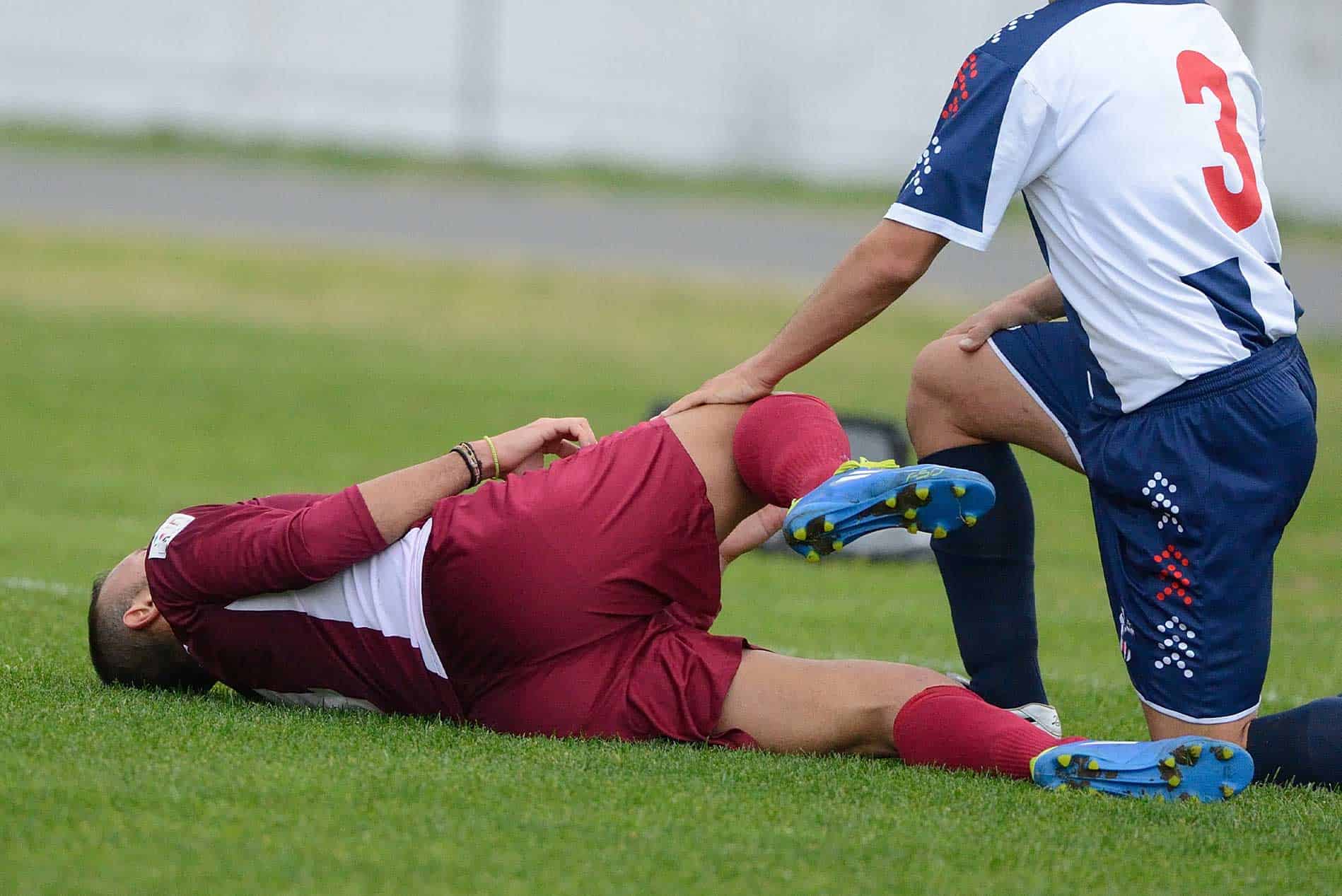
At Blackberry Clinic we pride ourselves on accurate diagnosis which leads to the best possible treatment outcomes. You may have suffered a ‘groin strain’ and be trying to rest or rehab it yourself. But if you don’t know what is actually causing the pain or which structure is injured and how, then it is likely your groin strain may become a chronic injury which reoccurs each time you start to play sport again. Come and see one of our practitioners (physiotherapy, osteopathy or chiropractic) for a full examination and assessment. If necessary they can send you to one of our Musculoskeletal doctors or Sport & Exercise Medicine doctors for further examination, investigation, or injection therapy if your injury does not respond to manual therapy and exercise. See if any of these injuries described below sound familiar and don’t put up with being on the bench for your sport!
The three most common causes of groin pain in football are a strain in an adductor muscle, a tendon injury or osteitis pubis, an instability around the pelvis. This article shows the details of each of these injuries – how they happen, what you feel and how they can be treated.
Adductor muscle strain – How it happens
Muscle tear or rupture to any one of the five adductor muscles, most commonly the adductor longus.
Sudden acute injury often from an overstretched sliding tackle, side step, sudden change in direction while running.
Depending on the severity, groin strains are graded:
Grade 1 strains are a mild injury, where a few fibres are torn or disrupted but the muscle bundle is still intact.
Grade 2 strains are a moderate severity injury, a number of muscle fibres are torn. This will affect your sporting performance and ability to walk.
Grade 3 strains are severe, complete rupture of the muscle. This will affect your ability to run, jump and hop. These injuries may require surgical intervention.
What do you feel?
Immediate pain or pain developing as you cease playing football
Tenderness in the muscle belly
Stiffness
Swelling or bruising along the muscle
Pain when stretching or contracting the muscle
Treatment
Immediately following injury follow the PRICE protocol: Protect the muscle, Elevate the leg, Rest, Ice, Compression of the muscle
After 48–72 hours you will be assessed to the extent of the injury and treatment can start including:
Physical therapy to promote tissue healing and ensure minimal scar tissue formation
Massage and manual therapy to release tight surrounding structures and address any underlying back, pelvis or hip issues
Exercise therapy – slow and progressive over stages depending on the severity of the initial tear
Adductor tendinopathy – How it happens
Chronic overuse injury of an adductor tendon.
Tendinopathy can develop from over training or overload, poor technique, or following a previous injury like a muscle strain.
Degenerative wear and tear changes to the tendon fibres which are slow to heal due to poor blood supply in the tendon.
What do you feel?
Pain at the top of the groin, radiating down leg
Pain with hip flexion
Pain on a specific bone in the groin
Pain squeezing legs together against resistance
Pain running, especially sprinting
Stiffness in the mornings and sense of weakness when trying to kick or use the leg
Treatment
In the early stages:
Ice regularly through the day
Stop stretching the adductor muscles
Have physical therapy to mobilise tight structures and promote tissue healing using massage, acupuncture and other modalities
Do isometric exercises 2–3 times per week especially if still painful
In the later stages:
Load modification; manage muscle imbalances in weakness and flexibility through exercises; training schedule, technique
Strengthen the core, pelvis and gluteal (buttock) muscles
Eccentric strengthening exercises
Osteitis pubis – How it happens
An overuse injury, caused by repeated trauma rather than a specific incident However, there can be a history of a specific incident that triggered the symptoms.
An instability of the pelvic bones, in particular the pubic symphysis, aggravated when asymmetrical loads are placed through the pelvis such as running or kicking
Associated with poor lumbopelvic (lower back and pelvis) control
There is often history of previous groin injury, ‘sportsman’s’ hernia or low back pain
What do you feel?
Pain over the pubic symphysis with referred pain into the groin
Acute tenderness directly on the bony pubic symphysis
Pain on resisted muscle contraction and pain stretching adductor muscles
Coughing, sneezing, performing sit-ups can cause pain
Often unable to lie flat on back or on stomach because of pain/discomfort
Treatment
Rest to unload the injured region, often a cessation of running and kicking, even the use of crutches in acute severe stages
Retrain stabilisation control of the pelvic girdle with specific exercises prescribed by your physical therapy specialist
Manual therapy treatments to normalise soft tissue and muscle flexibility across groin and pelvis
Early return to activity with low impact, like cycling, swimming with a pool buoy
Once pain permits, light straight-line running drills may commence
The information contained in this article is intended as general guidance and information only and should not be relied upon as a basis for planning individual medical care or as a substitute for specialist medical advice in each individual case.