

Mark Suttie has recently joined the team at Blackberry Clinic Milton Keynes. He is trained in ConnectTherapy™ and The Thoracic Ring Approach™ and here he explains what this means and what he can offer his patients using this method.
ConnectTherapy™ is a relatively new physio approach developed by Dr. L.J. Lee, based out of Vancouver, Canada. I have spent several years taking her courses and studying this, eventually becoming a fully Certified Practitioner in 2018. It is a methodical assessment process that looks at the whole-body and its connections during movement to determine the root cause of the patient’s problems. It has completely changed my practice as it is a very different way of assessing and treating. Rather than just treating symptoms, I can get to the bottom of why those symptoms are happening and this is particularly useful in re-occurring problems that don’t seem to go away, patients with multiple pathologies and patients that see me where previous treatment hasn’t helped.
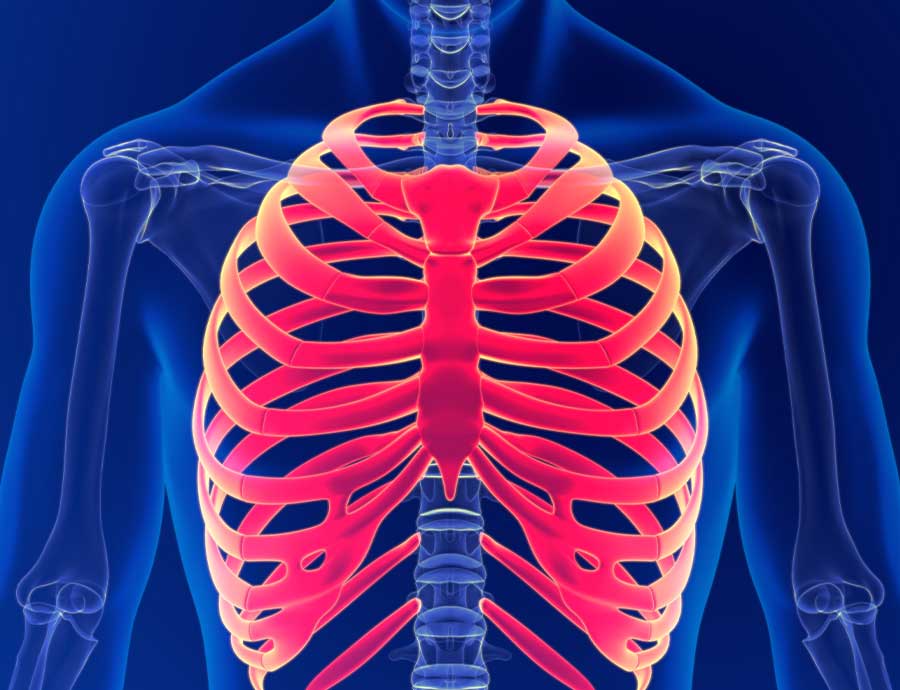
Central to this process is The Thoracic Ring Approach™. The thorax is a large part of the body and consists of the thoracic spine and ribs as well as all the muscular connections between them and the vital organs inside. It is traditionally believed that the thoracic spine is naturally quite stiff but this approach highlights that it is actually very flexible and is key to our movement and how we feel. The approach focuses on how the thorax works as whole, rather than just the thoracic spine. Imagine a thoracic vertebra, the ribs that come off it and around to the front and where they attach to the sternum at the front. This is a ring and you have 12 of them stacked on top of each other. In order to move well and feel good, these rings need to be stacked symmetrically, like a pile of plates, with nice space between them. The surrounding muscles should be doing their job of maintaining this and helping the rings move in the correct way to allow free and easy movement. In dysfunction, these rings become ‘unstacked’ and this can limit movement or cause pain/stiffness etc. Or it can cause pain or problems elsewhere in the body. For example, if you have left knee pain when running, this may be caused by your thorax shifting to the left when you run, causing you to load more through the knee and creating the pain. So in this case, treating the rings will solve the knee problem. Treatment for the rings is aimed at finding out exactly which set are the problem, releasing anything that is restricting their movement and then training them to move well.
The thoracic rings are a common cause of many problems, but they can also be affected by other parts of the body. For example, you may have persistent back pain where past treatment only helps short term. If you have an old ankle sprain that was never treated, this can cause the thoracic rings to become unstacked and be the reason for the back pain. In this case, actually treating your ankle will make the back pain go away. The possibilities are endless when you consider someone’s injury and movement history. Everything that has happened to you up until this moment dictates how you move and feel now.
This process makes for some really exciting results and often explains a lot of unanswered questions that patients have. If you would like to find out more about ConnectTherapy™ and The Thoracic Ring Approach™ then please feel free to get in touch or book an appointment with me to find out how I can help you.
Mark Suttie
Physiotherapist
Blackberry Clinic Milton Keynes