

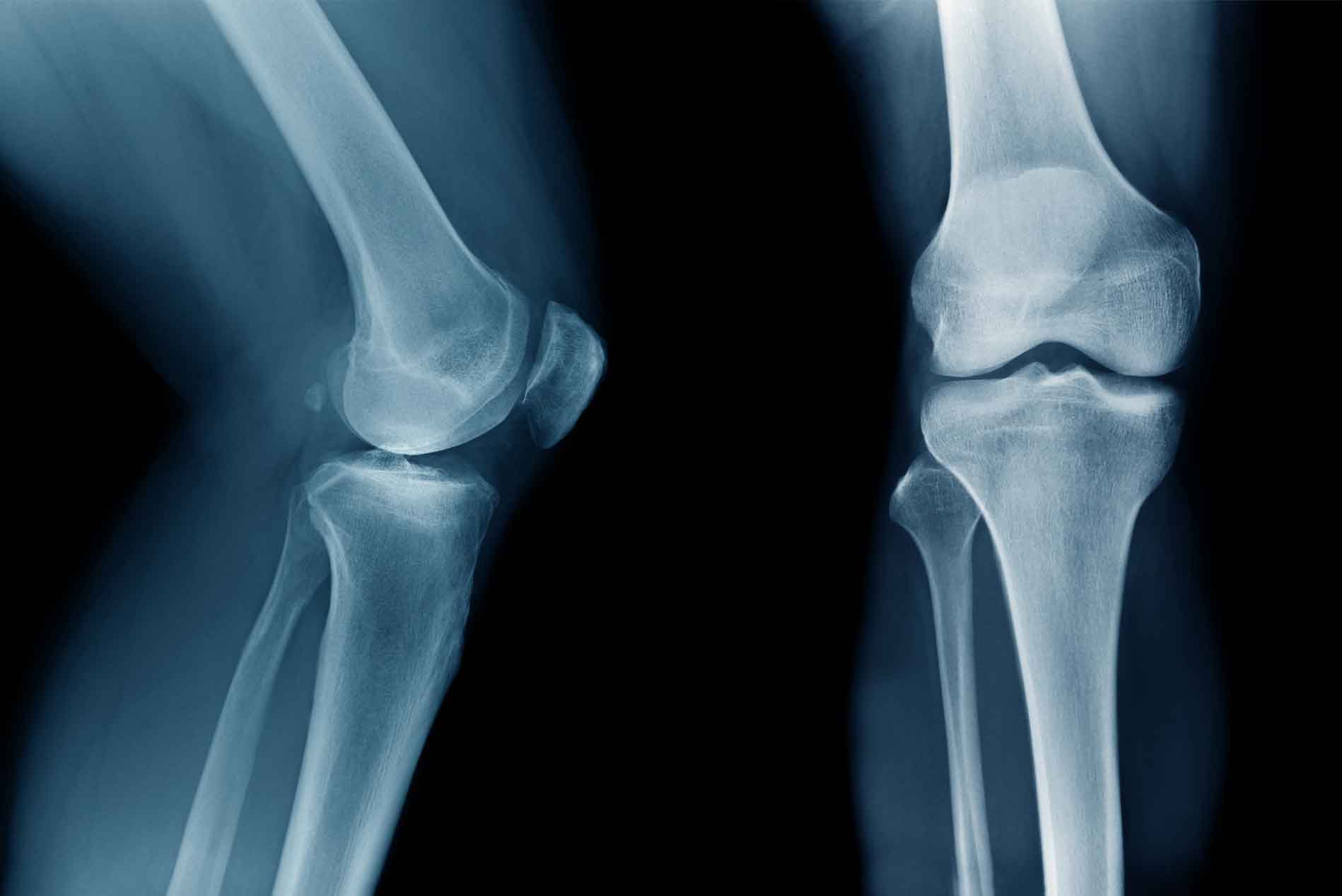
This condition usually presents with pain and tenderness felt within this region. Most commonly, Osgood-Schlatter disease is seen in young, adolescent males. Intense knee pain is usually the presenting symptom, occurring during activities such as running, jumping, squatting and especially ascending or descending stairs and during kneeling. The pain can be reproduced by extending the knee against resistance, stressing the quadriceps, or striking the knee.
The general consensus of research indicates that stress placed on the bone from the recurrent pulling tension of the quadriceps muscle on the kneecap tendon during different activities leads to the development of this disease. The irritation of this pulling can cause local pain, inflammation, swelling, and calcification of the tendon that is visible with an x-ray examination. Sometimes a tiny piece of the bone of the tibia is actually pulled away by the inflamed tendon.
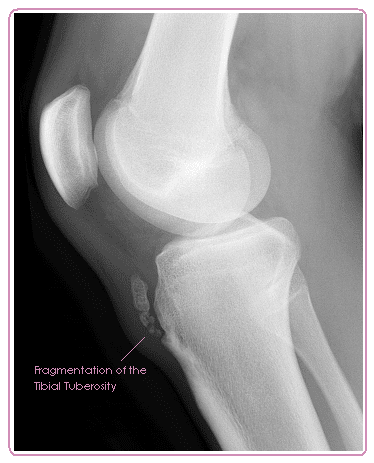
Osgood-Schlatter disorder can be diagnosed clinically based on symptoms and on physical examination findings, however x-ray investigation can provide confirmation of the disorder. A minority of people have evidence of Osgood-Schlatter disease on x-ray with no apparent symptoms.
About 90% of patients respond well to non-operative treatment that includes rest from aggravating activity, icing after activity, activity modification and rehabilitation exercises, all of which can be given and advised by musculoskeletal specialists such as Chiropractors, Osteopaths and Physiotherapists. It should not be necessary to stop all exercise since children can be disheartened by this unnecessary approach.
Significant benefit can be obtained by assessment by a Podiatrist. Overpronated (flattened) feet are frequently associated with Osgood-Schlatter disease and relief using orthotic shoe insoles to control the rolling of the foot can be almost immediate. At Blackberry Clinic we offer physiotherapy, osteopathy and chiropractic treatment for Osgood Schlatter disorder. Our specialist physiotherapists will advise whether PHITS 3D custom orthotics will alleviate the pain, following a dynamic foot scan using the latest technology for prescribing PHITS orthotics.
In rare cases surgical excision of the ossicle and/or free cartilaginous material may give good results in skeletally mature patients, who remain symptomatic despite conservative measures. Osgood Schlatter syndrome runs a self-limiting course, and usually complete recovery is expected with closure of the tibial growth plate. Overall prognosis for Osgood Schlatter syndrome is good, however in some cases there may be residual discomfort when kneeling and some activity restriction.
Blackberry Clinic Milton Keynes
References
Dunn JF. (1990). Osgood-Schlatter disease.American Family Physician. 1990 Jan;41(1):173-6.
Gholve P., Scher D., Khakharia S., Widmann R., Green D., (2007). Osgood Schlatter syndrome. Current Opinion in Pediatrics: February 2007 Vol 19:1 – p 44-50
Bloom J., Mackler L., (2004). What is the best treatment for Osgood-Schlatter disease? Clinical Inquiries from the Family Practice Inquiries Network, 2004 Vol. 53:2.