

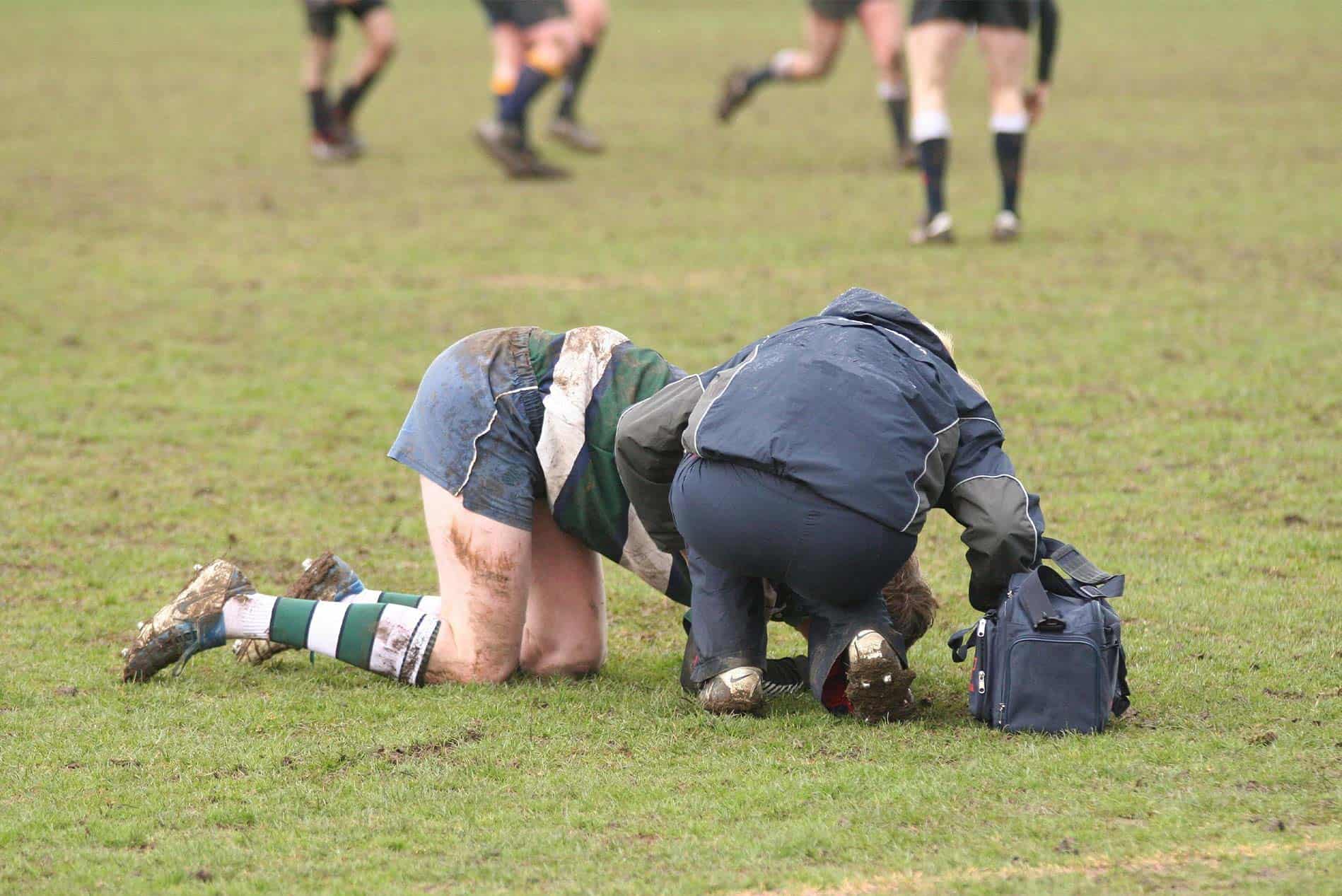
Rugby Union is a high velocity, collision sport, so it comes as no surprise that it reports one of the highest rates of injuries in team sports (Brooks, 2005). As the game becomes faster and the players get stronger, it is predicted that the injury rate will rise.
Traumatic injury is part and parcel of playing rugby, with the most common type being intra-muscular bleeding (haematoma) caused by the impact of a collision. The injuries that cause the largest amount of time absence from the field of play are anterior cruciate ligament injury for the forwards and hamstring injury for the backs (Brooks, 2005).
The repetitive trauma takes its toll on rugby players’ bodies; they develop more chronic long-standing injuries like chronic neck pain and lower back pain. One study using an MRI scanner showed that rugby players had more signs of wear and tear in their necks compared to non-rugby players of the same age (Berge 1999)
Physiotherapy plays a crucial part of a professional rugby player’s training schedule, both in the treatment of new injuries and chronic conditions. Indeed, it is just as important for rugby players at every level of the game. But getting athletes back to competing in their sport following injury is only one part of Sports Physiotherapy. Modern Sports Physiotherapists adopt a ‘prevention is better than cure’ approach, taking measures to ensure that sportsmen and women are in the best possible physical condition to withstand the demands that their sport places upon their bodies. That is why sportsmen and women rely on their Physiotherapist’s expert knowledge on how their bodies move and their individual strengths and weaknesses, to help them achieve their goals on the field of play.